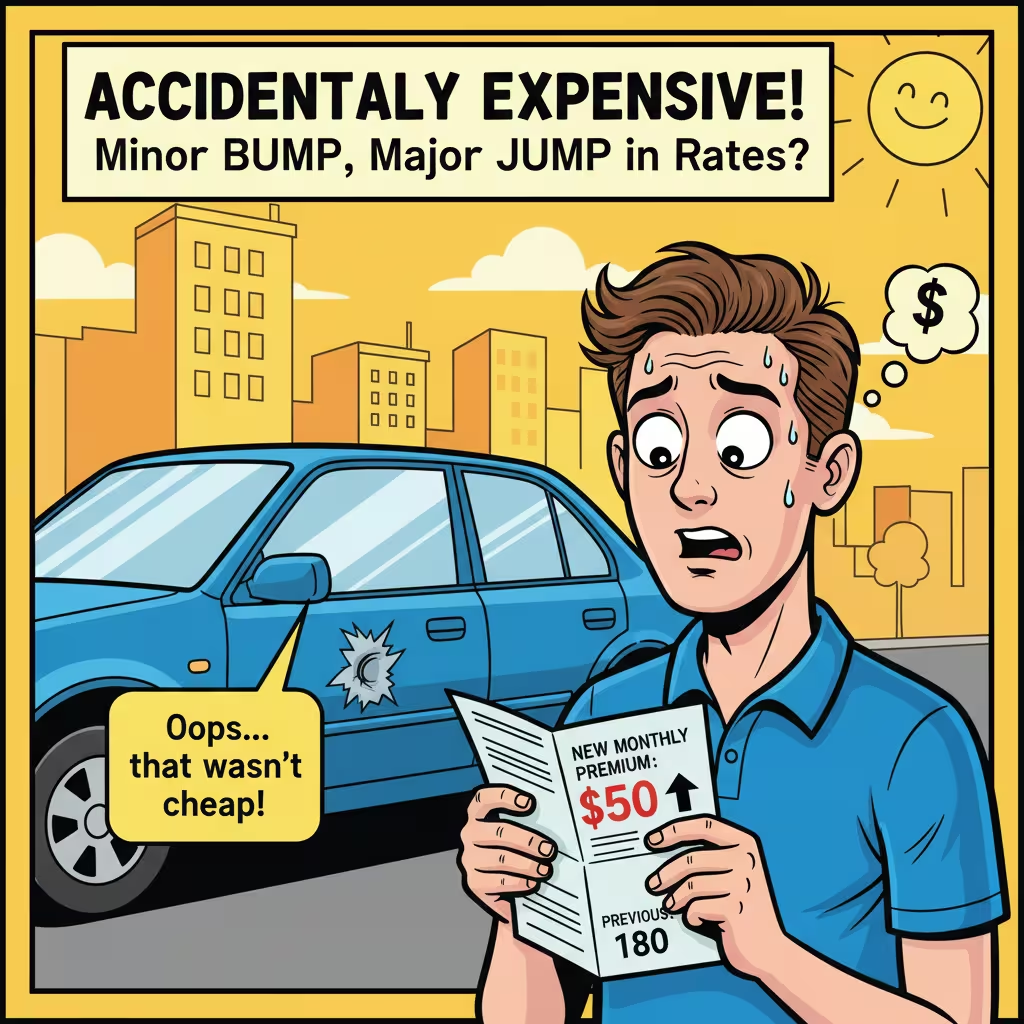

My cousin Derek paid $94 a month for car insurance for four years. Clean record. No tickets. He was proud of that number. Bragged about it at Thanksgiving.
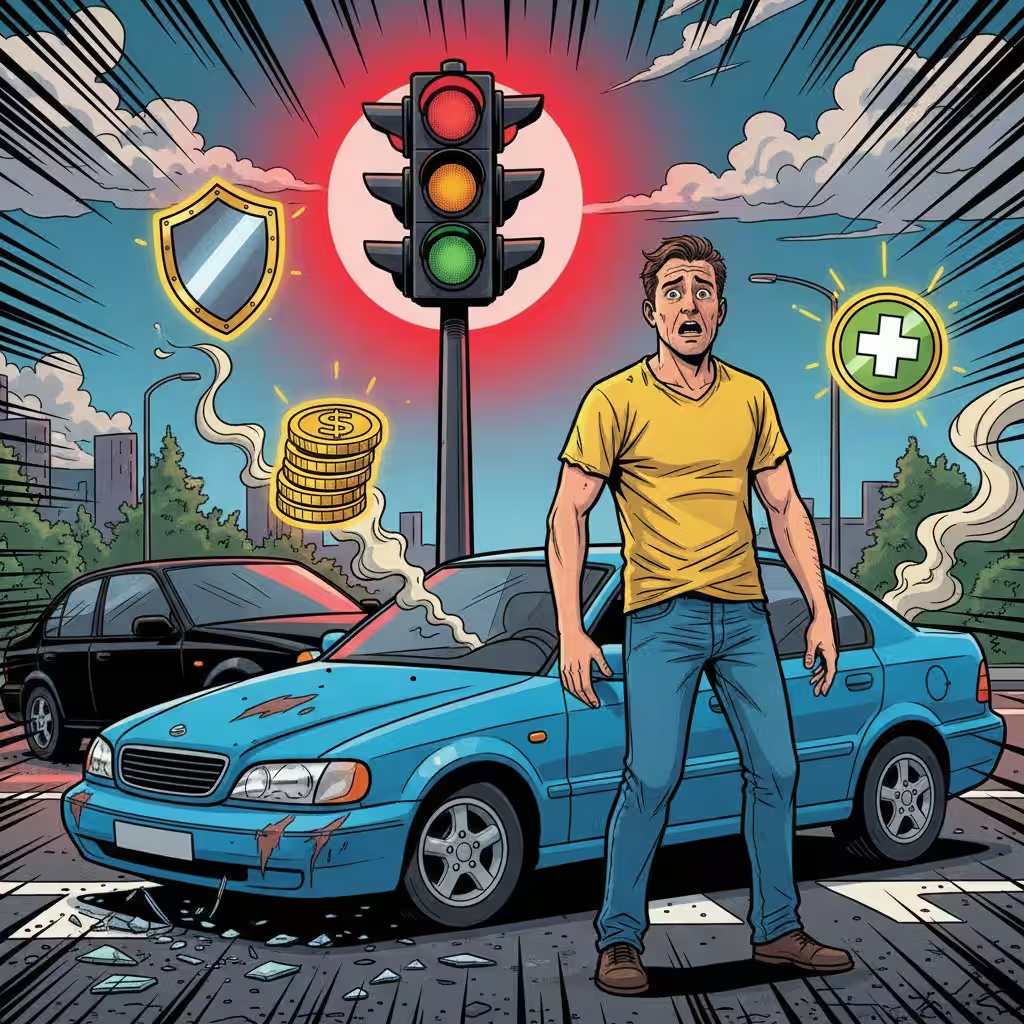
Then someone blew a red light in Memphis and hit his Camry at 40 miles per hour.
Derek’s $94 policy had a $3,000 deductible he’d never thought about, liability limits written for 2018 repair costs, and zero uninsured motorist coverage. The other driver had no insurance. Derek paid $6,400 out of pocket over the next three months while his car sat at a body shop.
That’s the trap. And it’s catching people every single day.
Car insurance in America isn’t complicated because the product is hard to understand. It’s complicated because the people selling it don’t always explain what you’re actually buying. This guide does. Plain words. Real numbers. No filler.
What Car Insurance Is — And What It Isn’t
Here’s the short version: you pay every month. Something bad happens. They cover it. You pay a chunk first — that’s your deductible. They handle the rest up to whatever limits you chose when you signed up.
That’s it. That’s the whole concept.
But the type of coverage — that’s where people get lost. And where they get hurt.
Liability coverage is the one every state forces you to carry. It pays for the other person’s car and medical bills when the accident is your fault. Key word: other person’s. Your own car? Not covered under liability. Your own medical bills? Also not covered.
Collision coverage fixes your vehicle after a wreck — your fault, their fault, doesn’t matter. If you’re still paying off a car loan, your lender almost certainly requires this. Miss it, and they’ll buy it for you at three times the market rate. Not a fun surprise.
Comprehensive is the catch-all. Hail the size of golf balls. A deer. Your car getting stolen from a Walmart parking lot at 2 p.m. on a Tuesday. Flooding. Fire. All of that falls under comprehensive. It’s usually cheap to add. Most people who skip it regret it exactly once.
Uninsured motorist coverage — UM and UIM — is the one I’d argue about with anyone who wanted to drop it. About one in eight drivers on US roads right now has no insurance at all. One in eight. If one of them hits you head-on, your liability policy does nothing for you. Your collision coverage kicks in but only for the car. UM/UIM covers your medical bills, your lost wages, and your pain when the person who hurt you has nothing.
Don’t drop it. Don’t lower it. Just don’t.

What You’re Legally Required to Carry
Every state has minimums. Every state’s minimums are different. And I’ll be blunt: most of them are outdated and borderline useless in a real accident.
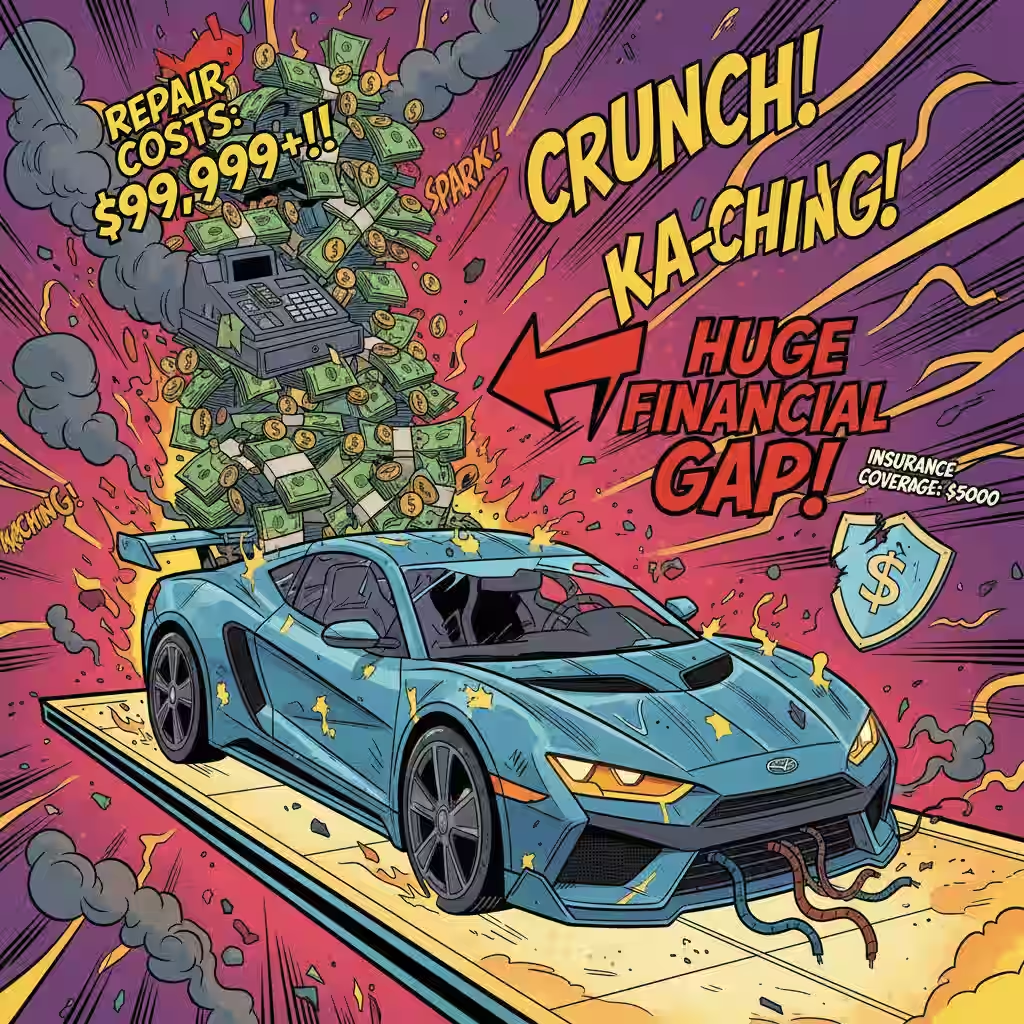
You’ll usually see liability written as three numbers — like 25/50/25. That means $25,000 per injured person, $50,000 per accident total, and $25,000 for property damage. Sounds fine until you see what a bumper job costs on a 2023 F-150 with cameras and sensors baked into every panel. We’re talking $6,000–$11,000 for a rear bumper. On a truck. For a bumper.
State minimums weren’t written for modern vehicles. They were written for a world where cars didn’t have six cameras, lane-keep assist, and a radar system mounted behind the grille.
Several states are actively rewriting those floors right now — Florida, Michigan, South Carolina, Minnesota — because the old numbers can’t cover what accidents actually cost anymore.
If you’ve had a DUI or too many at-fault accidents, your state might require something called an SR-22. Not its own policy. It’s a form your insurer files with the DMV proving you carry the legal minimums. It usually follows you for three years and it will push your premium up. A lot.
My actual advice on minimums: treat them like a floor you build up from, not a ceiling you aim for. Get liability at 100/300/100 at minimum. Stack UM/UIM on top. It’s not as expensive as you’d think.
Why Two People in the Same Zip Code Pay Totally Different Amounts
This used to drive me insane when I first started comparing rates. Same neighborhood. Same basic car. Sometimes $150 apart on monthly premium.
Here’s what’s actually moving the needle.
The car itself. Modern vehicles loaded with driver-assist tech cost more to repair. Full stop. Advanced Driver Assistance Systems — the stuff that helps you stay in your lane and stops the car before you rear-end someone — uses cameras, sensors, and specialized parts that independent shops often can’t even touch. Average labor hours on an EV repair run nearly twice as long as a standard gas car. All of that drives claims costs up, which drives premiums up.
Where exactly you live. Not just your state — your zip code. Washington D.C. saw an 18% auto insurance rate jump in 2025. Michigan and Florida both dropped 15% in the same window, thanks to regulatory changes. Two people 40 minutes apart can live in completely different insurance markets.
Your history with coverage. Gaps matter. If you went three months without vehicle insurance after selling a car, carriers see that. It signals risk to them even if nothing happened during those months.
How you actually drive. More carriers are offering telematics programs — opt in, let them track your braking and speed and nighttime driving, and if your habits are clean, you can shave 15–25% off your premium. Some people hate the idea of being monitored. Others look at their bill and decide they’re fine with it.

The EV Insurance Problem Nobody Warned Buyers About
This one’s real and it’s getting worse.
The average annual car insurance cost for an electric vehicle in 2026 is $4,058. The average for a gas-powered car? $2,732. That’s a 49% gap. Not a rounding error.
And it has nothing to do with EV drivers being worse behind the wheel.
The issue is what happens when an EV gets into an accident. Batteries can run $5,000 to $15,000 to replace. Structural batteries in some Tesla models are built directly into the chassis — meaning a minor fender-bender can total the car because pulling the battery apart would cost more than the vehicle is worth. Insurers know this. They price for it.
In states like Arkansas and Pennsylvania where EV adoption is still low and repair shops aren’t set up for it, EV insurance runs nearly double the cost of gas coverage. New Jersey, which has high adoption and state incentives propping up the market, sees only a 15% gap.
If you’re considering an EV purchase, get three insurance quotes before you sign the dealer paperwork. The monthly savings on gas can disappear entirely into higher premiums. Sometimes faster.

How Premiums Are Actually Calculated in 2026
The industry used to run on a handful of variables — your age, your record, your zip code, maybe your credit score depending on the state.
That era is over.
Carriers now use AI-driven pricing models that pull in dozens of data points. Telematics programs track how hard you brake, what time you’re usually on the road, how far you drive each week. Some insurers watch for whether you accelerate hard out of traffic lights. It sounds invasive. It kind of is. But if your numbers are clean, it works in your favor.
The move toward usage-based insurance (UBI) is accelerating. You pay based on how you actually use the car — not just who you are on paper. For low-mileage drivers, retired people, remote workers who barely commute, this can mean meaningful savings.
What’s not changing: your claims history still matters. File too many comprehensive claims — even for stuff that wasn’t your fault, like storm damage — and your carrier notices at renewal. It’s not fair. But it’s how the math works.
The Court Verdict Problem Pushing Everyone’s Rates Up
Here’s something your insurer won’t put in the quote email.
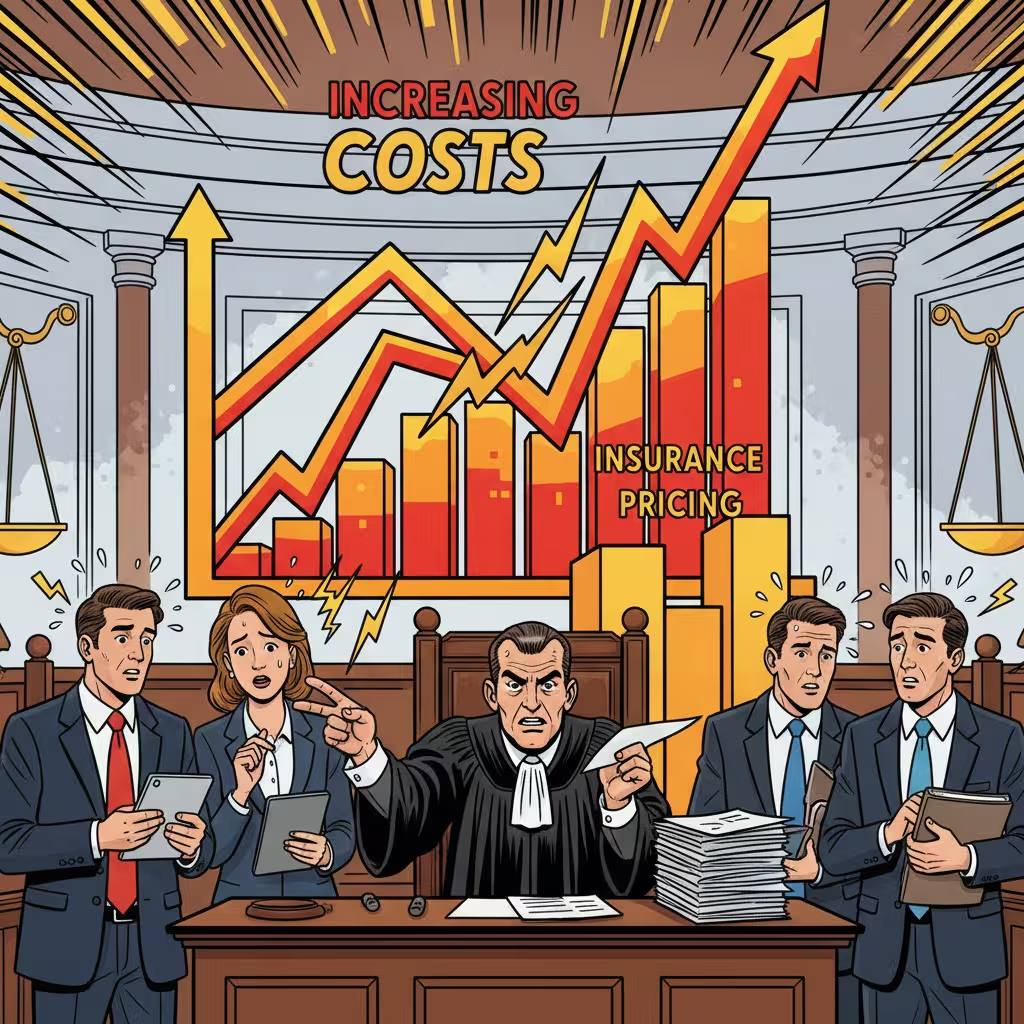
Jury awards that top $10 million — the industry calls them “nuclear verdicts” — are happening more often across the country. When juries hand down massive punitive damages in accident cases, it creates ripple effects through every part of the liability market. Insurers price for the worst-case scenario. That cost spreads to policyholders across the board.
It’s one of the main reasons states are raising their minimum liability limits. The old floors were written for a world where serious accidents cost $30,000 to $50,000 to resolve. Today that same accident — modern repairs, hospital bills, legal fees, potential litigation — can easily run $200,000 or more.
You can’t control what juries do. What you can control is whether your limits are high enough to protect your own financial life if you’re the one at fault.

First-Time Buyer? Here’s What Actually Matters
Skip the overwhelming comparison sites for a second. Here’s the stripped-down version.
Get at least four quotes — not two, not three. Prices between carriers for the same coverage can vary by 30–40% with no logical reason. Shop every year, not just when you buy the car.
When you’re comparing quotes, look past the monthly number. Check your deductible. Check your liability limits. Check whether UM/UIM is actually in there or whether the agent quietly dropped it to make the quote look cheaper.
New driver discounts are real and worth asking for. Good student discount. Defensive driving course credit. Some carriers have young driver telematics programs that reward clean habits with lower rates after six months.
And — this is the part nobody says out loud — the cheapest option is often the worst option. Not always. But often. The $40 monthly savings stops feeling like a win the day you need to use the policy and realize the limits don’t cover what happened.
A Quick FAQ for the Questions People Actually Google
How does car insurance work for first-time buyers? You pick a carrier, choose your coverage types and limits, and pay monthly or in full. Something happens — you file a claim, pay your deductible, and the insurer covers the rest up to your limits. Start with more coverage than your state minimum. Add UM/UIM.
What car insurance do I legally need? Liability at whatever your state’s minimum is — but go higher than that. Some states also require personal injury protection or uninsured motorist coverage by law. Check your specific state’s DMV site for current rules.
Car insurance explained simply — what’s the one sentence version? You pay into a risk pool every month; if you have an accident, the pool pays out, minus whatever deductible you agreed to upfront.
What is an SR-22 and do I need one? Only if you’ve had serious violations — DUI, license suspension, multiple at-fault accidents. It’s a form your insurer files with the state proving you carry required coverage. It’s not a separate policy but it raises your premium and typically stays on your record three years.
Does a higher deductible always lower my premium? Yes. But weigh it against what you could actually pay in an emergency. A $2,500 deductible might save $60 a month. It also means you’re writing a $2,500 check the day something goes wrong before insurance touches a single dollar of the repair bill.
Why is EV insurance so much more expensive? Repair complexity. Battery replacement costs. Specialized parts with no aftermarket alternatives. Shops that aren’t set up to handle them. It all pushes claims costs up, and premiums follow.
What Derek Did After
He switched carriers. Raised his liability limits. Added uninsured motorist coverage with limits he’d actually use if something bad happened. His new monthly premium went up $41.
He called me the week he signed the new policy. Said something I keep thinking about.
“I was paying for the feeling of having insurance. Not actual insurance.”
That’s the gap. That’s what this whole guide is about. The box gets checked either way — minimum policy or solid policy, the insurance card in your glovebox looks the same. The difference only shows up when you need it.
Do a coverage check today. Look specifically at your UM/UIM limits. With repair costs running at modern prices and legal verdicts pushing liability markets up across every state, the policy you set up in 2024 on autopilot might already be leaving you exposed.
Don’t be Derek at Thanksgiving. Check the limits. Know what you’re actually buying.