
Last Updated: April 2026
A couple links here are affiliate links. Small commission if you buy — zero extra cost to you, nothing changes about what I recommend.
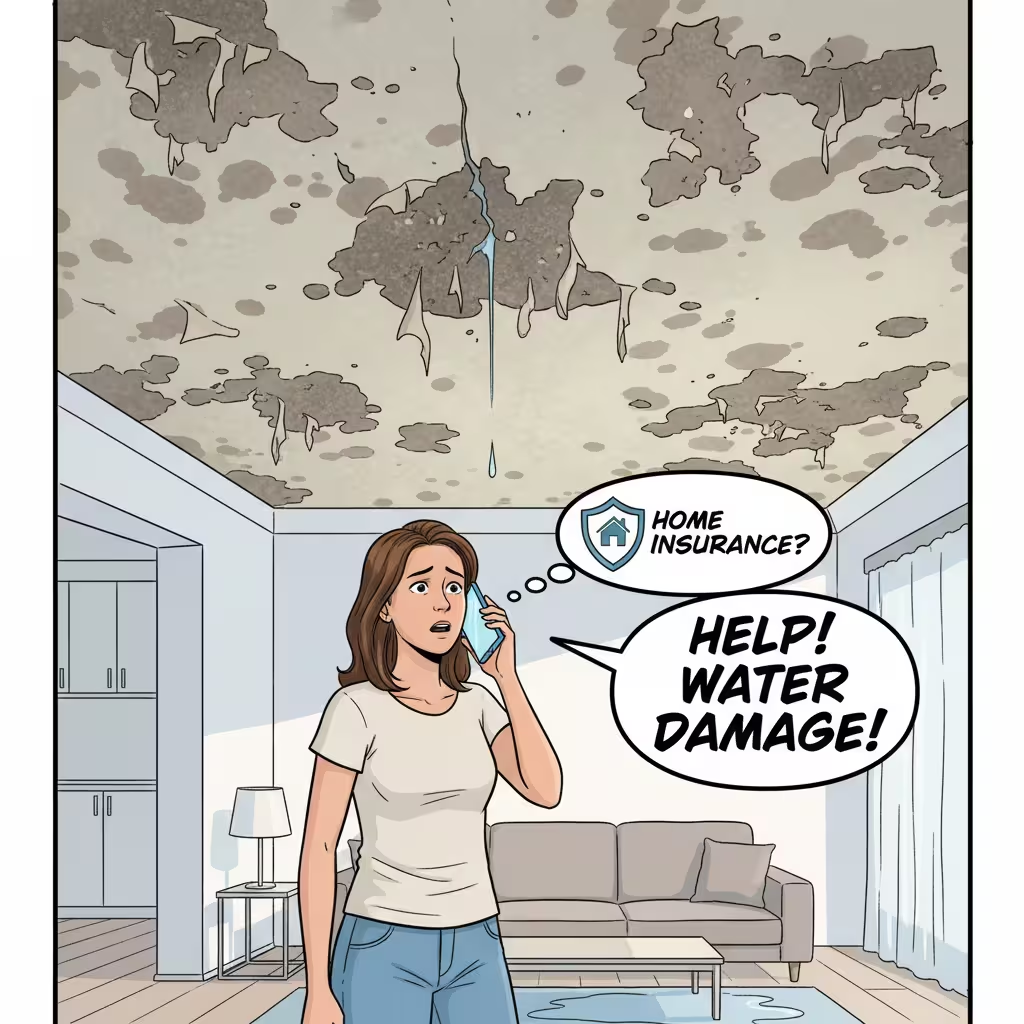
Diane filed her homeowners insurance claim three days after the storm.
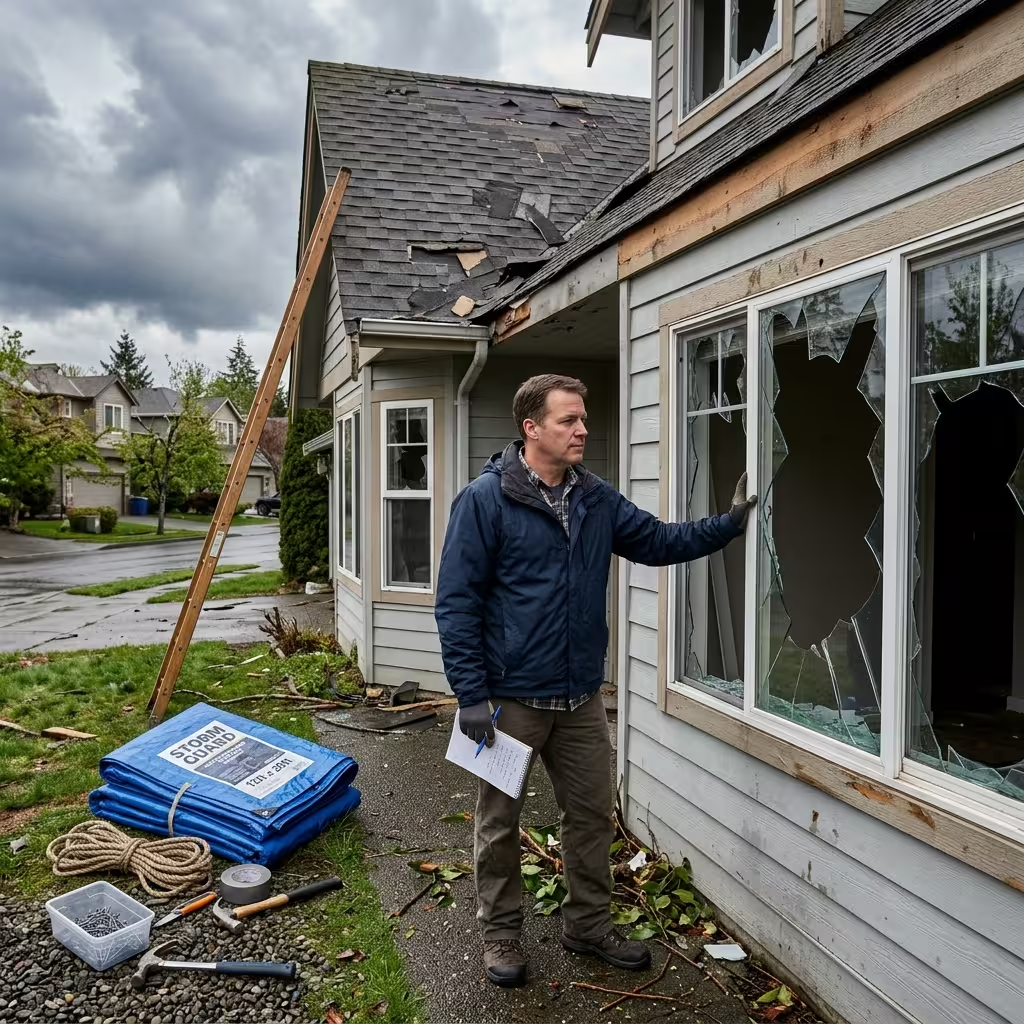
Thought that was fast. Roof hammered, two windows blown out, gutters hanging off the fascia like a broken arm. She called the insurer, described everything, waited. Felt like she’d done it right.
Six weeks later — partial denial.
She’d thrown out soggy ceiling tiles before the adjuster came. No photos of two rooms. And a form called a “proof of loss” — never heard of it until the denial letter spelled it out — never got filed. $4,800. Gone. Not because of fraud. Not a bad insurer. She didn’t know the rules. In fact, she doesn’t how to file a homeowners insurance claim, The right way!
Filing a claim correctly starts with knowing what your policy covers in the first place. Before you call your insurer, review what homeowners insurance actually covers to confirm your damage type is a covered peril.
That’s the problem with filing a homeowners insurance claim. Most people think it’s a phone call. It’s not. It’s the first move in a formal, document-heavy process with real deadlines — and the people who lose money almost always lose it because they didn’t know that before the storm hit.
Emergency Step 0: Stop the Bleeding (Mitigation vs. Claims)
When disaster hits your home—whether it is a burst pipe flooding your hallway or a tree branch crushing a section of your roof—your immediate instinct is to call your insurance agent. Do not dial yet.
First, you must understand a critical legal requirement embedded deep within almost every standard homeowners policy: The Duty to Mitigate Loss.
Insurance companies require you to take immediate, reasonable steps to protect your property from further damage. If you leave a hole in your roof open to a rainstorm for three days while waiting for an insurance adjuster to arrive, your carrier can—and likely will—deny coverage for any secondary water or mold damage that happens after the initial event.
The Gold Standard Rule: Taking emergency action to stabilize your home does not void your claim. It protects it.
The 3-Step Photo Playbook Before You Touch Anything
Before you sweep a single drop of water or clean up any debris, you must build an airtight digital crime scene of the damage. Grab your smartphone and take photos using this exact sequence:
- 1. The Context Shot (Wide-Angle): Take wide, structural photos of the entire room from all four corners. The adjuster needs to see how the damage fits into the overall footprint of your home.
- 2. The Source Shot (Medium-Range): Zero in on the exact point of failure. Photograph the split seam of the appliance hose, the cracked water pipe, or the specific window frame that blew out.
- 3. The Asset Shot (Macro/Close-Up): Take crisp, clear close-ups of serial numbers, manufacturer tags, and model labels on ruined electronics, appliances, or high-value furniture.
Keep every single receipt. If you spend $45 on heavy-duty plastic tarps or $120 on a late-night emergency plumbing valve, save those receipts. Your insurance company is required to reimburse you for these out-of-pocket mitigation costs as part of your overall claim settlement.
The 3x Multiplier Rule: Should You Actually File This Claim?
Filing a homeowners insurance claim is a major financial decision that carries long-term consequences. Many homeowners assume that because they pay their premiums every month, they should file a claim for every minor repair. This is a trap.
Every time you call your insurance company to report damage—even if the carrier ends up paying out zero dollars—that phone call is logged as an official inquiry or claim on your CLUE (Comprehensive Loss Underwriting Exchange) report. Think of your CLUE report as your property’s financial credit score. Other insurance companies check this database, and having multiple claims or inquiries listed can cause your premiums to spike by 20% to 50% for five to seven years, or cause your policy to be dropped entirely at renewal.
To protect yourself from premium hikes, run your situation through the 3x Multiplier Rule before you report anything to your carrier.
Step 1: Call an Independent Contractor First
Before talking to your insurance company, call a trusted, local, independent contractor to inspect the damage. Ask them for a detailed, line-item written estimate for the total cost of cleanups and repairs.
Step 2: Run the Deductible Math
Look at your policy’s declaration page to check your exact deductible amount. (Keep an eye out for special deductibles, like separate wind/hail or hurricane deductibles, which are often calculated as a percentage of your home’s total insured value rather than a flat dollar amount).
Step 3: Apply the 3x Formula
Compare your independent contractor’s repair estimate against your out-of-pocket deductible using this framework:
| Repair Estimate vs. Deductible | Strategic Action Plan |
| Below or Equal to Deductible | Do Not File. You are paying entirely out of pocket anyway. Reporting this only damages your CLUE report for zero financial return. |
| Less than 2x Deductible | Pay Out of Pocket. If your deductible is $1,000 and the damage is $1,500, a net payout of $500 is not worth the risk of a premium increase over the next 5 years. |
| 3x Deductible or Higher | File the Claim. If your deductible is $1,000 and a burst pipe causes $4,500 in flooring damage, your net payout ($3,500) justifies the claim filing. |

Do This Before Anything Happens to Your House
Most people reading this already have damage. That’s fine. But if you somehow found this before a loss — tonight, seriously, do a home inventory.
Walk every room with your phone recording. Open every closet. Say brand names out loud. Five minutes of narrated video uploaded to Google Drive or iCloud. That’s it. If the house burns down, your cloud backup survives. Your receipts don’t.
Jewelry. Art. Guitars. Firearms. High-end electronics. These get capped at low sub-limits under standard personal property coverage. An $8,000 ring might pay out $1,500. Schedule those items separately. Get an appraisal. Keep a digital copy somewhere the fire can’t find it.
Not being dramatic here. This one step is what separates a full settlement from a partial one.
Right After the Damage — Before You Touch Anything
Your brain goes straight into documentation mode. Understandable. But first thing is actually safety, not your claim.
Check for gas. Look at what you’re walking under before you walk under it. Power lines down near the property? Stay off the lawn entirely. I know this sounds like stuff from a pamphlet nobody reads — but people get hurt every year because they’re already filming before checking if the ceiling is stable.
Once you’re clear: mitigate. Most policies have a “duty to mitigate” clause baked in. Meaning you’re required — not suggested, required — to take reasonable steps to stop the damage from spreading. Tarp the roof. Board the window. Pump out standing water. If you skip this and the insurer finds out, they can reduce what they owe you.
But here’s where people wreck their own claim: they let a contractor start permanent repairs before any adjuster sees the damage. Don’t. Temporary fixes only until the insurer signs off. And keep every single receipt — tarps, plywood, emergency plumber, labor — because most of that is reimbursable under your policy and you’ll want the paper when you ask for it.
If your claim involves water, coverage depends entirely on the source and speed of the damage. Read our full breakdown of does home insurance cover water damage from a burst pipe before filing
Document It Like Someone Is Already Planning to Deny It
Not “document the damage.” Document it assuming the adjuster comes in skeptical and needs convincing.
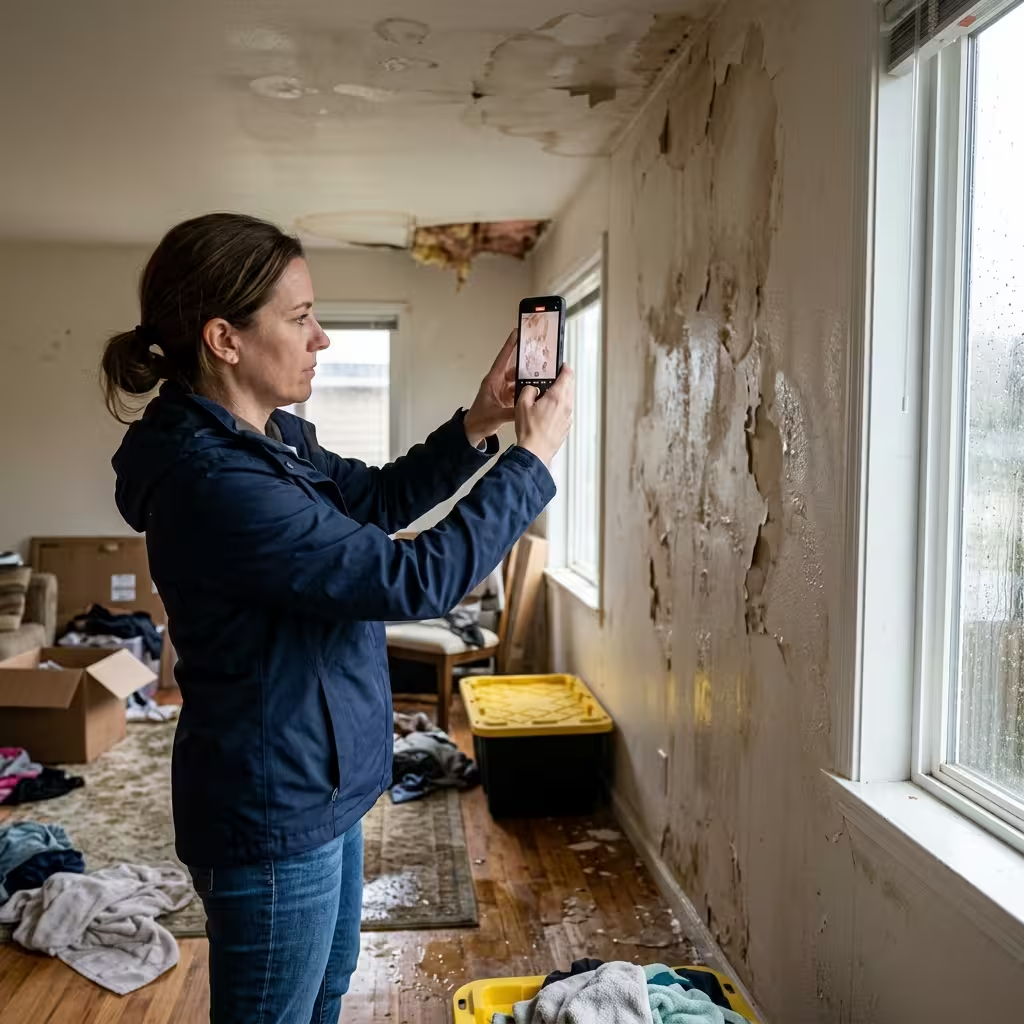
Wide shots of full rooms. Tight close-ups of specific damage. Multiple angles. Every room, even ones that look okay. Stuff you’re not sure is covered — photograph it anyway. Date-stamp every photo.
Walk the damage on video and narrate what you see. Say the date and time out loud on camera. This matters more than it sounds: in 2026, a lot of carriers push submitted photos through AI image recognition specifically hunting for inconsistencies between pictures. A timestamped walkthrough video makes that a lot harder to weaponize against you.
And don’t toss anything. Ruined furniture, busted drywall, blown-out appliances — keep all of it until the adjuster physically sees it or you have written confirmation it’s been documented. That’s exactly the mistake Diane made. Ceiling tiles in the trash three days before anyone came to inspect. That debris was her proof. Once it’s gone, it’s gone.

Calling the Insurer — What to Say, What to Absolutely Not Say
Call the same day if possible. Most policies have a “prompt notice” requirement — some have hard deadlines, others are vague, but all of them give the insurer ammunition if you sit on it for a week. Just report it. You can decide later whether to actually pursue the claim. Missing the notice window can get a valid loss tossed on a technicality.
When you call: what happened, when you noticed it, what’s visibly damaged.
That’s it. Full stop.
What not to say to a home insurance adjuster — really, anything you’re not 100% certain of. Don’t guess at repair costs. Don’t say “I think the roof might have had some wear before this” even trying to be helpful. The first conversation gets logged. Any inconsistency between what you said on the phone and what your photos show later is exactly what their systems are looking for now. Be precise. Be short. Let the documentation speak.
After filing: the insurer generally has 10 business days to acknowledge receipt. Day 12, nothing? Follow up in writing and keep a log. Every rep’s name. Every date. Every call summarized in one sentence. Paranoid-sounding, yes. Genuinely useful if the claim gets contested.
The Adjuster Is Not On Your Side — That’s Fine, Just Know It
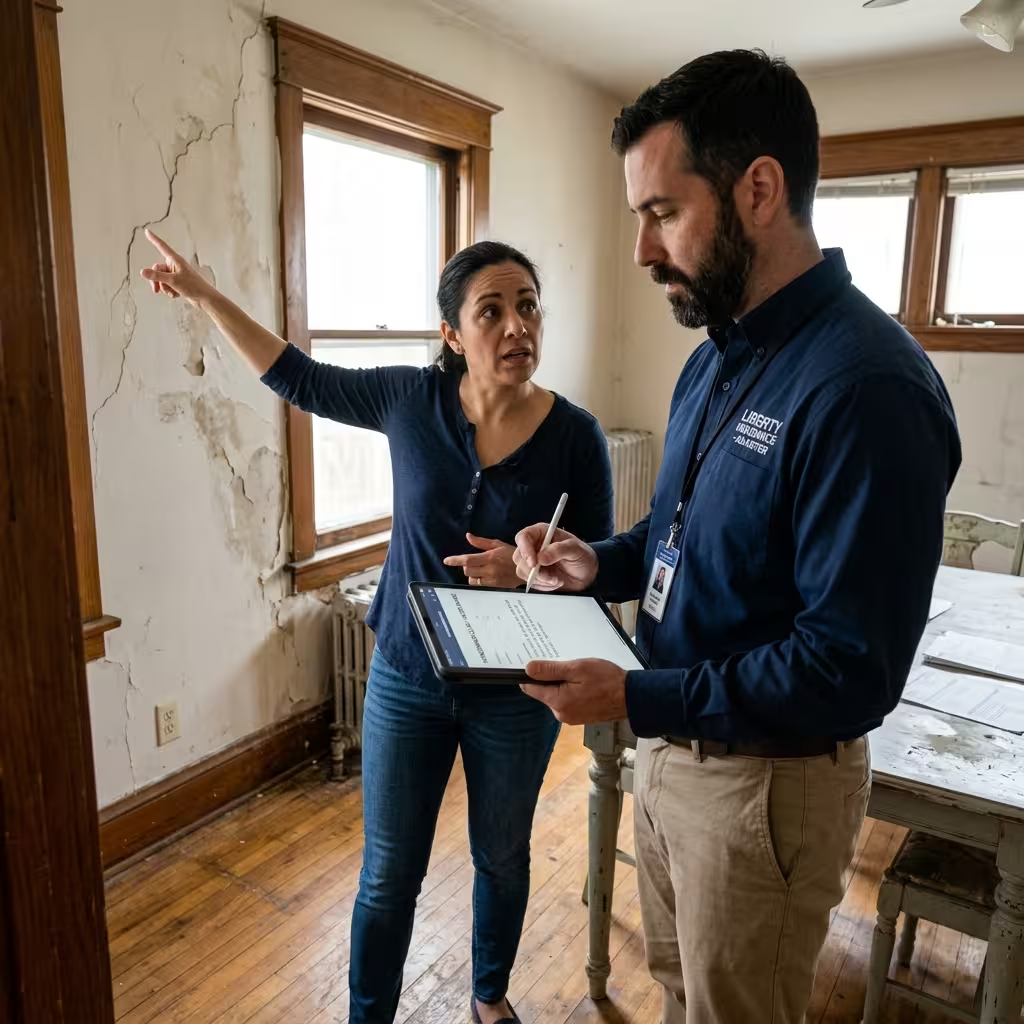
Staff adjuster, independent contractor — either way, they’re on the insurer’s payroll. Not yours. That’s not a character attack on anyone. It’s just the structure of the relationship going in.
Walk the property with them. Ask what they’re writing down. Ask what they’re skipping and why. People assume this comes off as hostile. It doesn’t — or at least it shouldn’t. It’s your claim and your payout.
Estimate comes back low on a big loss? Think hard about a public adjuster. Licensed professionals who represent only you. They work contingency — usually 5% to 12% of whatever they recover, with 10% being the standard. Steep-sounding until you’re staring at a carrier estimate that’s $30,000 short of what the rebuild actually runs.
Worth knowing: if your insurer cycles three or more different adjusters through your file inside six months, they’re required to give you a named point of contact and a written summary of all decisions made on the claim. If that’s happening and no one’s offered this, ask for it in writing.
The Proof of Loss Form — This Is What Bit Diane
Formal sworn statement. Your official account of what was lost, what it was worth, how it happened. Most policies require it within 60 days of the loss.
Miss that deadline — or never file it at all — and the insurer can reject the entire claim even if the damage is 100% real and covered. That’s what happened to Diane. Nobody told her the form existed until the denial letter arrived.
California during a declared state of emergency: law bumps that deadline to 100 days minimum, with three-month extensions available for legitimate reasons like contractor unavailability or no access to the property. Everywhere else, the 60-day clock starts the day the damage happened. Track it.

How the Money Gets Calculated
First check: Actual Cash Value. Replacement cost minus depreciation. Older roof, lower payout. That’s standard and expected.
If you’ve got replacement cost coverage — go check right now whether you do — the insurer holds back the depreciation amount initially. That’s the depreciation holdback. They release it after you finish the repairs and send proof. Invoices. Not estimates. Actual completed-work receipts.
Genuinely shocking number of homeowners finish the job and never go back to claim it. They just leave money on the table because no one told them they had to ask. Don’t do that.
California total loss: insurers must offer at least a 60% advance on personal property limits — up to $350,000 — without requiring a full itemized inventory upfront. You still do the full inventory later to collect the remaining 40%, but the advance is cash in hand when you’ve just lost everything and can’t think straight.
California disaster zones also get 36 months to collect full replacement cost payments. Permits take forever. Contractors are buried after major disasters. That window means you’re not forced into a rushed rebuild just to beat a payment deadline.
Homeowners Insurance Claim Checklist
Track your claim milestones in real-time to ensure full payout protection.
0% CompletedPhase 1: Immediate Safety & Mitigation
Phase 2: Independent Evaluation & Filing
Phase 3: Adjuster Meetings & Payout Rules
How Long This Actually Takes
Simple stuff — busted window, small roof section — two to three weeks. J.D. Power’s 2026 data puts average repair cycle time at 29.6 days. That number keeps dropping because carriers can now run AI-assisted estimates directly off submitted photos instead of scheduling in-person visits. So use the app. Day one. It genuinely moves faster.
Total losses and coverage disputes? Months. Sometimes a lot of months. The documentation you locked down in the first 48 hours is what determines whether those disputes are resolved quickly or drag.
Maximizing Coverage D: The “Like-Kind and Quality” Living Expense Rule
If a major house fire, severe storm, or widespread water disaster forces you out of your home while repairs are underway, your policy’s Additional Living Expenses (ALE) coverage—also known as Coverage D: Loss of Use—kicks in to cover your temporary living costs.
Most homeowners guides brush past this coverage with a brief mention that “it pays for hotels and restaurant meals.” However, if you are displaced from your home for three to twelve months while it undergoes major structural rebuilding, a cramped hotel room will quickly wear on your family’s well-being.
To advocate for yourself effectively during a long-term relocation, you must understand your right to “Like-Kind and Quality” housing.
Your Consumer Rights Under ALE
Your insurance carrier cannot force you into a lower standard of living to save themselves money. If you were displaced from a 2,500-square-foot, 4-bedroom suburban home with a fenced backyard for your dogs, you are legally entitled to rent a temporary home that matches those exact baseline metrics.
The Professional Playbook Approach: Do not waste your time searching standard consumer rental websites or trying to book months of Airbnb stays yourself. Instead, tell your insurance adjuster: “Please assign my loss of use file to a corporate relocation agency.”
Insurance companies partner with specialized national relocation firms (such as ALE Solutions, CRS Temporary Housing, or Housing HQ). These corporate housing agencies maintain databases of short-term fully furnished single-family rental homes. They will match your family’s exact geographic footprint, school district, and pet requirements, and they will arrange to bill your insurance company’s ALE department directly. This keeps thousands of dollars of temporary rental fees off your personal credit cards.

Getting Dropped After a Claim — Real Talk
One claim usually doesn’t do it. Filing a claim and losing your policy the same year is rare but not impossible.
Multiple claims in a short window — different story. Certain claim types that signal ongoing risk — also different story.
California during a declared state of emergency: carriers are legally barred from canceling or non-renewing policies in or adjacent to the fire perimeter for one full year after the declaration. That protection was written specifically because insurers were quietly non-renewing wildfire-area policyholders right after disasters.
Outside that: yes, insurers in most states can decline to renew after a claim. They typically need to provide proper notice. They won’t always do it — but it’s a real enough possibility that some homeowners with small damage amounts run the math and just pay out of pocket. Whether that makes sense depends on your deductible, your history, and what your insurer’s track record looks like.
If you’re a renter filing a claim on an HO-4 policy, the process is similar but the coverage limits differ. See how renters insurance claim process works and what renters can actually recover.
People Also Ask – PAA’s
How long does a homeowners insurance claim take?
Minor stuff — two to three weeks if you go digital fast. J.D. Power 2026 average is 29.6 days. Photo submission through the carrier’s app triggers AI estimates immediately instead of waiting for a scheduled visit. Total losses and disputed claims — budget months.
What should I never say to a home insurance adjuster?
Anything uncertain. Specifically: don’t guess at repair costs, don’t speculate about pre-existing conditions on the damaged area, don’t volunteer information you can’t back up with documentation. “I think this might have been going on for a while” is the kind of offhand comment that ends up in a denial letter. Say what you know. Stop there.
Can I be dropped after filing a homeowners insurance claim?
One claim, probably not. Multiple claims, maybe. California disaster non-renewal protections are real and strong. Everywhere else — insurers generally can non-renew with proper notice, it’s not automatic, but it happens. If your repair cost is close to your deductible anyway, run the math before filing.
What is the depreciation holdback?
ACV payout first — replacement cost minus depreciation. The withheld difference is the holdback. Complete the repairs. Send actual invoices proving the work is done. Ask the insurer to release it. A lot of people never do this last step. That’s real money left uncollected.
What’s the proof of loss form?
Formal sworn statement — what was damaged, what it was worth, what happened. Due within 60 days under most policies. Late or missing filing = grounds for full claim denial. California disaster declarations push this to 100 days minimum. Clock starts on the date of loss, not the date you filed.
What is subrogation?
Your insurer pays your claim, then goes after whoever caused the damage to recover their costs. Neighbor’s dead tree takes out your fence — you get paid, insurer pursues the neighbor. Your job: cooperate, and don’t sign any liability release for the at-fault party before talking to your insurer first. Accidentally sign away their subrogation rights and it can come back on your coverage. One call before signing anything. That’s all it takes.
What Happened to Diane Now, When She knows how to file a Homeowners Insurance Claim — the Second Time
Two years later a worse storm hit.
She had a video inventory in iCloud. Photographed everything before touching a piece of debris. Called her insurer that evening. Kept the damaged materials until the adjuster left. Filed the proof of loss form 11 days in. Walked the scope of loss line by line with the adjuster before he got in his truck.
Settlement: $18,400. Depreciation holdback collected four weeks after the repairs were done.
Still stressful. No version of a major claim isn’t. But she came out whole.
The homeowners insurance claim process was designed to protect the insurer, not make things easy for you. Documentation, deadlines, sworn statements. The people who walk out with a full check aren’t the ones who got a sympathetic adjuster. They’re the ones who had the photos, met the deadlines, and didn’t throw anything in a dumpster before the inspection.
Home inventory. Tonight.
About the Author Written by a financial content team covering personal insurance, residential property claims, and US consumer protection. Research draws from the J.D. Power 2026 U.S. Property Claims Satisfaction Study, California Department of Insurance regulatory filings, the Insurance Information Institute, and claims data from AM Best and Verisk Analytics.
Disclaimer: Coverage terms, claim timelines, and state regulations described here reflect publicly available information as of April 2026. Products vary by state and carrier. Consult a licensed insurance professional before making coverage decisions.