

Margaret didn’t think twice when she filed her claim. A Waikato storm had flattened her back fence — timber palings scattered across the lawn, the boundary line between her property and her neighbor’s exposed for the first time in twenty years. Surely the insurance would sort it. Her policy was up to date. Her premiums never missed.
What she got back was a settlement cheque based on the depreciated value of a rotting old fence — not the cost of a new one. Her neighbor refused to contribute. And not a single person along the way had told her how any of it actually worked.
That’s the gap this guide is here to fill.
Most insurance content circulating in New Zealand is either recycled from Australian templates or written by people who’ve never driven Crown Range Road in July or tried to explain the Fencing Act 1978 to a neighbor who doesn’t want to hear it. Our legal landscape is specific. Our geography is unforgiving. And the Privacy Act 2020 fundamentally changed what local businesses owe their clients when something goes wrong with their data.
Generic advice doesn’t cut it here. This does.
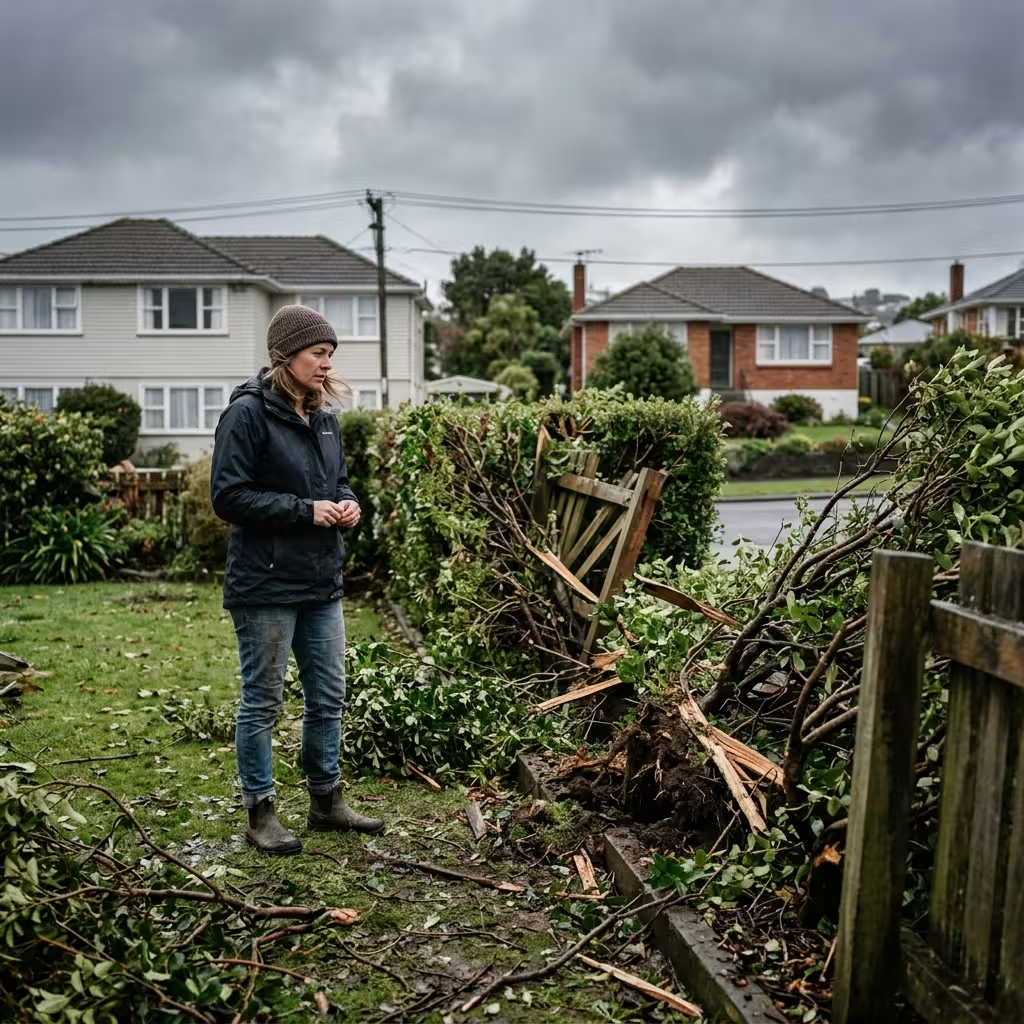
NZ Fencing Act Neighbor Disputes & Property Boundaries
Here’s what most people think happens when a fence needs replacing: you ask your neighbor to chip in, they agree, you split it, done. That version exists — but only when both parties already get along and no money is at stake.
The moment a fence costs serious money, the dynamic shifts. And without the right legal process, you have no enforceable claim.
The Fencing Act 1978 is the framework that governs boundary fencing across New Zealand. Under it, adjoining occupiers — meaning the owners or long-term occupants on each side of a boundary — share the cost of constructing or repairing an “adequate fence.” In most residential situations, that split is 50/50.
“Adequate” doesn’t mean premium. It means reasonable and fit for purpose given the location and land use. A rural lifestyle block requires functional stock fencing. A suburban boundary in Auckland or Hamilton typically calls for something more solid. If you and your neighbor can’t agree on the spec, the District Court can make that determination for you.
Most NZ fencing act neighbor disputes don’t start as legal battles — they start as conversations that go nowhere. The Fencing Act gives you a structured process to get past that.
The 21-day Fencing Notice is where it becomes legally binding.
Before any fence replacement begins, you must serve a formal written notice on your neighbor. That notice needs to include:
- A description of the proposed fence type and materials
- An estimated cost
- The share you’re asking them to pay
- A clear response window — the statutory period is 21 days
If they don’t respond within that window, you can proceed with the work and recover their share through the Disputes Tribunal. If they object, you have a formal process for mediation or escalation. What you can’t do is complete the work first and then ask for money — that significantly weakens your position.
Don’t assume goodwill will hold when a bill arrives. Serve the notice first. It costs you nothing and protects everything.

Home Insurance Fence Storm Damage: Replacement vs Indemnity Value
Back to Margaret’s situation — because this is where the real sting lives.
When a storm causes home insurance fence storm damage, most homeowners expect their insurer to cover a new fence. Some policies do. Many settle at something called indemnity value, and that distinction matters enormously.
- Replacement value covers what it costs to build a comparable fence today, at today’s prices.
- Indemnity value covers the depreciated worth of the fence that was damaged — meaning its age, condition, and remaining useful life are factored in.
If your fence was a twenty-year-old timber paling showing its age, an indemnity settlement might pay out $600 toward a job that actually costs $3,800. The gap comes out of your pocket.
The uncomfortable truth: most standard home insurance policies in New Zealand cover fences at indemnity value, even when the dwelling itself is insured at full replacement cost. The inconsistency is baked into the product, and most people don’t catch it until a claim is already in progress.
Three things worth checking on your current policy right now:
- Does it cover boundary fences at all? Some policies exclude shared fences entirely — particularly if joint ownership with a neighbor is implied.
- Is there a cap? Many policies limit fence claims to $1,000 or $2,000 regardless of actual repair costs.
- Does it specify replacement or indemnity? If the policy wording is unclear, call and ask directly.
The fencing act 1978 rules give you a path to recover your neighbor’s share — but only if you’ve followed the correct notice process before the work starts. Insurance covers your half, the Act helps you recover theirs. Neither system works well if you skip the process.
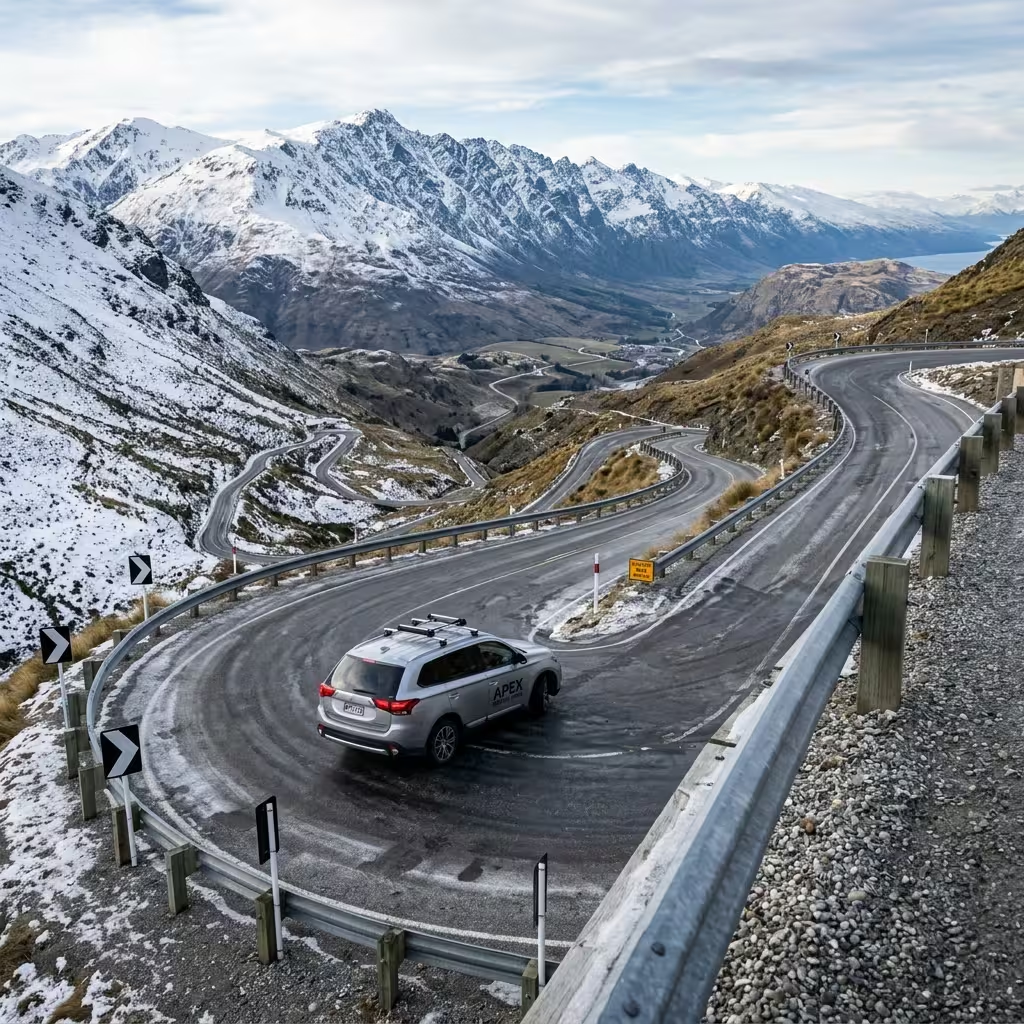
Queenstown Rental Car Insurance & Southern Alps Driving Pitfalls
Nobody rents a car in Queenstown expecting to file a claim. The scenery is breathtaking, the freedom is part of the appeal, and the roads look manageable on a map.
Then you hit Crown Range Road in July.
The Crown Range is the highest sealed main road in New Zealand — a series of steep switchbacks and exposed ridgelines connecting Wanaka to Queenstown. In winter, black ice forms fast. Afternoon cloud can roll off the Remarkables within an hour and drop the road surface temperature well below freezing while the air still feels manageable. There are no guardrails on significant stretches. The vertical drops are real.
Lindis Pass, on the Cromwell to Omarama corridor, carries similar risk. Rapid temperature swings, limited infrastructure, and sections that transition from sealed road to gravel shoulder without any clear warning. It’s a stunning drive. It’s also exactly the kind of environment where a single misjudgment turns a dream road trip into a credit card emergency.
Queenstown rental car insurance is sold confidently at the counter. Reading what it actually covers takes longer than the sales pitch.
Two facts worth knowing before you drive off the lot:
First: Unsealed surfaces often void your cover entirely. Most rental agreements include a clause — usually buried in the terms — that removes all cover, including any excess reduction product you’ve paid for, the moment the vehicle sustains undercarriage damage on an unsealed road or gravel shoulder. Hit a rock at the wrong angle, and you’re personally liable for the full repair bill regardless of what you paid for at pickup.
Second: Gravel chip damage to windscreens is usually covered under excess waiver products. Damage to the fuel tank, exhaust, or suspension is usually not. That distinction isn’t highlighted in the brochure.
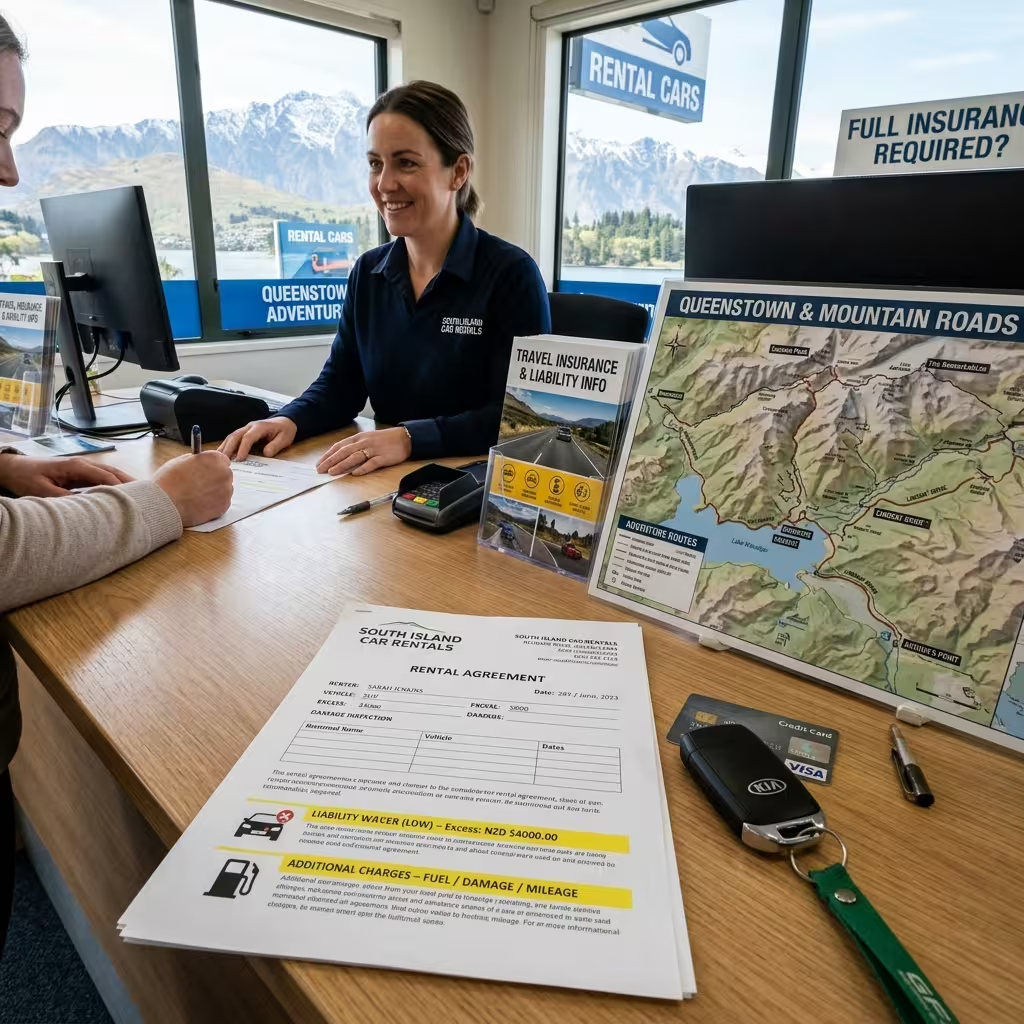
Deconstructing the New Zealand Rental Car Excess Matrix
The new zealand rental car excess structure is more layered than a single figure on the rental agreement. Here’s an honest breakdown.
Base excess: The amount you’re liable for in any standard covered claim. For most vehicles in the Queenstown market, this sits between $3,000 and $5,500. Premium and larger vehicles run higher.
Excess reduction or waiver products: A daily fee — typically $25 to $50 — that reduces your liability to zero or a nominal amount in covered claims. These are sold by the rental company, not an insurer. They are not insurance. They are contractual waivers with their own exclusion lists.
Single-vehicle accident excess: This is the clause that catches the most people off guard. If you’re involved in an incident without another vehicle — sliding on ice, clipping a barrier, leaving the sealed surface — many rental agreements automatically double the standard base excess. A $4,500 base excess becomes a $9,000 charge held on your credit card while the assessment is completed. That’s the single vehicle accident excess clause in operation, and it’s standard across most major rental chains operating in New Zealand.
Undercarriage and gravel chip exclusions sit outside both the base excess and any waiver product. Windscreen chips: usually covered. Fuel tank damage from a raised road edge: almost always excluded. Full stop.
Practical steps before you leave the forecourt:
- Ask explicitly whether you’re covered on gravel roads and gravel shoulders
- Ask what happens to your excess in a single-vehicle incident
- Look into travel insurance with a rental vehicle excess component before you travel — it’s often broader and cheaper than the on-site waiver

Cyber Liability Insurance Loopholes NZ Small Businesses Overlook
A Wellington firm discovered last year that a phishing email had exposed years of client financial records. They had professional indemnity cover. They had a solid business insurance package. What they didn’t have was standalone cyber liability insurance — and every dollar of the forensic investigation, legal notification, and regulatory response came out of their own pocket.
This is not an unusual story.
The Privacy Act 2020 changed the ground rules for how New Zealand businesses handle data. Under the Act, if your business experiences a privacy breach that has caused — or is likely to cause — serious harm to the individuals affected, you have a legal obligation to notify both the Privacy Commissioner and the affected people. That reporting must happen as soon as reasonably practicable after becoming aware of the breach.
Serious harm is assessed by looking at the sensitivity of the information involved, the number of people affected, and the realistic risk of misuse. In practice, any breach involving financial records, health information, government identifiers, or login credentials will typically meet the threshold.
Here’s the gap most small business owners don’t see until it’s too late: standard commercial general liability policies and business owners packages were not designed to cover cyber events. They cover physical damage and bodily injury. A ransomware attack, a data breach, a regulatory notification requirement — none of these trigger a standard commercial liability policy.
Cyber liability insurance loopholes nz businesses fall into are often not loopholes at all. They’re simply gaps between what business owners assume is covered and what the policy actually says.

Custom Software Development Risks NZ Startups Face Under the Privacy Act
If your business builds custom software — internal platforms, client portals, APIs that process personal data — the exposure is sharper still.
Custom software development risks nz startups often underestimate because the vulnerability isn’t always external. It’s frequently in the code itself. Insurers investigating a breach will look at whether adequate security controls were in place at the time. If your developer left an API endpoint unsecured, used hardcoded credentials, or failed to patch against a known vulnerability, the insurer may decline the claim entirely — arguing the breach was foreseeable and preventable.
Common code-layer risks that create uninsured exposure:
- Hardcoded credentials or unencrypted data at rest
- Unaudited open-source components with known security vulnerabilities
- Inadequate access controls — former staff still holding system access months after leaving
- Missing input validation that leaves databases open to injection attacks
First-party costs — forensic investigation, breach notification, credit monitoring for affected users — can easily reach six figures for a mid-sized business. Third-party liability, where affected individuals or the Privacy Commissioner pursue formal action, adds a separate layer of exposure.
What to look for in a standalone cyber policy for privacy act 2020 nz compliance purposes:
- Forensic investigation and incident response costs
- Legal fees related to regulatory notification
- Third-party liability for data subjects affected by a breach
- Business interruption if systems are taken offline during response
A standard business package won’t cover these. A dedicated cyber policy usually will — provided your security baseline meets the insurer’s requirements at the time of inception.
People Also Ask – PAA
Does home insurance cover a fallen fence nz?
It depends on your policy wording and the cause of the damage — storm damage is typically covered, but many standard policies settle fence claims at indemnity value rather than full replacement cost. That means you may receive far less than the actual repair bill, particularly if the fence was already aging. Always confirm whether your policy covers shared boundary fences and whether the settlement basis is replacement or indemnity before you need to claim.
Is crown range road covered by rental insurance?
Crown Range Road is a sealed road, so standard rental cover generally applies for incidents on the main carriageway — but that protection can disappear quickly if your vehicle sustains damage on an unsealed surface or gravel shoulder nearby. Most rental agreements void undercarriage cover the moment the vehicle leaves sealed road, and many contracts apply a doubled single-vehicle accident excess on alpine and exposed routes. Read the exclusion clauses carefully before you drive, not after an incident has already occurred.
Who is liable if a developer causes a data breach?
Under the Privacy Act 2020, the business that holds and processes the personal data is the primary responsible party for reporting and remediation — not the contractor or developer who built the system. If the development contract didn’t include clear security obligations, recovering costs from the developer is legally difficult and slow. That’s why businesses handling personal data need standalone cyber liability coverage that specifically addresses custom software vulnerabilities and regulatory notification costs.
My Honest Take
None of these risks are hidden. They’re just written in policy documents most people never read until something has already gone wrong.
The Fencing Act 1978 gives you a legal path through neighbor disputes — but only if you follow the process before the work starts, not after. Rental cover in Queenstown looks comprehensive at the counter; it rarely is on the road. And the Privacy Act 2020 created compliance obligations that most standard business policies were never designed to meet.
Check your policies now. Ask specific questions about exclusions, settlement bases, and coverage limits. If your broker can’t answer plainly, that’s telling you something too.