
Quick note: I’m sharing general info regarding cheap car insurance for young drivers, not licensed insurance advice. Rates vary by state and driver profile — always pull your own quotes.
Let me tell you about the worst Tuesday of my cousin’s life.
She called me right after it happened. Her son Jake — 17, clean record, honor roll — had just gotten his first insurance quote. $6,054. Annual. Her exact words were something I can’t print here, but the general theme was disbelief.
Two weeks later, after I walked her through a few things? Different carrier. Same Jake. Same beat-up Civic on the same street. $1,090 a year.
She asked me why nobody tells you this stuff. Honestly, I don’t know. But that’s what this whole piece is about — the stuff nobody tells you.

Why Your Teen’s Rate Is Basically a Punishment for Being Alive
Okay, not literally. But kind of.
Here’s the cold reality. Drivers between 16 and 19 crash at three times the rate of drivers 20 and up. Three times. Insurers have been tracking this data for sixty years. They’re not being dramatic about it — they’re being actuarial.
But 2026 threw extra fuel on the fire.
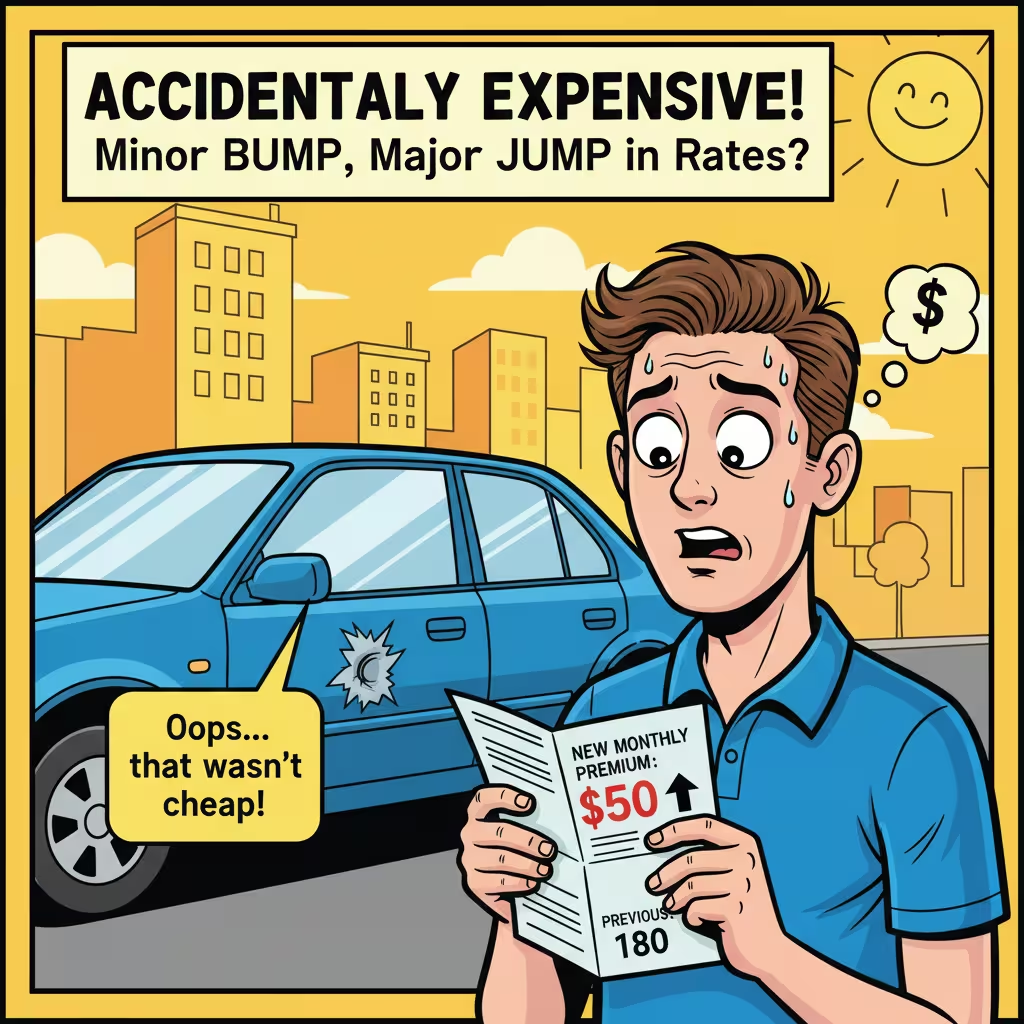
That fender bender your kid had in a parking lot? The bumper he barely kissed? There’s a radar sensor behind that bumper. It runs the car’s collision-warning system. After any kind of impact — even a slow one — a certified tech has to pull it out, test it on a bench, and recalibrate it from scratch. That used to cost around $800. Now shops are charging $4,000, sometimes $4,500, depending on the make.
And shop labor — God, shop labor. Parts of California are now paying techs $18, $20 an hour. Denver hit $19.29 minimum. That’s not a rounding issue. Every extra dollar on that hourly rate ends up in your repair estimate. Your repair estimate feeds the claim. The claim feeds next year’s premium. It’s a chain and it doesn’t stop.
There’s a legal side too. Courts have been slamming insurance companies with what the industry calls “nuclear verdicts” — jury awards above $10 million designed to punish corporations. Every carrier bakes that liability risk into the price of your policy before you even see it.
So when I say teen rates hit a national average of $6,054 in late 2025 — up 17% in a single year — I’m not trying to scare you. That’s just the floor right now.
But floors aren’t ceilings. And that’s the whole point.

Who’s Actually Offering Cheap Car Insurance for Young Drivers — and Why
Not every carrier prices teens the same way. Some just see “16-year-old” and charge whatever the actuarial table spits out. Others have deliberately built products to reward safe behavior regardless of birthday.
Here’s who’s doing it right in 2026.
COUNTRY Financial — around $86 a month for teens. I know. It sounds wrong. It’s real. They operate regionally, which means they’re pricing your specific county and your specific driver profile instead of averaging across the entire country. The downside is they’re not everywhere. Check their coverage map before you get excited.
USAA — roughly $132 a month. Military families only, no exceptions. If your family qualifies, this should be your first call. Not your second. Your first.
Auto-Owners — around $151. This one gets overlooked constantly and I’ll never understand why. They hold AM Best’s A++ rating — the top grade in the industry. Their renewal rate sits at 92%. Agents here actually hunt for discounts. The website won’t find everything. A real human on the phone usually will.
State Farm — about $155. Huge network. The Steer Clear program for under-25 drivers is genuinely useful, and I’ll get into that in a minute.
Root Insurance — around $174. Completely different model. Root doesn’t care how old you are when they set your initial rate — they care how you drive. You download the app, drive normally for a few weeks, and they price you on your actual behavior. Hard stops, late-night miles, sharp turns — all of it goes into the calculation. For a careful teen driver, Root can beat every carrier above it.
The Thing Most Parents Don’t Know Exists
If I had to pick one move that saves the most money for the most families — this is it.
Adding your teen to your existing household policy costs around $3,824 per year extra, on average. Giving that same teen their own standalone policy for the same car? Usually clears $5,000.
That’s over a thousand dollars going nowhere. Every year. Just because no one explained that teens don’t need their own policy when they live in your house.
Here’s how to actually do this right. Don’t just call and say “add my kid.” Say this: “I want to add my teen driver to our policy, and I want you to walk me through every discount that applies to this situation.”
Word it exactly like that. Agents process these requests all day. They won’t always volunteer the savings. You have to ask for the walkthrough.

Telematics — Honestly the Smartest Move a Young Driver Can Make
I’ve been banging on about this for years and not enough people listen.
Regular underwriting prices you based on who you look like on paper — your age, your zip code, sometimes your credit score, your gender in states where that’s still legal. None of it is actually you. It’s a statistical average of everyone who matches your demographic. That’s the whole unfair part.
Telematics blows that up. It prices you on what you actually do.
State Farm’s Steer Clear is the one I point families to first. It was built for drivers under 25, and here’s the part most people miss — the rate only moves in one direction. Good data drops your premium. Sketchy data doesn’t spike it back up. There are also educational modules buried inside the program that kick out their own separate discounts when you actually finish them. Most people ignore those. Don’t.
Nationwide’s SmartRide is where the real money is if your kid drives like a normal careful person. Up to 40% off. On a $4,000 annual premium that’s $1,600 back in your pocket. I don’t know why more families aren’t sprinting toward this.
Progressive Snapshot — the plug-in version — matters because not every teen is driving a 2023 with built-in connectivity. Older cars can participate too. That’s often overlooked.
RightTrack from Liberty Mutual runs 90 days and then it’s done. Discount locked. No ongoing monitoring. If your teen drives clean for three months, that’s the rate they keep.
Nine out of ten young drivers in 2026 surveys said usage-based pricing feels fair to them. More than credit scores, more than gender, more than any other factor insurers use. And honestly — they’re right. It’s the only method that actually sees you.

Pick the Wrong Car and Lose Before You Start
Most families figure out the car situation and then think about insurance. That’s backwards. Completely backwards.
The car itself moves your premium by 30% or more. Compact crossover SUVs dominate the affordable-to-insure list right now because they have strong safety scores, high parts availability, and years of clean claims data that insurers actually trust.
The Buick Envista lands somewhere around $161 a month. Sticker in the low $20Ks, parts come from everywhere on the planet, loss ratios are quietly excellent. Honda CR-V matches it almost exactly — IIHS Top Safety Pick, repair data going back what feels like forever, parts at literally every auto shop in the country. Subaru Outback and the VW Taos are both hovering around $163. Forester rounds it out.
What consistently surprises people: that $7,500 used sedan might cost more to insure than one of these newer crossovers. Old cars without safety tech don’t qualify for modern safety discounts. When they break, parts are getting scarce and expensive. The “old car equals cheap insurance” idea stopped holding up around 2022 and nobody really updated the conventional wisdom on it.
EVs — look, I understand the appeal for a first car. But premiums run higher, full stop. Battery repairs need specialists. Replacement costs are steep. If you’re going EV, have a conversation specifically about battery protection coverage before anyone signs anything.
Two Discounts Nobody Uses
The good student discount. It’s sitting there at basically every major carrier and people walk right past it. B average — that’s a 3.0 — and you’re looking at 8 to 15% off. You submit a transcript once a year. Five minutes of your life. I’ve talked to parents who didn’t know this existed for two full years of paying full rates. Two years.
Driver training is the other one. Finish a certified driver ed course and tell your insurer about it. State Farm and Auto-Owners both apply the discount in year one — the year when rates are at their absolute worst. That’s exactly when you need every bit of leverage you’ve got.
Run both of those alongside telematics and the household policy add-on and you’ve got four things pulling the rate down simultaneously. Not sequentially. At the same time. The combined effect is the part that actually makes teen insurance survivable.
The Numbers by Age, If You Want Them
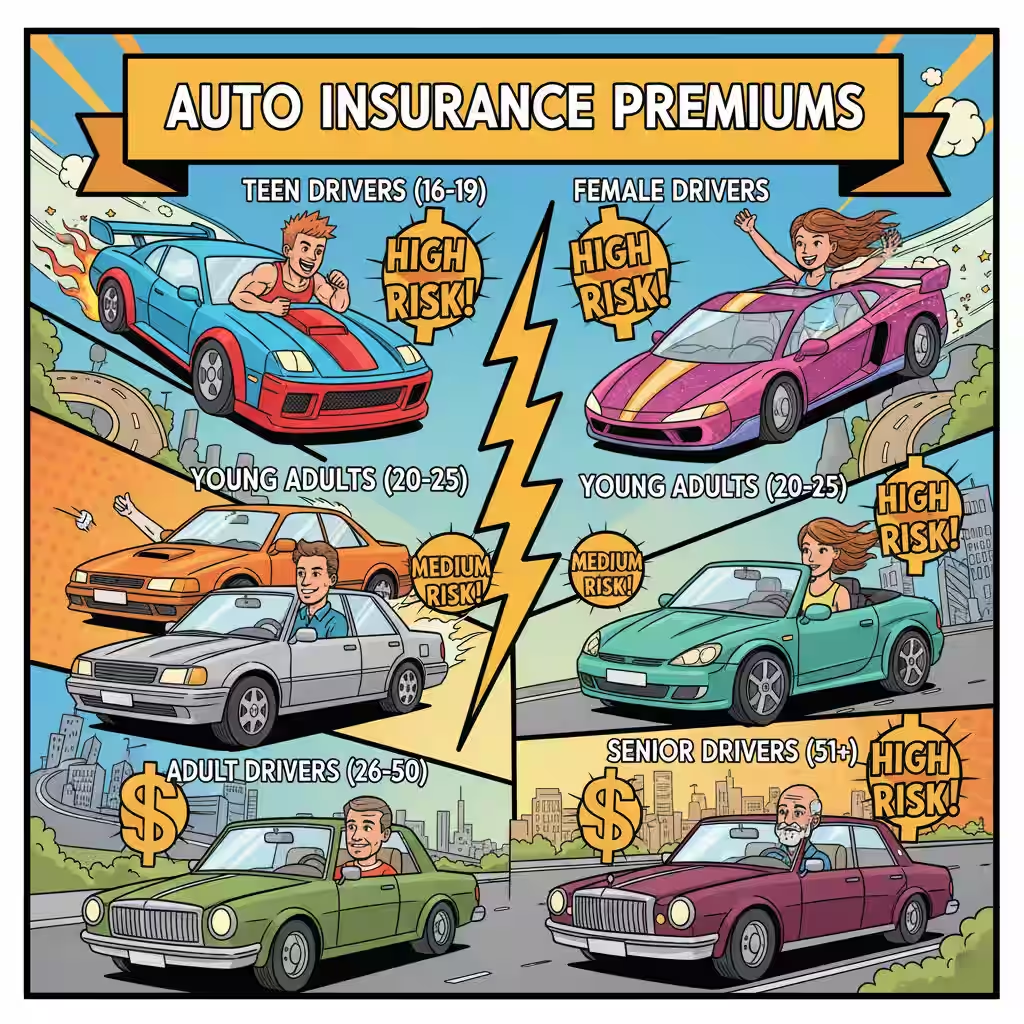
Here’s what the actual rate table looks like in 2026. Sixteen-year-old males — $7,530 a year nationally. Girls the same age — $6,742. At 18 those numbers slide to $5,533 and $4,943. Hit 21 and you’re suddenly looking at $3,226 and $2,953. By 25 it finally starts feeling sane — $2,291 for guys, $2,219 for women.
Gender-based pricing is flat-out banned in California, Hawaii, Massachusetts, Maine, Michigan, Montana, North Carolina, and Pennsylvania. Carriers in those states shift their focus to telematics and credit history instead to tell drivers apart. Which means if you’re in one of those states, the driving program angle matters even more. Not less.
The drop from 18 to 25 is steep and it’s real. But waiting it out isn’t the only option. Every move I’ve laid out here chips at that number right now, not seven years from now.
When Liability-Only Is Fine (And When It’s a Mistake)
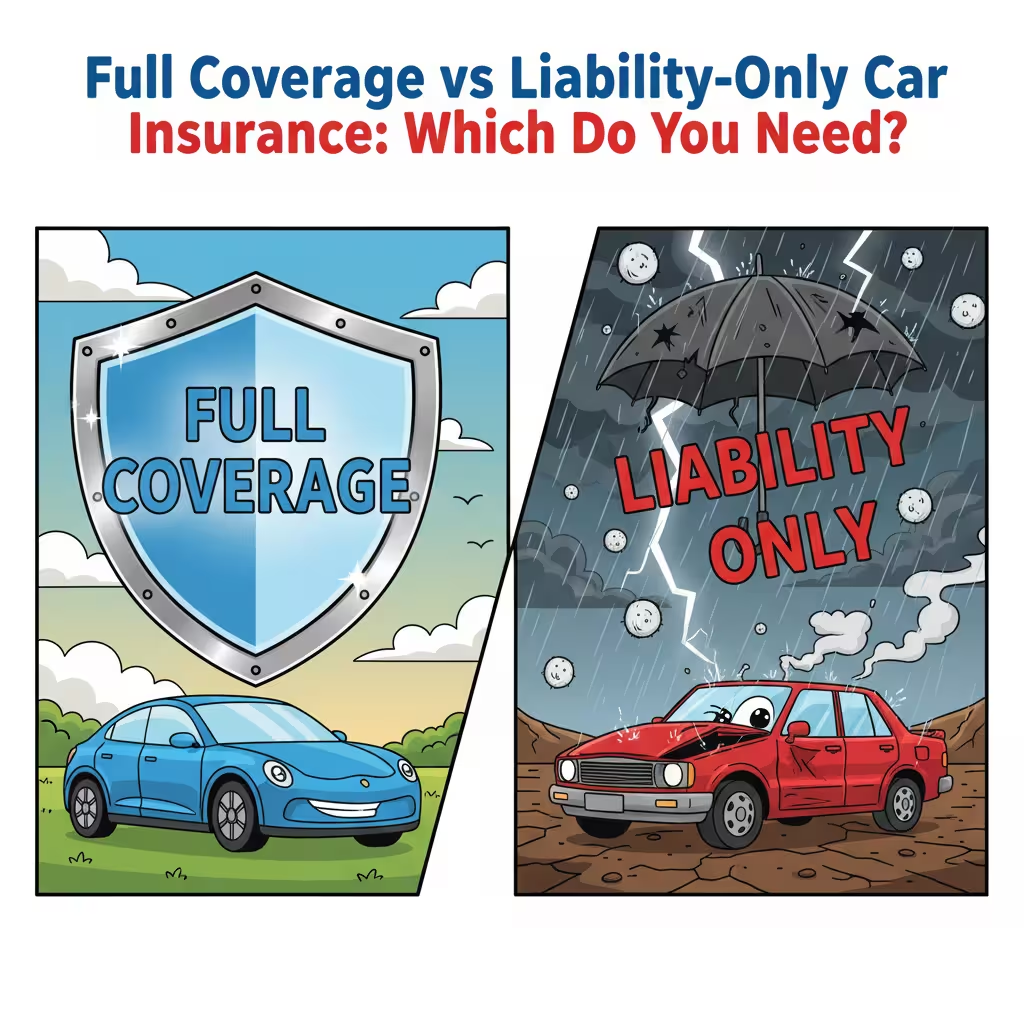
If the car is worth less than around $5,000 to $6,000, full coverage might literally cost more per year than the vehicle is worth. In that case, liability-only keeps your teen legal and covers damage they cause to someone else’s property. Auto-Owners leads on liability-only pricing — somewhere around $52 a month.
But if the car is newer, has ADAS systems, any kind of hybrid setup, or an EV battery? Don’t drop comprehensive. One hailstorm. One theft. One battery issue. The out-of-pocket cost wipes out years of premium savings in a single shot.
What Happened With Jake
They added him to the household policy. Dropped the standalone quote entirely. Picked a Honda CR-V instead of the old Camry they’d been looking at. Enrolled him in Steer Clear. Submitted his GPA paperwork for the good student discount.
Final annual rate: $1,090.
No magic. No special connections. Just the checklist.
Stuff People Keep Asking Me
What is actually the cheapest car insurance for young drivers right now? COUNTRY Financial — around $86 a month for teens. Sounds fake. It isn’t. USAA beats them in some markets but that’s military families only, no workarounds.
Does the good student discount actually move the needle? More than people expect. Eight to fifteen percent off at most major carriers just for keeping a 3.0. You mail in a transcript once a year. That’s it. I genuinely don’t understand why more families skip this.
Own policy or parents’ policy for a teen? Parents’ policy. Almost always. The savings are usually over a grand a year. Don’t let anyone talk you into standalone unless there’s a specific reason it makes sense for your situation.
Okay but what actually is telematics? App or plug-in that watches how your teen drives. Not where — how. Braking, speed, cornering, time of day. Safe drivers typically save 20 to 40%. State Farm’s version is specifically set up so it can only lower your rate, not raise it. That matters.
Which cars are cheapest to insure for a young driver in 2026? Buick Envista, Honda CR-V, Subaru Outback, VW Taos. All of them land somewhere under $165 a month. Parts availability and safety ratings are what get them there — not size, not price tag.
When does liability-only actually make sense? When the car’s worth under six grand and you’ve done the math. If full coverage costs you $1,800 a year and the car’s worth $4,000 — yeah, liability-only makes sense. For anything newer or with serious tech inside, don’t gamble it.
Jordan Whitfield has been writing about auto insurance and personal finance for seven years. His focus is on making rate data readable for families who don’t have time to decode insurance jargon on their own.
This post is informational only — not licensed insurance advice. All rates reflect 2025–2026 industry averages and vary significantly by state, driving history, and carrier. Get personalized quotes before making any decisions. Some carriers mentioned may not operate in all states.