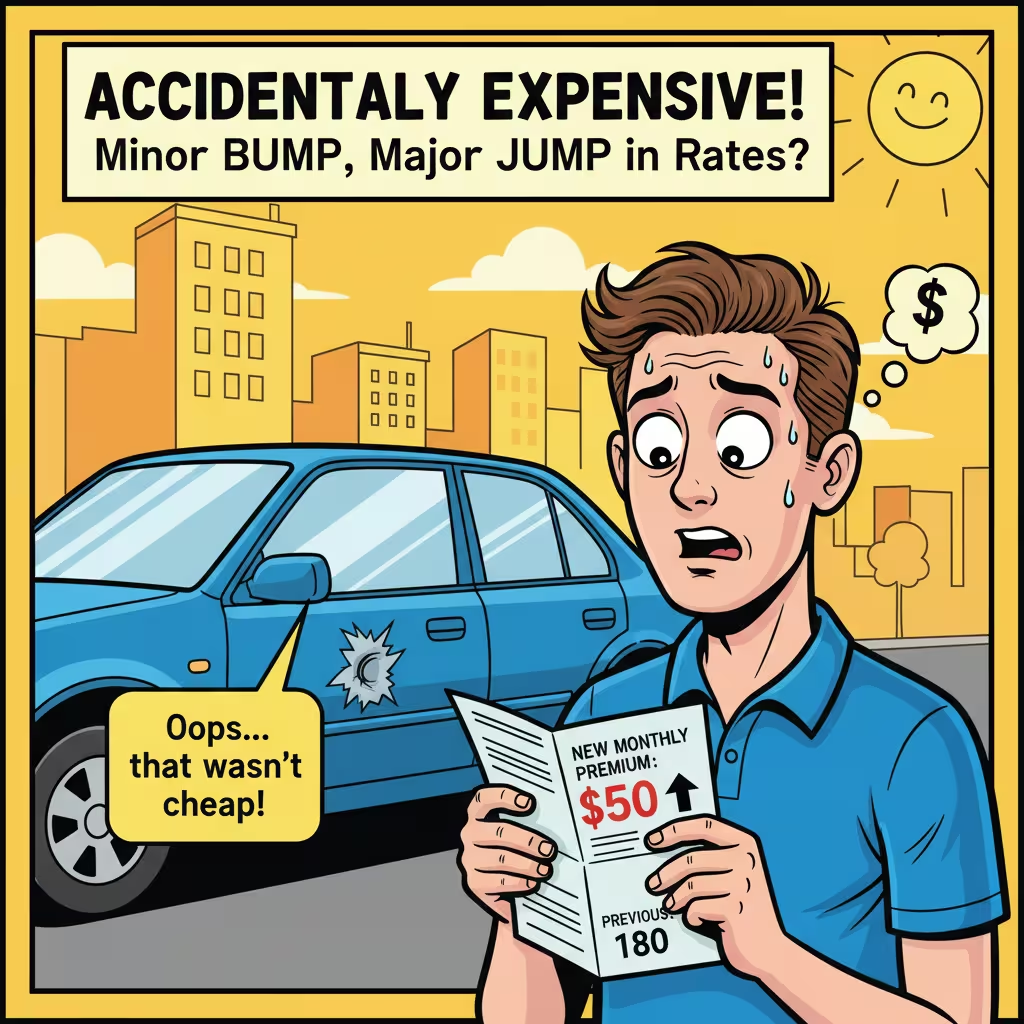
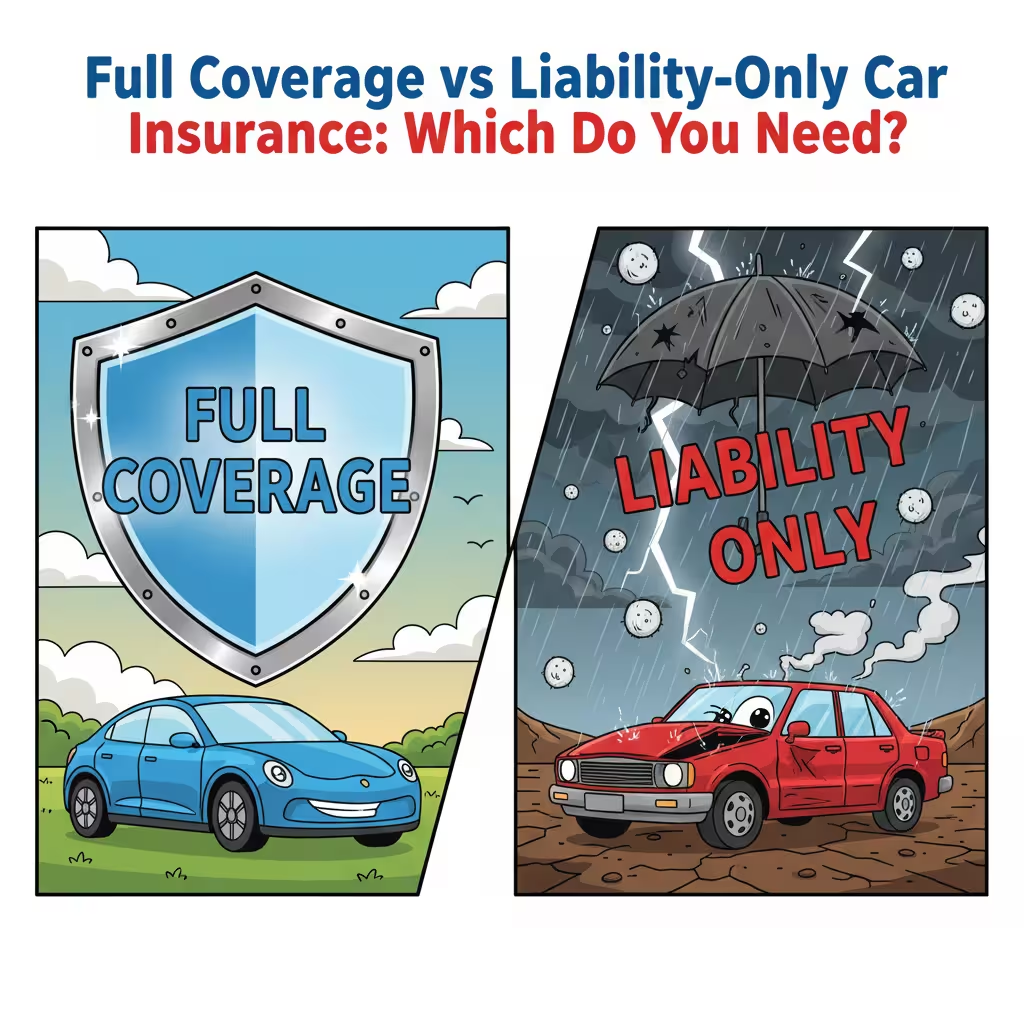
Nobody explains this until after something goes wrong.
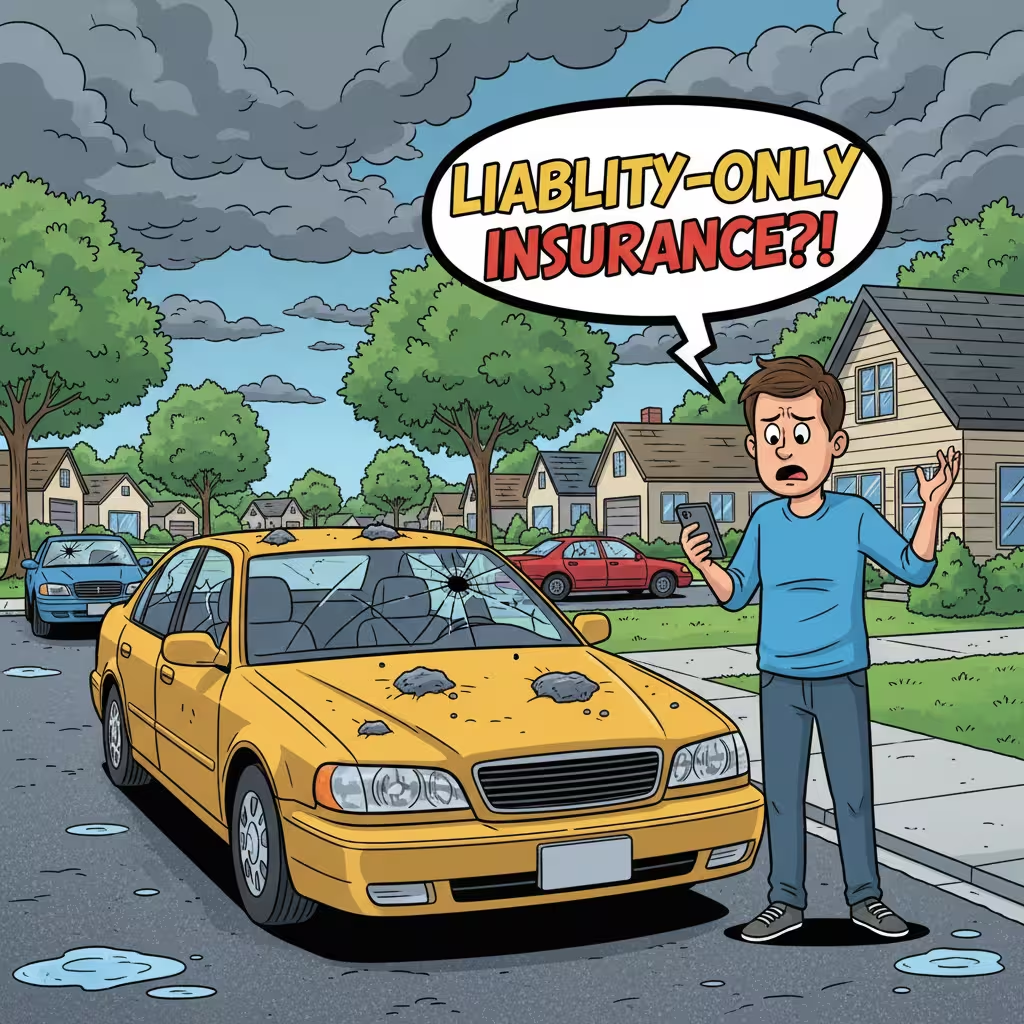
That’s the part that gets me every time. You pay your premium. You feel covered. And then a hailstorm comes through and turns your hood into a waffle iron and your agent says, very politely, very carefully — “well, you only had liability.”
And then you want to throw your phone.
I’ve been there. Not with hail, personally — mine was a stolen catalytic converter off a 2017 Honda Accord parked three feet from a security camera that somehow caught zero usable footage. Liability-only policy. Zero payout. Paid $1,400 out of pocket and spent two weeks getting to work on borrowed time.
Learned that lesson the expensive way. You don’t have to.
Here’s the fastest way I can explain the difference.
Liability insurance covers the damage you do to other people. Their bumper. Their ER visit. Their mailbox if you slide off an icy road into their front yard. The state says you have to carry this. It is the legal floor. Non-negotiable.
It does not cover your car. Not even a little.
Full coverage — and I’ll explain in a second why that phrase is kind of made up — adds two more layers on top of liability. Collision, which pays for damage to your car when you crash into something. And comprehensive, which pays for everything that isn’t a crash. Theft. Hail. Fire. Deer. Flooding. That last one matters more than people think in 2026, after watching hurricanes hit places that have never seen hurricanes before.
Stack those three together — liability, collision, comprehensive — and dealers call it “full coverage.” It’s not one product. It’s a bundle with a nickname.
If You’re Financing, Stop Reading and Go Check Your Policy
Seriously.
Your lender requires full coverage. It’s in your loan agreement. It’s not a suggestion — it’s a condition of the loan, buried in page 7 of the paperwork you signed at the dealership while the finance guy was rushing you through the stack.
The reason is simple and cold: until you pay off that loan, the bank partly owns your car. They’re not leaving their asset unprotected. So collision and comprehensive are mandatory for the entire life of the loan.
Miss a payment on your insurance — let your policy lapse for even a few weeks — and your lender can slap something called force-placed insurance on your account. Force-placed is ugly. It costs more than regular insurance, covers almost nothing useful to you, and protects only the lender’s interest. You pay the bill for coverage that doesn’t actually help you.
Leasing? Same deal. Sometimes stricter. Lease agreements often require higher liability limits on top of the collision and comprehensive requirement.
If you’re still paying off a car, this decision isn’t yours to make. Full coverage. Done.
The Number That Tells You When to Drop It
For everyone who owns their car outright — here’s the math that actually matters.
Grab your car’s current market value. Not what you paid. Not what you owe. What someone would hand you cash for it today. Kelley Blue Book takes about four minutes. Do it.
Got the number? Good.
Now subtract your deductible from it. Take 10% of that result. That’s your threshold number.
If you’re paying more than that threshold annually — just for collision and comprehensive, not the whole policy — dropping to liability is worth serious thought.
Real example. Car’s worth $8,000. Deductible is $1,000. So $8,000 minus $1,000 is $7,000. Ten percent of that is $700. If collision and comprehensive together cost you more than $700 a year — about $58 a month — the math starts leaning toward dropping them. Because the most you’d ever collect on a total loss is $7,000. And you’re paying nearly that in premiums over ten years just for the protection.
But — and I cannot stress this enough — that logic only holds if you have money set aside to replace the car without insurance. If your savings account has $200 in it and your car gets stolen, liability-only just wrecked your commute for six months. The 10% rule is a math rule, not a life rule. Your cash cushion matters as much as the calculation.

Is Full Coverage Worth It on a 10-Year-Old Car?
Honestly? For most people, no.
A 10-year-old car — let’s say a 2015 Nissan Altima with 110,000 miles — is probably worth somewhere between $6,000 and $9,000 depending on condition. Run the 10% rule. Price out your collision and comprehensive specifically on your declarations page. If those two line items together are eating $100 a month, you’re paying $1,200 a year to protect a $7,000 car.
The insurer isn’t going to give you $7,000 either, by the way. They’ll give you ACV — actual cash value — which accounts for depreciation, wear, mileage, market conditions. On a 10-year-old Altima with some miles, that payout might be $5,800. Maybe.
So you’re paying $1,200 a year for a maximum $5,800 payout that requires something bad to actually happen first.
I’ve found that most people keep full coverage on old cars out of anxiety, not arithmetic. The fear of being stranded without a car is real. I get it. But the smarter move is building a $4,000-$5,000 vehicle emergency fund and dropping the collision and comprehensive — because then you’ve got actual cash on hand, not a claim process that takes two weeks and still leaves you driving a rental.

When Full Coverage Is Obviously Worth It
New car. Financed or not.
Anything worth $20,000 or more — full coverage, no debate. A total loss without collision is a life-altering financial hit. The premium is worth it.
Car worth $12,000-$18,000 — probably still worth full coverage, especially if you don’t have a strong cash safety net.
Car worth under $6,000 — run the numbers. Liability-only might genuinely be the smarter call.
And if you live somewhere that sees real weather — hail in Texas, tornadoes in Oklahoma, flooding in Louisiana, that surprise hurricane that hit Asheville, North Carolina of all places in 2024 — comprehensive coverage earns its price on environmental risk alone. Comprehensive is actually the cheaper of the two add-ons. And it’s the one that covers the stuff that happens when you’re not even driving.
The Gap Insurance Thing Nobody Explains at the Dealership
You sign papers. You drive off. You feel great about your new car.
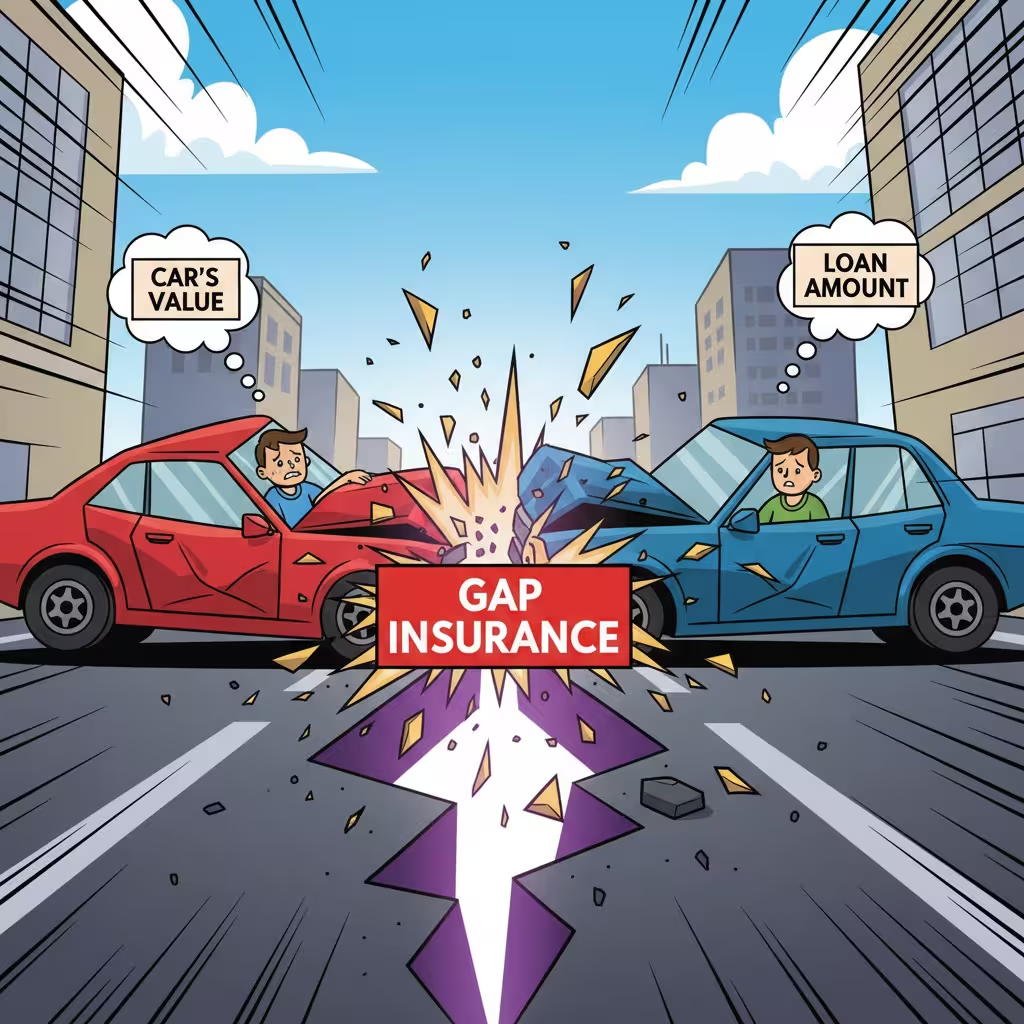
Two years later, you total it on the highway. Your insurer calculates the actual cash value — say, $19,000. But you still owe $24,000 on the loan. They cut you a check for $19,000. You still owe $5,000. For a car that’s now a crumpled pile somewhere.
That $5,000 is your problem. Not the insurer’s. Not the other driver’s. Yours.
Gap insurance covers that difference. The gap between what the car is worth right now versus what you still owe. It’s usually $20-$40 a month if you buy it through your insurer — significantly cheaper than buying it through the dealership, where they mark it up like it’s a floor mat upgrade.
New cars depreciate hard and fast. The gap between loan balance and ACV is widest in years one through three. That’s exactly when gap coverage is most valuable. Once your loan balance drops below the car’s market value — meaning you’d net positive from a total loss — gap becomes unnecessary. Worth checking every year where you stand.
The 2026 Pricing Thing That Surprised Me
Here’s something that flipped the conventional logic a bit.
Full coverage premiums nationally dropped about 2% at the end of 2025. Makes sense — insurers stabilized, competition picked up.
But minimum coverage — liability-only — jumped 14%. Average annual cost hit $722.
So the “cheap” option got more expensive faster than the full option. Some carriers are actively pulling away from liability-only business. Amica — well-regarded insurer — raised their minimum coverage rates by 37% while actually dropping full coverage rates at the same time.
That’s not random. Insurers have figured out that drivers buying bare minimum coverage as a group file more claims, carry less financial stability, and cost more to service per dollar of premium than full-coverage customers. So they’re repricing that segment upward or quietly not wanting that business at all.
What that means practically: before you assume liability-only saves you money, run both quotes side by side. The gap between them might be $30-$40 a month. Is $30 a month worth leaving your own car completely unprotected? Maybe. Maybe not. But you need the real number in front of you before you decide.

Telematics Makes Full Coverage More Affordable Than You Think
Safe driver? This changes your math.
Progressive’s Snapshot, State Farm’s Drive Safe & Save, Nationwide’s SmartRide — these programs watch your actual driving. Braking patterns. Speed. Time of day. Phone use. And they price based on what they see, not what a credit bureau says about you or what happened three years ago.
Discounts run up to 40% for clean habits. On a $160/month full coverage policy, 35% off gets you to about $104. That’s real. That’s the kind of number that makes dropping to liability feel less necessary — because the premium you were dreading isn’t actually as high as the quote you got without telematics factored in.
90% of drivers in a 2026 survey said they find telematics-based pricing fair. Makes sense. You want to be priced on what you actually do behind the wheel, not on averages and demographics.
One warning: if your driving isn’t clean — hard braking, highway speeding, late-night miles — telematics can backfire. Most programs let you bail before renewal if your scores are rough. Set a calendar reminder for 30 days before renewal. Check the score. If it’s helping, stay. If it’s hurting, opt out.
Frequently Asked Questions – FAQ’s
- What is the difference between liability and full coverage car insurance?
Liability covers damages and injuries you cause to others, while full coverage includes liability plus protection for your own car through collision and comprehensive coverage. - Is full coverage car insurance mandatory?
No, but it is required if you finance or lease a car. Otherwise, it depends on your financial situation and risk tolerance. - What does liability insurance cover?
It covers bodily injuries and property damage you cause to others in an accident, up to your policy limits. - What does full coverage car insurance include?
It typically includes liability, collision (for accidents), and comprehensive (for non-collision events like theft or natural disasters). - When should I drop full coverage on my car?
Consider dropping it if your car’s value is low, and the cost of collision and comprehensive exceeds 10% of its value annually. - Does full coverage cover at-fault accidents?
Yes, collision coverage within full coverage pays for damages to your car in at-fault accidents. - Is full coverage worth it for an older car?
It depends on the car’s value and your ability to cover repair or replacement costs out of pocket. - What is gap insurance, and do I need it?
Gap insurance covers the difference between your car’s loan balance and its actual cash value after a total loss. It’s essential for new cars with loans. - How can I lower my full coverage insurance costs?
Use telematics programs, increase deductibles, or bundle policies to reduce premiums. - Does liability insurance cover theft or natural disasters?
No, liability only covers damages you cause to others. Comprehensive coverage is needed for theft or natural disasters.
The Decision, Made Simple
Financing or leasing the car — full coverage. No wiggle room.
Car worth over $15,000 and you own it — full coverage makes obvious sense.
Car worth $8,000-$15,000 and you own it — run the 10% rule with your real numbers. Consider your savings cushion. Comprehensive alone might be worth keeping even if you drop collision.
Car worth under $6,000 and you own it — liability-only is probably the smarter call, provided you’ve got a financial buffer for replacing it.
Live somewhere with real weather risk — keep comprehensive regardless of the car’s value. It’s the cheaper add-on and it covers the unpredictable stuff.
Clean driving record — get a telematics quote before making any decision. Full coverage might be cheaper than you assumed once discounts apply.
The stolen catalytic converter cost me $1,400 and four months of second-guessing every parking spot I picked. After that I went back to full coverage. My car isn’t worth a ton. But my commute is worth something.
Run your numbers. Make the call with real math, not with what you assume insurance costs.
That’s all it takes.
Rate data and coverage details reflect 2026 market conditions. Confirm specifics with a licensed insurance agent or your state’s Department of Insurance before adjusting your policy.