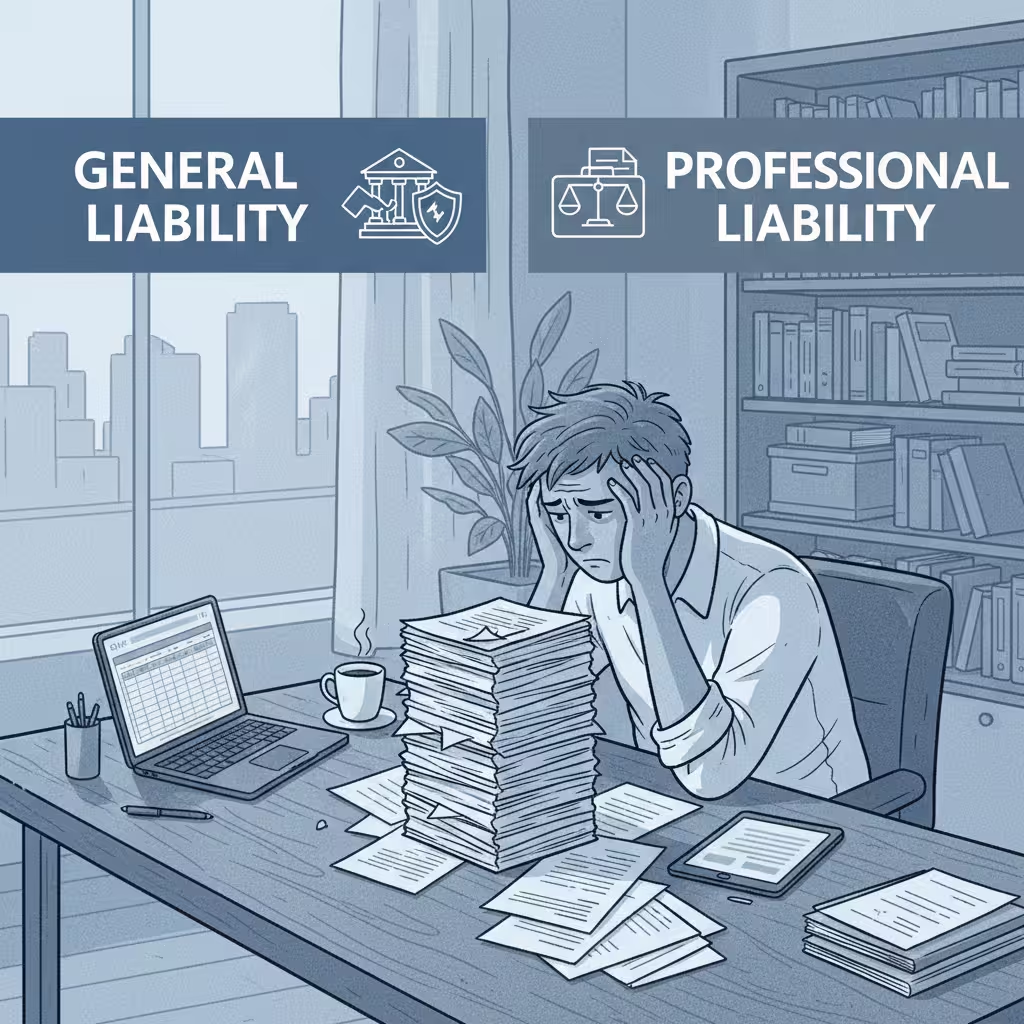
Kevin thought he had it handled.
IT consulting firm, five solid clients, a Business Owner’s Policy he’d bought in year two and auto-renewed ever since. Property covered. General liability covered. He even remembered his agent saying something like “this takes care of the basics.”
Then a client said his team botched a server migration. Three days of downtime. $87,000 in lost revenue, according to their attorney. Kevin called his insurer the same afternoon.
Wrong policy.
General liability vs Professional liability — the GL coverage he’d been paying for and trusting for years — doesn’t cover professional mistakes. Not even slightly. It’s built for a completely different kind of risk. Kevin needed Errors and Omissions coverage. He didn’t have it. And the gap between “thought I was covered” and “actually covered” cost him nearly everything he’d saved.
Here’s the part that still gets me: E&O coverage would’ve run him about $35 a month. That’s it.
This is the conversation most small business owners never have — not because it’s complicated, but because nobody sits them down and explains that these two policies cover completely different worlds of risk. General liability and professional liability aren’t two versions of the same thing. They were built for entirely different disasters, and mixing them up is expensive.
General Liability vs Professional Liability: The Two Disasters They’re Each Built For
Think about it this way.
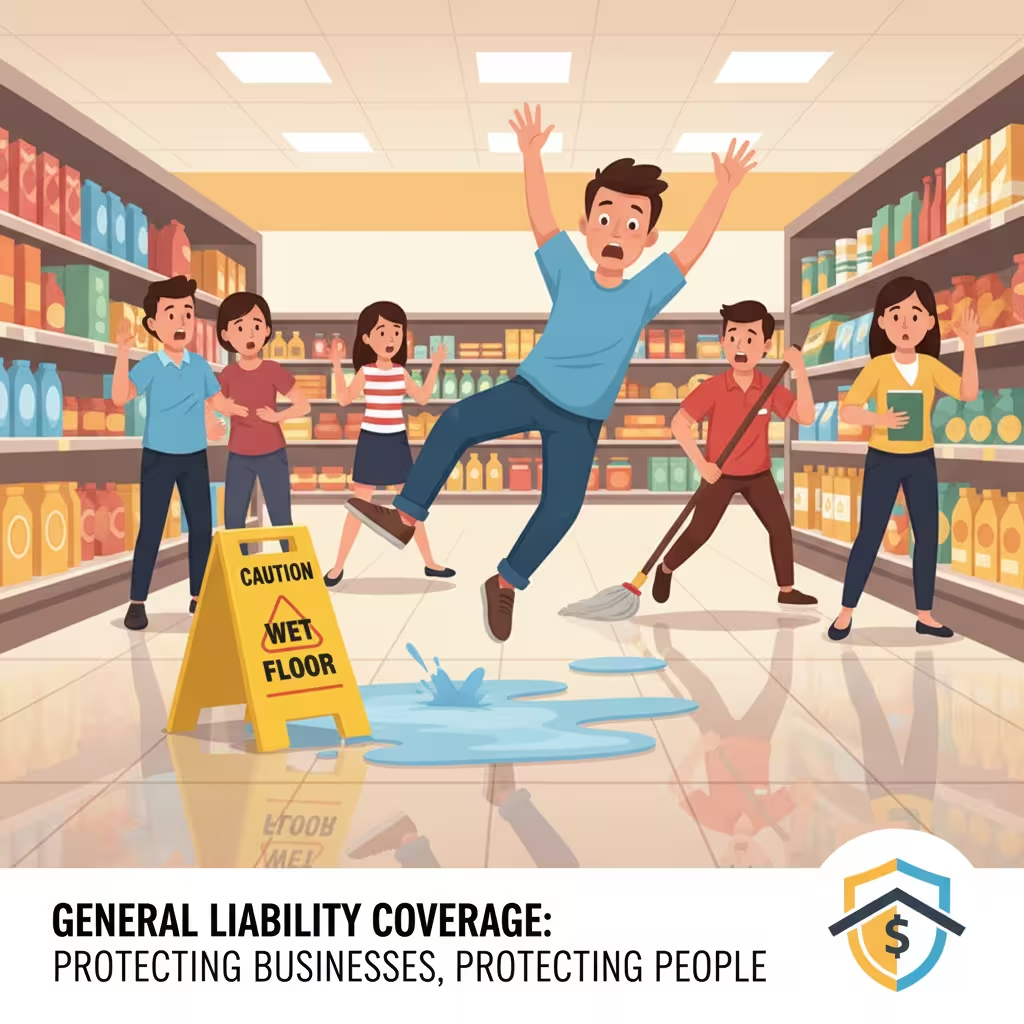
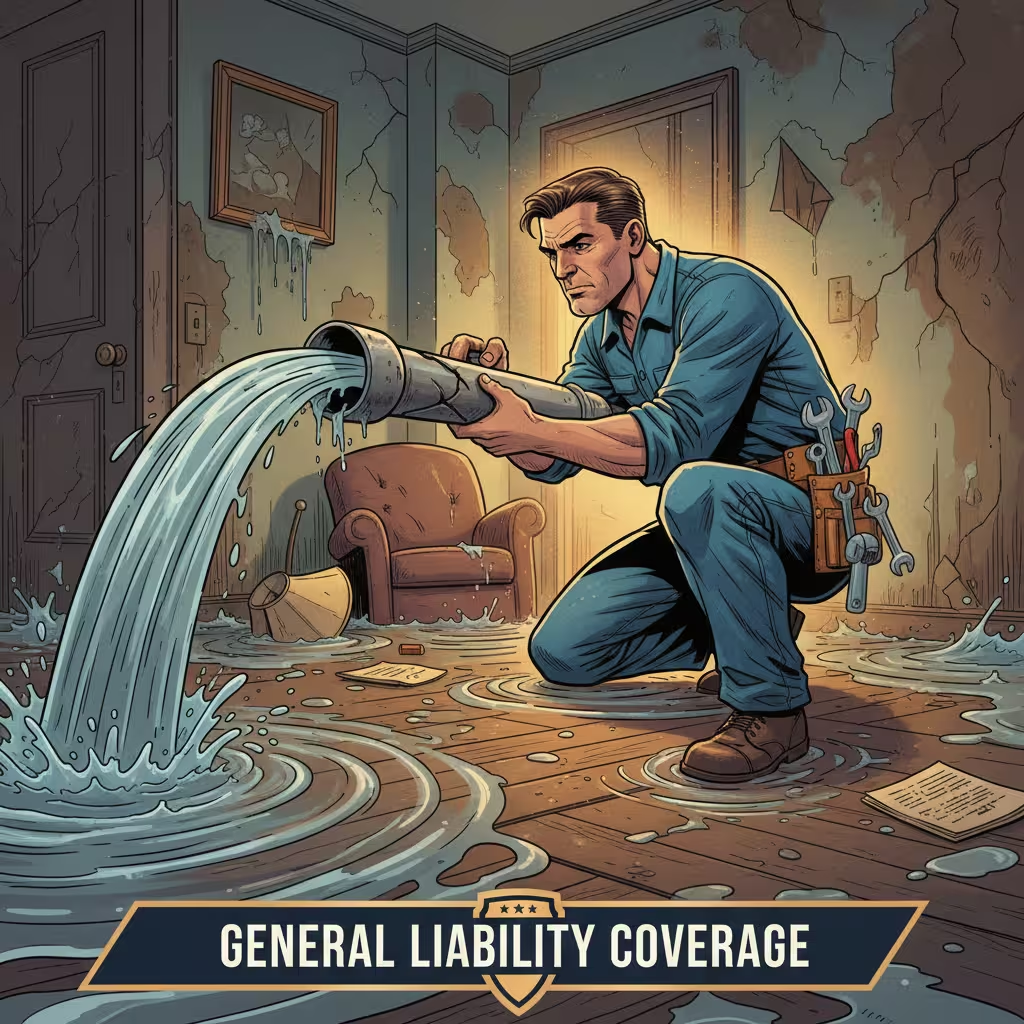
General liability — Commercial General Liability, CGL, GL, whatever your agent calls it — was designed for physical world problems. A customer slips on your wet floor. Your crew accidentally puts a drill through a client’s water pipe. Your company runs a Facebook ad that someone’s lawyer decides crosses into defamatory territory. These are events you can photograph. Injuries you can measure. Damage with a repair estimate attached.
Professional liability — E&O, errors and omissions, malpractice depending on the industry — handles something much harder to photograph. The advice that backfired. The deliverable that missed the mark. The financial loss that traces back to your professional judgment, your analysis, your recommendations. No physical damage required. No hospital visit. Just a claim that what you delivered cost someone money they can’t recover.
Those are two separate legal territories. That’s why they need two separate insurance products.
This is where most people go wrong: they see “liability” in both names and assume overlap. There isn’t any. The trigger mechanisms are completely different. GL responds to physical accidents. E&O responds to professional acts — or failures to act.
77% of small businesses are currently underinsured, according to Hiscox research. And 83% of business owners can’t accurately describe the difference between these two coverages. Put those numbers next to each other and Kevin’s situation starts to look less like bad luck and more like the norm.
What GL Actually Covers — and Three Things It Flat-Out Won’t
So what does general liability actually do?
Three main categories. Bodily injury to third parties — a customer trips over a power cord in your office, someone gets hurt at a job site you’re running. Property damage your business causes to others — your driver backs a company van into a client’s fence, a plumber’s work causes a leak that ruins the flooring below. And personal and advertising injury — that one catches people off guard. If your marketing materials make a claim that crosses into defamation, or you accidentally use copyrighted material in a campaign and get sued for it, GL can respond to that dispute.
Average cost runs about $42 a month for most small businesses. Wide variance by industry though — a drone operator might pay $25 because the physical risk profile is contained. A pressure washing business pays over $1,300 because the chemical and property damage exposure is genuinely large.
Now. What it won’t touch.
Equipment that gets stolen, an office that floods, tools that get damaged — that’s commercial property coverage. It’s usually bundled inside a BOP but it’s a separate coverage from GL, and confusing the two is a common and expensive mistake.
Workers’ compensation handles employee injuries on the job. Required in 49 states from the moment you hire. Not part of GL.
And then there’s the one that trips the most people: professional mistakes. If your work product causes a client financial harm — strategy that failed, code with a flaw, advice that backfired — GL does nothing. Zero. It was designed for a different world entirely. Doesn’t matter how high your limits are or how many years you’ve been paying the premium. That dispute is not GL territory, and your carrier will say exactly that.
E&O: The Coverage 58% of Service Businesses Skip
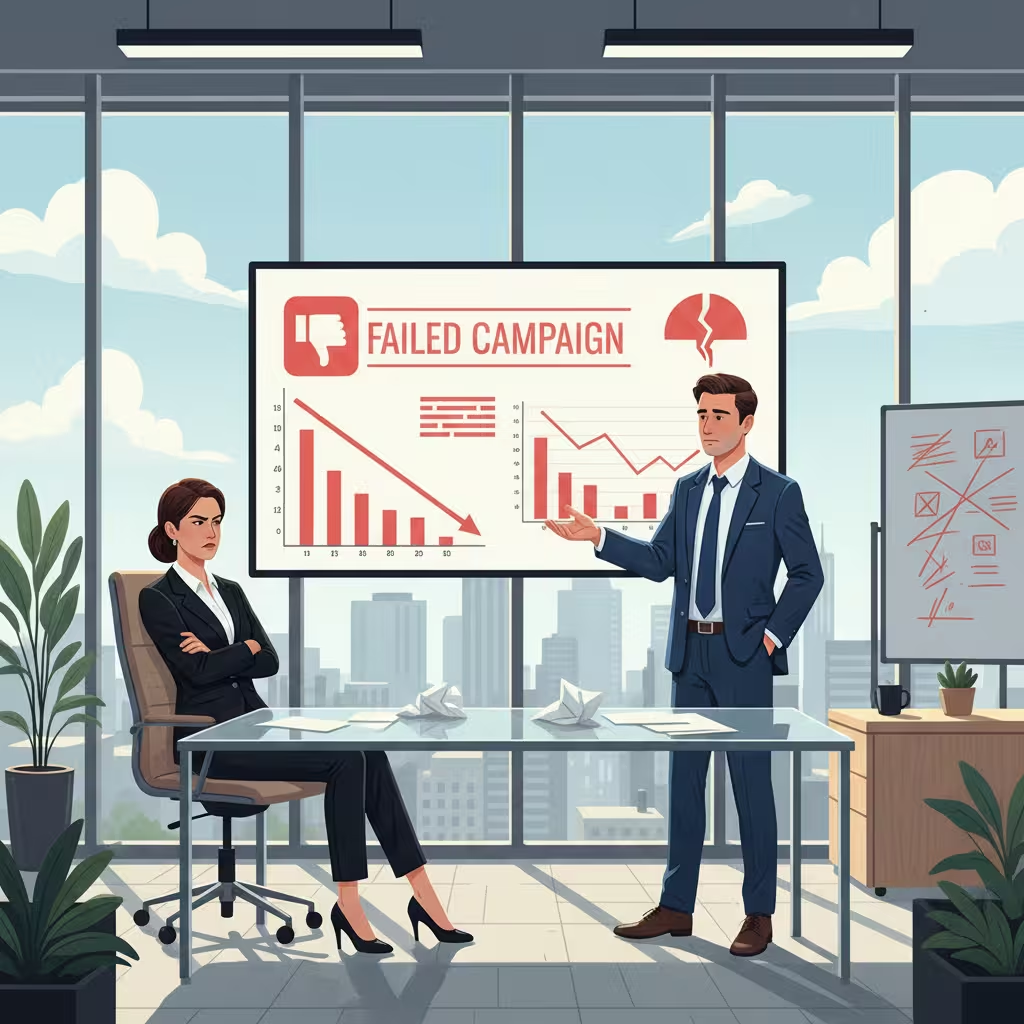
Only 42% of small businesses carry professional liability insurance. That number bothers me every time I see it, because the American economy runs on services. Advice. Expertise. Specialized judgment. Most of the people selling those things have a massive uncovered gap sitting right in the middle of their operation.
Errors and Omissions coverage responds when a client claims your professional work caused them financial damage. Not physical damage — financial.
A freelance marketing consultant whose campaign strategy burned through $40,000 of a client’s ad budget and delivered nothing — that dispute lands in E&O territory. An accountant who blew past a filing deadline and handed the client an IRS penalty they’re sending back as a bill — same territory. An IT firm whose security audit missed the vulnerability that got exploited six weeks after the report was signed off? E&O dispute, not GL. A real estate agent who didn’t flag a material defect before closing and the buyer found out later at the worst possible moment? Also lands there.
Not one of those situations involves anyone going to the hospital. That’s exactly the point. General liability is watching from the sidelines in every single one — and your GL carrier will confirm that the moment you call.
Worth saying plainly: the claim doesn’t require you to have done anything wrong. A client who’s unhappy with their outcome, who has the money to retain an attorney, can file a dispute you’ll need to defend regardless. Defense costs alone — before any settlement gets discussed — can run $30,000 to $50,000 on a contested professional liability case. E&O covers that. Nothing else does.
Average cost for most small service businesses is around $61 a month. IT firms and anything near healthcare run higher. But for a solo consultant or freelance professional, you’re often looking at $40 to $80 a month for coverage that could decide whether your business survives a dispute or doesn’t.

The Contractor Situation Is Its Own Thing
If you’re in the trades — general contractor, electrician, plumber, roofer — people usually assume your biggest insurance exposure is physical. They’re not wrong. It’s massive.
Roofing contractors average around $567 a month for their BOP — and that number reflects real exposure. A botched roof job that lets water into a commercial space, a plumbing failure that floods the floor below, a pressure washing crew whose chemicals strip the finish off an expensive surface. Plumbers average around $535 for similar reasons. Pressure washing operations land over $1,300 because the damage potential on each job is genuinely enormous.
But here’s what the trades conversation usually leaves out.
Contractors give advice. They make recommendations. They manage timelines, set budgets, spec materials. A project manager who scoped a renovation wrong — missed the structural work, underestimated the scope — and cost a client $60,000 in overruns? That’s a professional liability dispute. The client isn’t suing because someone bled. They’re suing because the professional judgment was wrong.
High-risk trade contractors need both policies. The physical work points to GL — that part’s obvious. What’s less obvious is that the project management, the budgeting, the material recommendations all carry professional liability exposure that no GL policy will touch. Carrying only GL because you’re “in construction” is the same logic that burned Kevin. Different industry, same gap.

The AI Wrinkle Most Business Owners Haven’t Caught Yet
Something shifted in 2026 that’s worth knowing about.
The Insurance Services Office — ISO — introduced two new endorsements this year: CG 40 47 and CG 40 48. These let insurers formally exclude Generative AI-related claims from standard Commercial General Liability policies.
Practically speaking: if your business uses AI tools to generate content, write code, produce marketing materials, or create anything client-facing — and that output causes harm — your GL policy may now carry an explicit exclusion for it. An AI-generated image that infringes on a copyright. An AI-written marketing claim that turns out to be false. Content that causes someone financial loss.
Before these endorsements, some of that might have slipped through under GL’s “advertising injury” bucket. Now insurers can close that door with a single endorsement.
If your business uses AI to produce anything that reaches clients, ask your broker directly: does my current policy include CG 40 47 or CG 40 48? If it does, you may need an AI liability buy-back or a standalone product. Find out before a denied claim answers the question for you.
The Comparison Nobody Lays Out Plainly
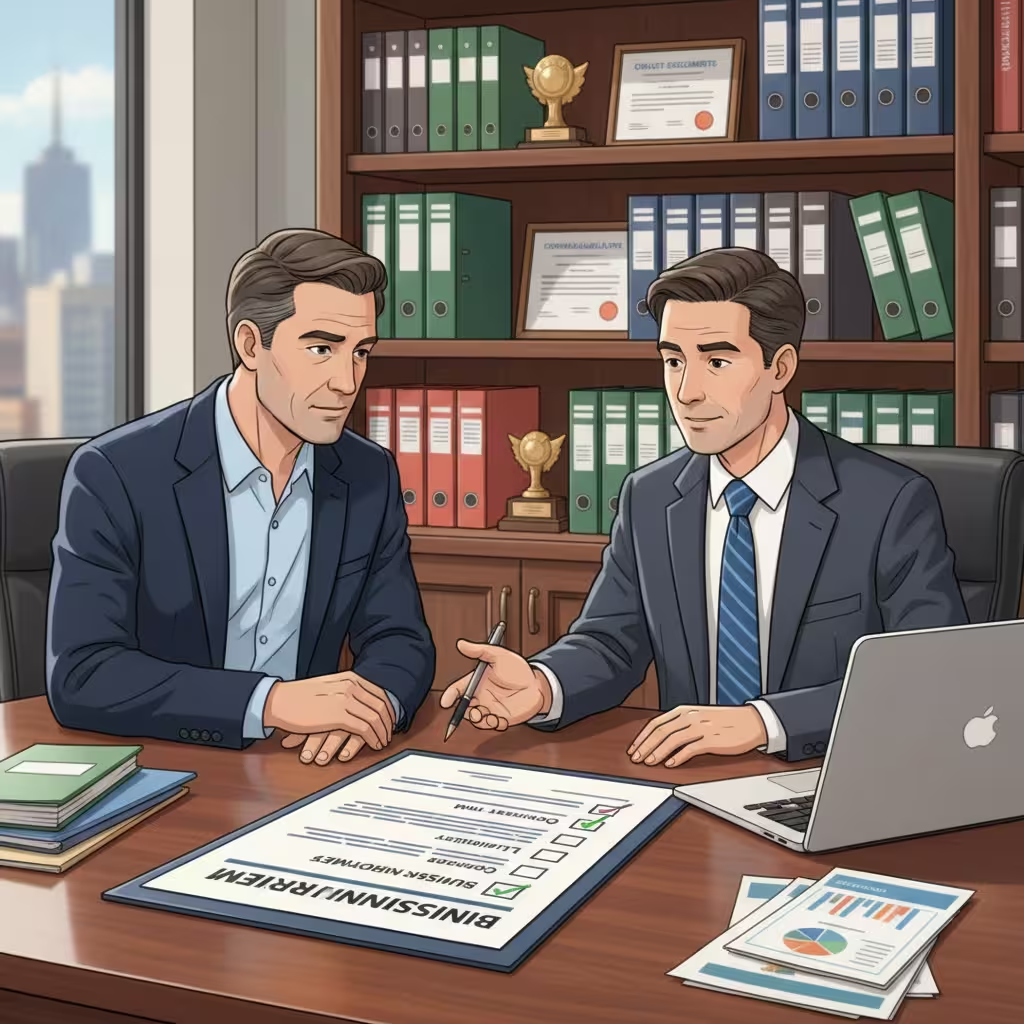
Most insurance articles explain these coverages in separate boxes and leave you to figure out how they connect. So here it is plain.
GL is for when something physical goes wrong — a third party gets hurt, their property gets damaged, or your advertising creates a legal dispute over reputation or intellectual property. It’s the policy that responds to things you can point at.
E&O is for when your professional output goes wrong. Your judgment, your analysis, your advice, your design — when any of that causes a client financial loss, E&O is what shows up. Nothing has to break. Nobody has to bleed. The trigger is financial harm that traces back to your work.
Combined, a typical small service business pays somewhere between $80 and $150 a month. Less than one hour of attorney fees in a contested claim.
As for who only needs one: genuinely narrow operations with zero advisory component. A sole proprietor who manufactures a physical product and sells wholesale, never consulting buyers on what to choose. Maybe. But the moment advice or expertise is part of what you’re selling — even casually — professional liability exposure exists. And it doesn’t go away just because you didn’t charge extra for the advice.
Geography moves the number around. Maine, North Dakota, and North Carolina sit in low-litigation states — combined coverage often under $140 a month. New York, New Jersey, Pennsylvania have higher litigation frequency and larger jury payouts, which pushes premiums up. Same coverage, different zip code, different cost.
Frequently Asked Questions – FAQ’s
- What is the main difference between General Liability and Professional Liability insurance?
General Liability covers physical accidents and property damage, while Professional Liability (E&O) covers financial losses caused by professional mistakes or advice. - Why didn’t Kevin’s General Liability policy cover the $87,000 claim?
General Liability doesn’t cover professional mistakes like botched server migrations. Kevin needed E&O insurance for that. - What does General Liability insurance typically cover?
It covers bodily injury, property damage, and advertising injury caused by your business operations. - What does Professional Liability insurance cover?
It covers financial losses caused by errors, omissions, or professional advice that negatively impact a client. - How much does E&O insurance cost for small businesses?
The average cost ranges from $40 to $80 per month, depending on the industry and risk level. - Why do contractors need both General Liability and Professional Liability?
Contractors face physical risks (covered by GL) and professional risks like project management errors (covered by E&O). - What are the new AI-related exclusions in General Liability policies?
Endorsements CG 40 47 and CG 40 48 exclude claims related to harm caused by AI-generated content or tools. - What percentage of small businesses are underinsured?
77% of small businesses are underinsured, and 83% can’t accurately describe the difference between GL and E&O. - What are common misconceptions about General Liability insurance?
Many believe it covers professional mistakes, stolen equipment, or employee injuries, but it doesn’t. - How can small businesses avoid insurance gaps like Kevin’s?
Work with an independent broker to assess your business risks and ensure you have both GL and E&O coverage.
What Kevin Did Next
After the settlement, he found an independent broker. Not a carrier rep — someone who could pull quotes from multiple insurers and actually talk through what Kevin’s firm did, day to day, not just what industry box it fit into.
He left with a BOP covering the office and equipment and a standalone E&O policy for the consulting work itself.
$94 a month. That’s what the full stack cost him.
Eight months later, a different client disputed an implementation project — claimed it caused integration failures that cost them productivity. Kevin’s E&O carrier stepped in. Handled the legal defense. Negotiated a settlement the client accepted. Kevin’s out-of-pocket on that whole episode was zero. The business kept running like nothing had happened, because from the outside, nothing had.
The difference between those two outcomes — the $87,000 gut-punch and the quiet resolution — was $94 a month and one honest conversation about what his business actually faced.
General liability vs professional liability isn’t a debate. It’s a question of which risks your specific business carries. Most service operations carry both. The coverage that matches those risks costs less per month than most business phone plans. The only real question is whether you figure that out before something tests it, or after.
About the Author: James Whitfield is a small business risk consultant with 14 years of experience advising founders, freelancers, and trade contractors on insurance structure, tax strategy, and operational planning. He has worked alongside independent brokers and CPA firms in 11 states.
Disclosure: This content is educational only and does not constitute legal or financial advice. Speak with a licensed insurance broker or attorney for guidance specific to your business and your state.