
The week I brought my puppy home I was not thinking about insurance.
I was thinking about whether she’d chew the couch. And whether my older cat would ever forgive me. That was basically the whole mental load. Insurance wasn’t even in the same zip code of my brain.
Then a friend — whose Labrador had torn a knee ligament at eleven months — texted me a photo of a $4,800 vet bill with the caption “enroll her now.” No explanation. Just that photo.
I enrolled her the next morning.
And honestly? Best panicked decision I ever made. Because here’s the thing nobody tells you clearly when you first get a puppy or kitten: the window where everything is clean and coverable is short. Really short. And once it closes, it doesn’t open back up.
That’s what this whole article is actually about. Not just which company. Not just the price. The timing. Because timing is the thing that trips people up the most, and I’ve never seen it explained in a way that doesn’t sound like a sales pitch. So let me try.

Why Right Now Is Literally the Best Time
Not next month. Not after you figure out which food she likes. Now.
Here’s the thing about pet insurance pre-existing conditions that most people don’t fully get until it’s too late. It’s not just diagnosed diseases that get excluded. It’s symptoms. Notes. A vet scribbling “appeared to favor left front leg during exam” in the checkup file. That’s it. That tiny note. And now if your dog ever has a problem with that leg, the insurer pulls the records, sees that note, and says — pre-existing. Excluded.
Your puppy right now has clean records. Probably nothing in there except birth information and maybe a first round of vaccines. That’s the golden window. Every single week you wait, there’s more stuff going in those records. More observations. More notes. More potential flags.
I’m not being dramatic. This is genuinely how the exclusion process works. And the worst part is most people don’t find out about it until they file a claim and get a denial letter. Which is a terrible way to learn this.
So When Exactly Can You Enroll
Most companies set the minimum enrollment age at eight weeks. Some go earlier — six weeks with certain providers. Pumpkin is one of the few that builds packages specifically for puppies and kittens from these very early weeks. We’re talking multiple vaccines, fecal tests, the early-life wellness stuff bundled in.
If you can enroll at eight weeks — the same week you bring them home — that’s the move. Ideally before their first full vet appointment. Because that appointment is when the note-writing starts.
Now — I know that’s not always how it actually goes. Sometimes you’re scrambling in those first days and the vet appointment happens on day three and you haven’t even Googled insurance yet. If that happens, just enroll as soon as you realize. A clean first-appointment record from a healthy puppy probably won’t have anything disqualifying. But don’t push it weeks further. Don’t let “I’ll do it this weekend” turn into month four.
Month four is when puppies start getting into real trouble. Knees. Elbows. Swallowed objects. Weird lumps the vet wants to “keep an eye on.” All of that is pre-existing condition territory if coverage hasn’t kicked in yet.
Waiting Periods — This Is the Part That Catches Everyone
You sign up. You pay. You think you’re covered.
You’re not. Not yet.
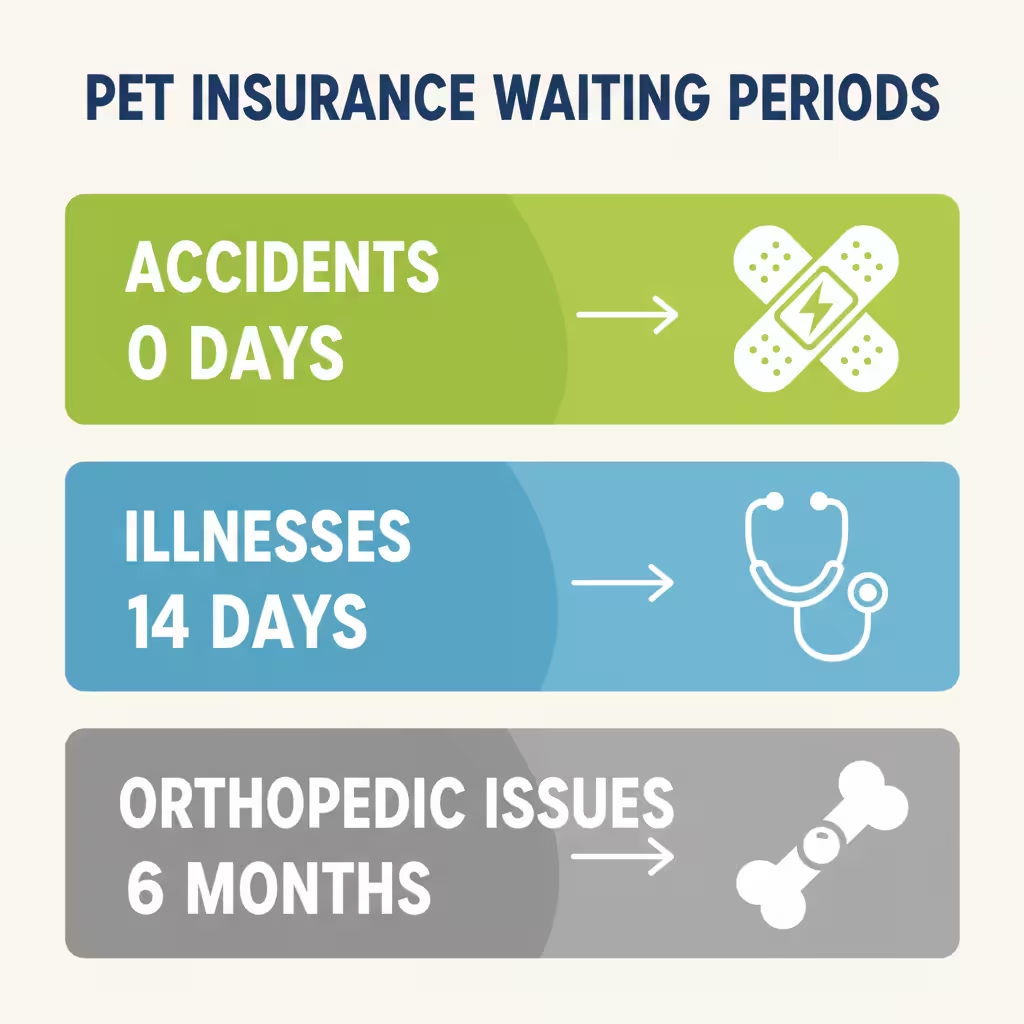
Every pet insurance policy has a waiting period — a gap between when you enroll and when the coverage actually turns on. And the length of that gap depends on what kind of issue we’re talking about.
Accidents: some companies cover these in as little as zero days. MetLife and Embrace both have zero-day accident coverage — which means midnight of the night you enroll, your puppy is accident-covered. Other companies make you wait 15 days. That’s a real difference when you have an eight-week-old puppy who is actively trying to destroy themselves.
Illnesses: usually 14 days. Pretty standard across the board. You can work with 14 days.
Orthopedic stuff — knees, hips, ligaments — this is the brutal one. Six months at most companies. Twelve months at some. That’s a half a year to a full year where if your puppy blows out a knee or shows signs of hip dysplasia, you’re paying completely out of pocket. And for large breeds specifically, this is not a rare event. It’s a when-not-if situation.
Some states are now capping orthopedic waiting periods at 30 days. California and Washington have laws that limit what insurers can require here. Worth checking what your state allows before picking a company.
The Breed Thing Is Really Really Important
I want to sit on this for a minute because people gloss over it and then get surprised later.
If you have a big dog — a Lab, a Golden, a German Shepherd, a Rottweiler, a Bernese — hip dysplasia and cruciate ligament tears are not remote possibilities. They’re statistically likely over a lifetime. Insurance companies know this and they price for it.
But here’s the specific trap: bilateral condition clauses.
Bilateral means both sides of the body. Hips. Knees. Elbows. If your puppy develops a problem on the left side — even during the waiting period, even before the policy is fully active — the insurer can exclude the right side too. Both sides. Because they treat paired-body-part conditions as one thing.
So if your Golden shows a limp in the left knee at month two and you only enrolled at month one, you might end up with zero knee coverage. Both knees. For the lifetime of the policy.
I’m saying this because nobody I know understood bilateral clauses when they first bought puppy insurance. Nobody. It’s buried in the policy documents and it’s the kind of thing that only makes sense when you’re already dealing with the consequences.
Ask before you enroll: “If my dog develops a condition on one side during the waiting period, does that exclude the opposite side too?” If the answer is yes — and at most companies it is — that’s even more reason to enroll before any symptoms ever show up.
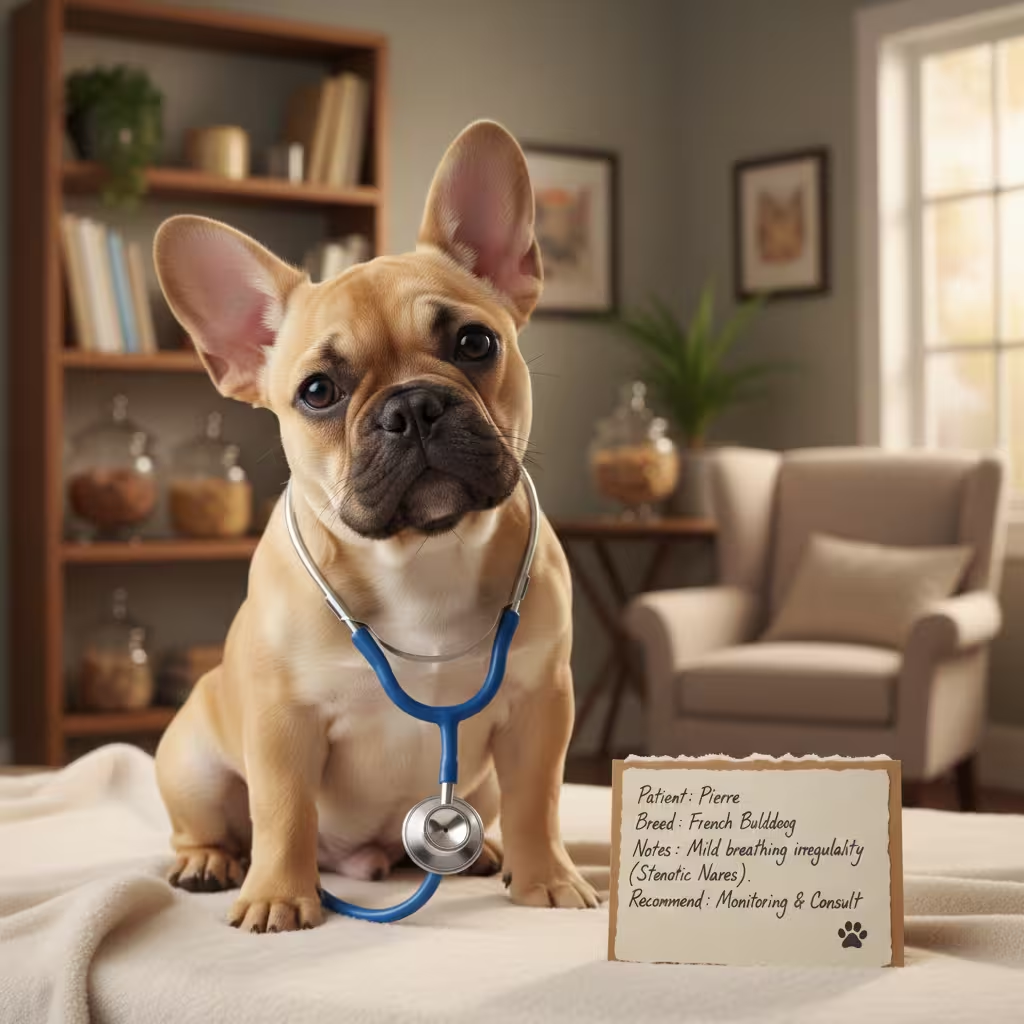
Flat-faced breeds need their own mention here. French Bulldogs. English Bulldogs. Pugs. Boston Terriers. Persian cats. These animals have respiratory issues that are basically baked into their genetics — BOAS, they call it. Brachycephalic Obstructive Airway Syndrome. Surgeries for this can run several thousand dollars. And if any respiratory symptom — any — gets noted before coverage kicks in, it becomes a pre-existing condition. Permanently excluded.
Enroll these breeds as early as the company allows. Before any snorting or breathing irregularity gets written down anywhere.
Does Pet Insurance Cover Spay and Neuter
Yeah so this one is a little annoying. The straight answer is: standard accident-and-illness plans don’t cover it.
Spay and neuter are elective procedures. Most policies specifically list elective stuff as excluded. Not a trap — just how the policy is built.
But. Wellness add-ons are different.
Wellness riders — the optional extra coverage you can bolt onto a base policy — often do include spay and neuter reimbursement. And Pumpkin’s puppy-specific packages include this kind of thing as part of what they built for young animals. Multiple vaccines, fecal stuff, preventive care — all in there.
Whether a wellness rider actually saves you money is a separate math problem. They run about ten to twenty-five dollars extra per month. So figure out what you’d actually spend on routine care in a year — vaccines, the annual exam, flea prevention, the spay or neuter cost — and compare that number to what you’d pay in rider premiums over twelve months. Sometimes it pencils out. Sometimes it doesn’t. Don’t just add it because it sounds comprehensive. Run your specific numbers first.
The Discounts Nobody Uses
Enrolling young isn’t just about avoiding exclusions. It’s also about price.
An eight-week-old puppy costs less to insure than a two-year-old dog. A two-year-old dog costs less than a seven-year-old dog. A ten-year-old dog — we’re talking upwards of $139 a month in some cases. The same breed. Same coverage. Just older.
Your premium is based on your pet’s age at enrollment and then adjusts every year as they get older. But the base you lock in at enrollment matters. Enrolling at eight weeks versus enrolling at eighteen months means a lower starting point. And you can’t go back and get the puppy rate later.
Some companies — Embrace specifically — offer a diminishing deductible. Every year you don’t file a claim, your deductible drops by fifty bucks. If your puppy stays healthy for a few years, you could eventually be sitting at a zero-dollar deductible. MetLife does something similar. Long game, but worth knowing.
Embrace also has a Healthy Pet Discount — a premium reduction for claim-free years. So being enrolled early with a healthy young pet isn’t just cheaper upfront. It can also set you up for ongoing savings if things go well.
The Vet Exam Waiver and Why You Should Use It
Here’s a specific tactic that doesn’t get talked about enough and I kind of resent that.
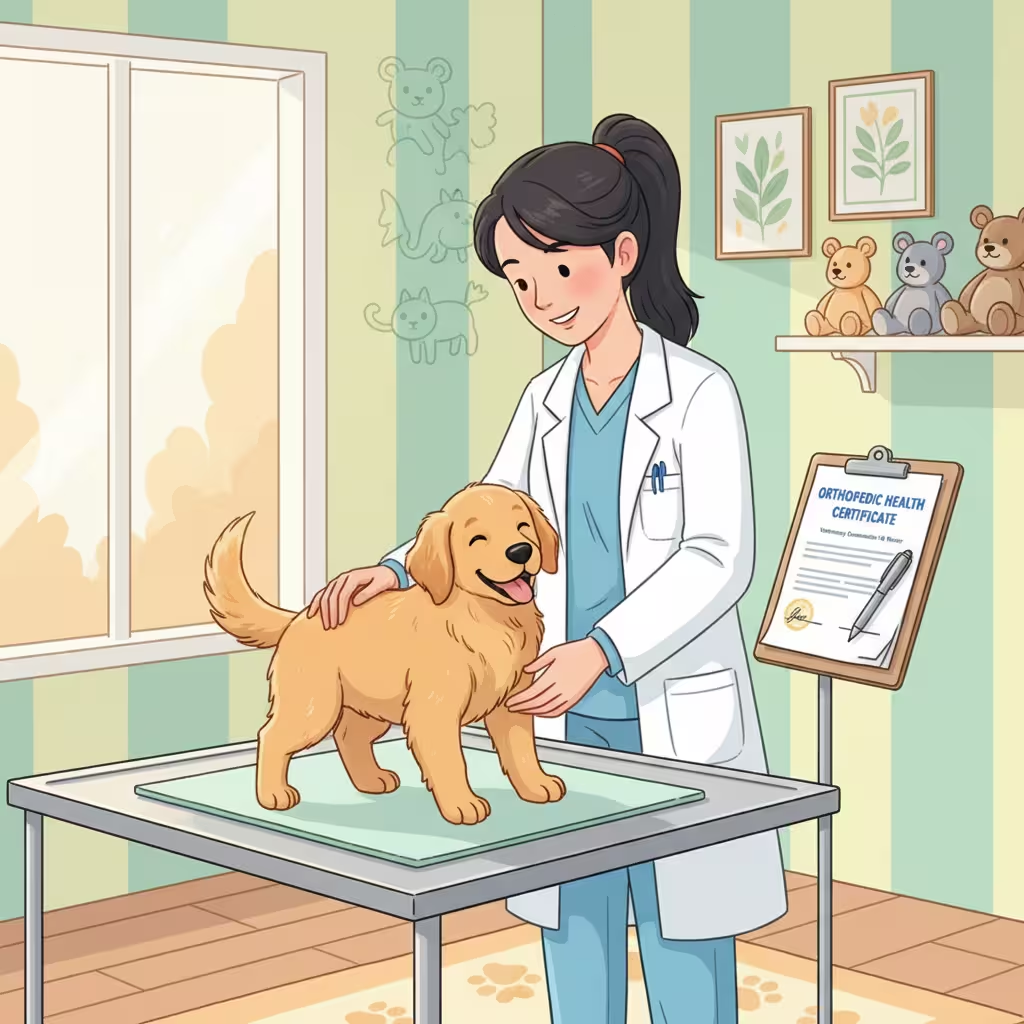
Some insurance companies — Figo, Spot, Fetch, and a few others — will waive the long orthopedic waiting period if you get your vet to do a thorough physical exam within the first 30 days of your policy and submit a clean health certificate.
Vet checks out the puppy. Hips, knees, elbows, the whole thing. Documents everything looks good. Sends the paperwork to the insurer. And suddenly that six-month orthopedic wait shrinks dramatically or disappears entirely.
You’re probably already taking your new puppy to the vet in the first month anyway. Tell the vet you want a comprehensive orthopedic screening documented. Tell them you’re submitting it to your insurance company for a waiting period waiver. Takes maybe ten extra minutes of the appointment.
Before you enroll anywhere, ask the company directly: do you offer a waiting period waiver with a clean vet exam? That one question — thirty seconds on the phone — could save you months of being unprotected.
Which Companies Are Actually Worth It for Puppies
Let me just go company by company. Fast.
Pumpkin. Built specifically for young animals. Their preventive care packs include the early-life stuff most companies don’t touch — multiple vaccine rounds, fecal testing, early wellness coverage. If you want the most purpose-built puppy insurance plan on the market right now, this is probably it.
MetLife. Zero-day accident coverage. Starts at midnight the night you enroll. For a puppy that is currently in the “chaotic goblin” phase of development, having that protection begin immediately matters. Also has a shared-deductible family plan if you’re adding multiple young animals at once.
Figo. One-day accident wait. Also offers up to 100% reimbursement — zero co-pay on covered claims. You pay more monthly for that option but it exists, which is genuinely unusual in this industry.
Embrace. Diminishing deductible. Healthy Pet Discount for claim-free years. If you enroll your puppy young and they stay healthy, Embrace’s structure rewards you for that over time in a way most companies don’t.
AKC Pet Insurance. The pre-existing condition angle is real here. After 365 days of continuous coverage, AKC covers conditions that were initially excluded. If something shows up during your waiting period and gets flagged as pre-existing — AKC is the only major company with a defined pathway to coverage for it after a year of enrollment. Nobody else does this.
Spot. No upper age limit. Unlimited annual coverage option. For high-risk breeds with expensive lifetime health histories, knowing there’s no coverage ceiling is meaningful.
Three Real Scenarios So This Lands
Because I think real examples explain this better than general statements.
Scenario one. Somebody gets a Golden Retriever puppy. Keeps meaning to get insurance. Busy with work. At eleven months the dog tears the cruciate ligament in the left knee. Surgery is $4,500. They get insurance after the surgery. Left knee is now excluded. Right knee is excluded too — bilateral condition. Their young dog has zero knee coverage. For life. With a breed that is almost certainly going to have more knee problems.
Scenario two. Someone gets a French Bulldog puppy. At the six-month checkup, the vet notes mild breathing irregularity — nothing serious, just worth watching. The owner gets insurance after that visit. The insurer reviews the records, sees the breathing note, and flags BOAS as pre-existing. Soft palate surgery later: $4,000. Not covered.
Scenario three. Someone enrolls their mixed-breed puppy the week she comes home at eight weeks. Waiting period passes. Life goes on. At fourteen months she eats an entire hair tie. Emergency surgery to remove it: $3,100. Insurance covers 80% after the deductible. Out of pocket: just under $900 instead of $3,100. Worth every premium dollar.
Scenarios one and two are not bad luck. They’re just what happens when enrollment gets pushed off. Scenario three is what early enrollment actually looks like in practice.
The PAW Act — Worth Keeping an Eye On
Quick note on something in progress.
There’s a bipartisan bill called the People and Animals Well-being Act — PAW Act — introduced to the House in early 2025. Still working through the process as of 2026. If it passes, pet owners could use up to $1,000 from an HSA or Flexible Spending Account for vet care or pet insurance premiums.
Pre-tax money. For puppy insurance.
If you’re already contributing to an HSA through your job — which a lot of working adults do — this would make your premiums effectively cheaper in a real way. It hasn’t passed yet. But it has support on both sides and it’s worth tracking as you’re making coverage decisions this year.
Frequently Asked Questions – FAQ’s
- What is pet insurance for puppies, and how does it work?
Pet insurance helps cover veterinary costs for accidents, illnesses, and preventive care. You pay premiums, and the insurer reimburses eligible expenses after claims are submitted. - When is the best time to enroll a puppy in pet insurance?
Enroll as early as 8 weeks old to avoid pre-existing condition exclusions and lock in lower premiums. - What does pet insurance typically cover for puppies?
Coverage varies but often includes accidents, illnesses, diagnostic tests, surgeries, and optional wellness care like vaccinations. - Are pre-existing conditions covered by pet insurance?
Most insurers do not cover pre-existing conditions, so enrolling before any symptoms or diagnoses is crucial. - How much does pet insurance cost for a puppy?
Costs depend on breed, age, location, and coverage, averaging $30–$60/month for young puppies. - What are the differences between accident-only and comprehensive pet insurance plans?
Accident-only plans cover injuries, while comprehensive plans include illnesses, diagnostics, and sometimes wellness care. - Does pet insurance cover routine care like vaccinations and spaying/neutering?
Routine care is usually excluded but can be covered with optional wellness add-ons. - What are the waiting periods for pet insurance coverage to start?
Waiting periods vary: accidents (0–15 days), illnesses (14 days), and orthopedic issues (6–12 months). - How do breed-specific health risks affect pet insurance coverage and costs?
Breeds prone to conditions like hip dysplasia may face higher premiums or exclusions for those conditions. - What should I consider when choosing the best pet insurance provider for my puppy?
Compare coverage, exclusions, waiting periods, premiums, and customer reviews to find the best fit.
The Bottom Line
There’s only really one thing you need to take from all of this.
Enroll your puppy or kitten now. This week. Before anything gets written in the vet records. Before any symptom gets observed. Before the waiting period has to race against your puppy’s natural talent for injuring themselves.
The pet insurance market is growing fast — from just over $6 billion now to nearly $19 billion projected by 2033. More vets are seeing the difference it makes for their clients. Studies show 68% of vets see better treatment compliance from insured pet owners. About 25% of euthanasia decisions in this country happen because owners can’t afford care.
That last number is the one that sits with me.
Insurance doesn’t fix everything. But it keeps options open. And for a puppy or kitten who is just starting their life with you — keeping options open is kind of the whole point.
Go enroll them. Seriously. Close this tab and go do it.
Disclaimer: This article is for informational purposes only and is not insurance, financial, or veterinary advice. Policy terms and availability vary by provider and state. Review your full policy documents and consult a licensed insurance professional before purchasing coverage.