So your dog already has something going on. Maybe it’s hip dysplasia. Maybe it’s diabetes. Maybe the vet has been side-eyeing that knee for the past two years and you finally want to do something about the bills that are piling up.
And now you’re Googling “does any pet insurance cover pre-existing conditions” at midnight, hoping for a miracle.
I get it. I’ve been there. And the answer? It’s complicated — but it’s not hopeless.
This guide is going to walk you through exactly what pet insurance pre-existing conditions means in plain English, which companies are actually worth your time, and how to avoid the fine-print traps that catch most dog owners off guard.
Let’s dig in.
What Even Is a Pre-Existing Condition?
Here’s the short version: a pre-existing condition is anything wrong with your dog before the insurance policy kicks in — or during those early waiting periods when coverage hasn’t fully started yet.
Sounds simple. It’s not.
Here’s the part that trips everyone up. Your dog doesn’t need an official diagnosis for something to count as pre-existing. If your vet’s notes say “patient appears to be limping” from eight months ago, and then your dog tears an ACL a year later? That limping is a red flag. The insurer might deny the claim based on those old notes.
Yeah. Even undocumented stuff — like vomiting once during an exam — can show up in veterinary records and come back to haunt you.
This is why, if you’re reading this and your dog is still healthy, you should stop reading right now and go get a policy. Today. Don’t wait. The moment something shows up in those medical records, your options start shrinking.
But if your dog already has issues, keep reading, because you still have options.
Curable vs. Incurable: The Distinction That Changes Everything
Not all pre-existing conditions get treated the same. This is actually really important to understand.
Curable conditions are things that can go away completely. Think ear infections, urinary tract infections, broken bones. Temporary stuff. Some insurers will cover these again if your dog goes symptom-free and treatment-free for somewhere between 180 days and 12 months. That window is called a look-back period, and it varies by company.
So if your dog had an ear infection two years ago and hasn’t had one since? There’s a real shot that a new policy will cover future ear infections. Not guaranteed — but possible.
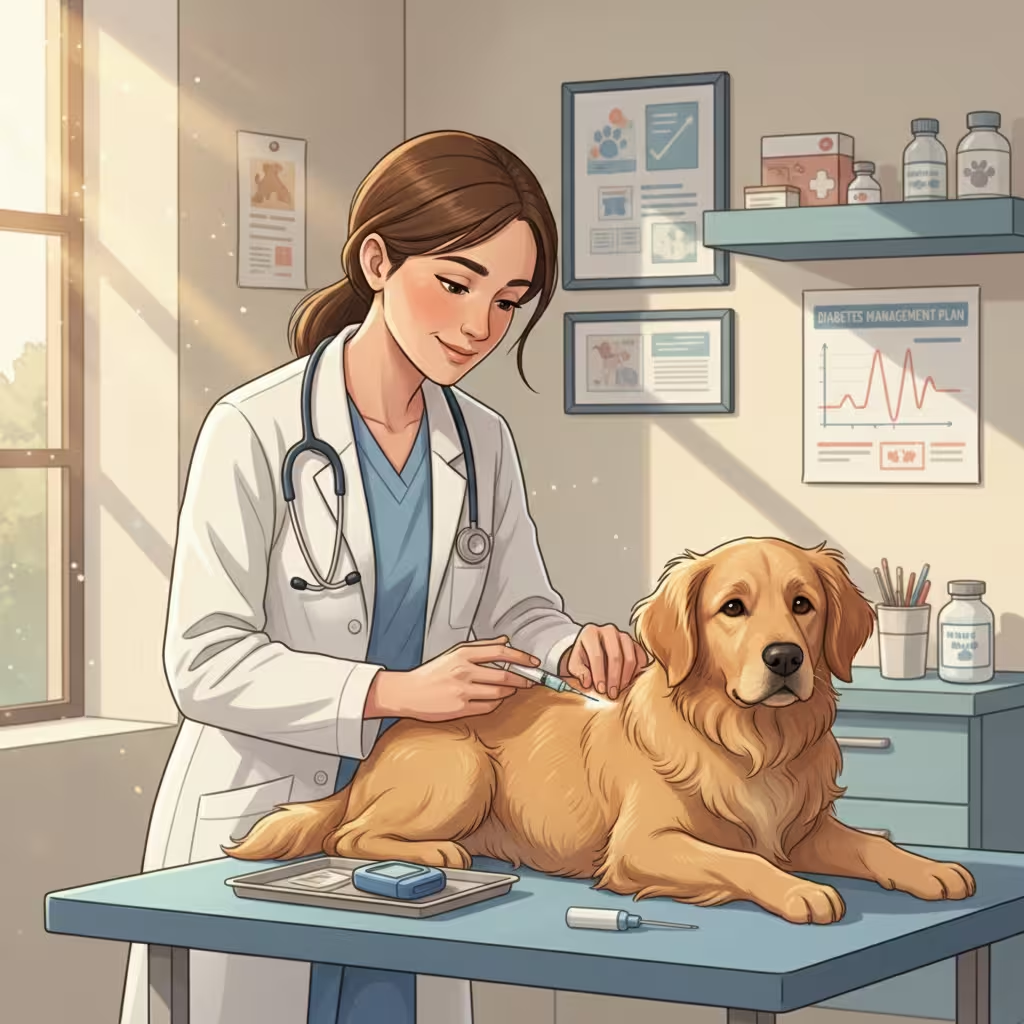
Incurable conditions are different. Cancer. Diabetes. Arthritis. Hip dysplasia. These are lifelong, and most insurers will exclude them permanently. Like, forever. Once it’s in the record as a diagnosed chronic condition, most companies will stamp “excluded” on it and call it a day.
The one major exception to this? AKC Pet Insurance. More on them in a minute.
The Bilateral Condition Problem Nobody Talks About
This one is sneaky and I want to make sure you understand it before you sign anything.
A bilateral condition affects body parts that come in pairs. Knees. Hips. Eyes. Shoulders. If your dog has a torn ACL in the left knee before coverage starts, most insurers will also exclude the right knee — even if it’s totally fine right now.
The logic is: these conditions tend to happen on both sides eventually. So insurers treat them as one pre-existing issue across both sides of the body.
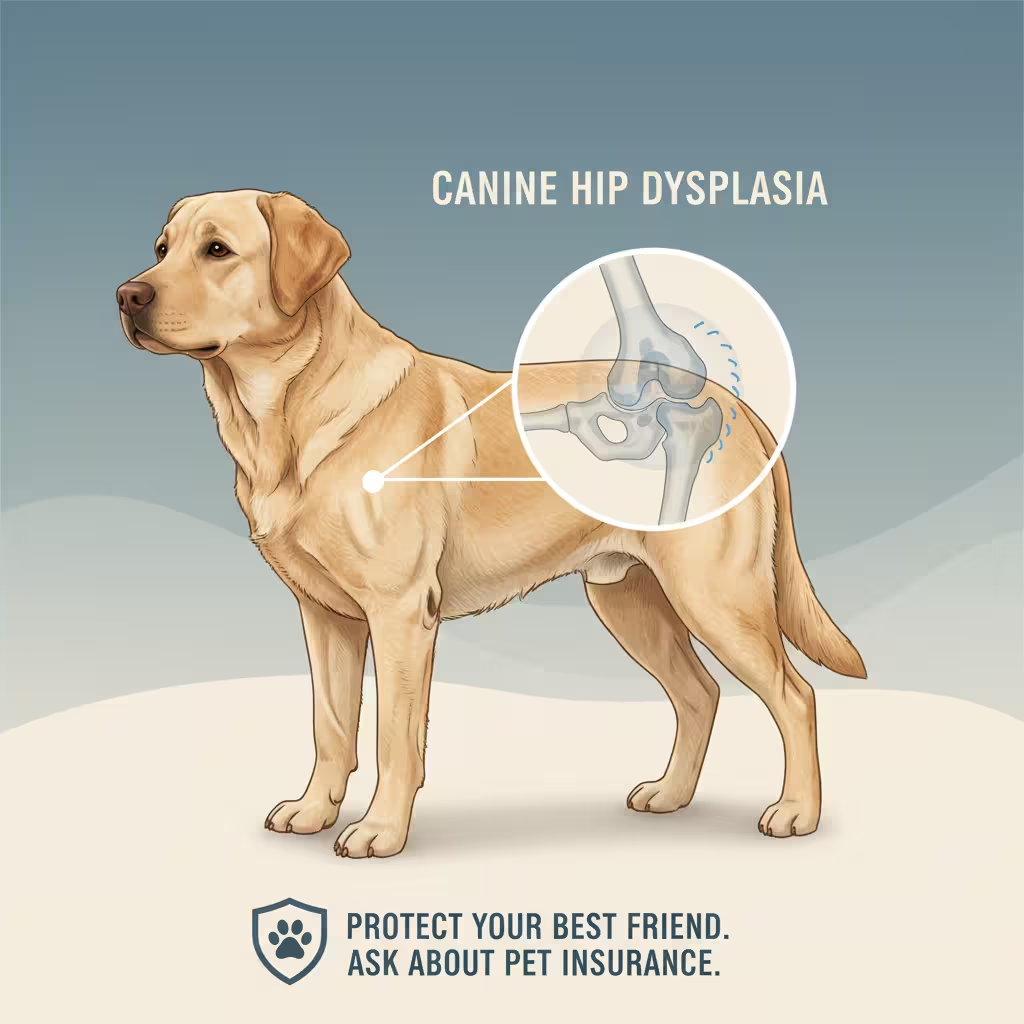
For dog owners with breeds prone to joint problems — like Labrador Retrievers, Golden Retrievers, or German Shepherds — this matters a lot. Hip dysplasia, cruciate ligament tears, elbow dysplasia. These are bilateral conditions. One diagnosis can knock out coverage for both sides.
Make sure you ask any insurer directly: “How do you handle bilateral conditions?” If they dodge the question or bury the answer in the fine print, that’s a sign.
Does Any Pet Insurance Actually Cover Pre-Existing Conditions?
Here’s the honest answer: most don’t. But some do — with conditions attached (pun intended).
There are three approaches insurers take:
1. Permanent Exclusion — The most common. Whatever was wrong before is excluded forever. Full stop.
2. Conditional Coverage for Curable Conditions — Your dog can “age out” of certain exclusions if they’ve been symptom-free for a set period. This is actually more common than people realize, and it’s worth asking about specifically.
3. Full Coverage After Enrollment Period — This is rare. Like, really rare. Only one major company does this properly.

The Providers Worth Knowing About
AKC Pet Insurance — The Gold Standard for Sick Dogs
I’ll be upfront: AKC charges more. Sometimes significantly more.
But here’s what makes them genuinely different from every other company in the US market right now: AKC Pet Insurance is the only major provider that will cover both curable and incurable pre-existing conditions — after your dog completes 365 days of continuous enrollment.
One full year. No claims on that condition during that year. And then, potentially, it’s covered.
For a dog with diabetes or a chronic skin condition that flares up seasonally? This is huge. This changes the math entirely.
Is it expensive? Yes. Is it worth it for a dog that already has serious ongoing health stuff? For a lot of families, yes.
If your dog has something chronic and you want actual coverage for it, AKC is the only real answer on the market right now. Everything else is going to exclude that condition permanently.
Pumpkin Pet Insurance — Best for Budget-Conscious Owners
Here’s the flip side. Pumpkin is the most affordable option for pet insurance with pre-existing conditions on the market, with monthly rates starting around $46 for dogs.
For cats, it’s even cheaper — roughly $20 a month to start.
Now, Pumpkin isn’t going to cover your dog’s pre-existing hip dysplasia. They’re not in the miracle business. But for dogs with one or two excluded conditions who are otherwise healthy? Pumpkin gives you solid coverage for everything else without destroying your monthly budget.
The strategy here is: use Pumpkin to protect against the unexpected new health issues while you manage the known pre-existing conditions out of pocket or through a savings account.
It’s not perfect. But it’s practical. And honestly, for a lot of dog owners, practical beats perfect.
Waiting Periods: The Clock Starts Now
Before we go any further, let’s talk about waiting periods because they affect everything.
When you sign up for any pet insurance policy, there’s a mandatory waiting period before coverage kicks in. This isn’t the company being mean — it’s the way insurance works. Without waiting periods, people would just sign up the day before a surgery, use the insurance, then cancel. That’s called adverse selection, and it would make the whole system collapse.
Here’s what standard waiting periods typically look like:
- Accidents: 2–5 days
- Illnesses: 14–30 days
- Orthopedic conditions (like ACL tears or hip issues): 6–12 months
That last one. That’s the brutal one.
If your dog needs knee surgery and you just signed up for insurance? You’re probably waiting six months to a year before that’s covered. And if your dog shows any symptoms during that waiting period, it could become a pre-existing condition that’s excluded permanently.
So the timing of when you enroll matters. A lot.
The Orthopedic Exam Requirement
Some insurers — particularly for breeds prone to joint issues — will require an orthopedic exam before they’ll write coverage for orthopedic conditions. German Shepherds, Rottweilers, Bernese Mountain Dogs, larger breeds in general.
This exam basically establishes a baseline. The vet checks hips, elbows, knees. If everything looks clean, you might qualify for orthopedic coverage after the waiting period.
If something shows up on that exam? It’s excluded. But at least you know exactly what’s excluded and what’s not, which is actually better than finding out when you file a claim.
Not every insurer requires this. But it’s worth asking about, especially if you have a large breed dog that’s younger and currently healthy. Getting that baseline documented could protect you later.
Best Pet Insurance for Dogs with Hip Dysplasia
This is one of the most searched questions out there — and for good reason. Hip dysplasia is incredibly common in certain breeds, it’s bilateral, and it’s expensive to treat.
Here’s the reality of where things stand:
If your dog has already been diagnosed with hip dysplasia, your options are limited. Most insurers will permanently exclude it. AKC is the only provider where coverage after a year of enrollment is theoretically possible, depending on how the condition is classified.
If your dog is at risk for hip dysplasia but hasn’t been diagnosed yet — maybe you have a young Lab or a Golden — this is the time to act. Get a policy now, before any symptoms appear. Get that orthopedic exam done and documented as clean. Then you’re in a much stronger position.
For dogs who have hip dysplasia and need a policy for everything else — other conditions, accidents, new illnesses — Pumpkin or a comparable budget provider makes sense as a financial safety net.
Pet Insurance for Older Dogs with Health Issues
Let me just say this clearly: yes, you can get insurance for an older dog. It’s harder. It’s more expensive. But it’s not impossible.
The older the dog, the more likely there are pre-existing conditions lurking in the medical records. Most of those will be excluded. And premiums for senior dogs are higher because the actuarial risk is higher — it’s just math.
But here’s the thing. An older dog can still get into an accident. Can still develop a new illness. Can still need emergency surgery for something that has nothing to do with their existing conditions. And those costs can be enormous.
Accident-only pet insurance is worth considering for older dogs. It’s significantly cheaper, doesn’t cover illnesses, but does protect you against the unexpected trauma events — a car accident, a fall, swallowing something they shouldn’t have.
Some insurers offer accident-only policies specifically for senior pets. If full coverage isn’t realistic because of cost or exclusions, accident-only is better than nothing.
How AI Is Changing the Game (And Not Always in Your Favor)
Here’s something that doesn’t get talked about much in these pet insurance comparison articles.
Insurance companies are now using AI to analyze veterinary records. Fast. Accurately. Way more thoroughly than a human reviewer ever could.
That’s good in some ways — claims get processed faster, there are fewer errors, enrollment decisions happen quicker.
But it also means that AI is better at finding pre-existing conditions in those medical records than ever before. That vague note from 2022 about your dog “seeming stiff” after a hike? AI will find it. It will flag it. And it might affect your coverage.
This isn’t a reason to panic. It’s a reason to know your dog’s medical history before you apply. Pull the records. Read them. Know what’s in there. If there are notes that could be interpreted as symptoms of something serious, talk to your vet about it before you start the application process.
Information is power. Don’t walk into enrollment blind.

New Rules You Should Know About (2026 Regulations)
Florida updated its pet insurance laws in 2026, and it’s worth knowing what changed — especially if you live there.
Insurers in Florida now have to clearly disclose coverage limits and waiting periods upfront. No more hiding the important stuff in 40 pages of fine print. And consumers get a 30-day “free look” period after signing up — if you read the policy and realize it’s not right for you, you can cancel within 30 days and get a full refund.
That’s actually a big deal. Use it. When you sign up for any policy, read the full policy document during those first 30 days. Look specifically for how they handle pre-existing conditions, bilateral conditions, and what their look-back period is for curable conditions.
Even if you’re not in Florida, some of these protections are worth asking your insurer about directly. The industry is moving toward more transparency. Push for it.
So Which Policy Should You Actually Get?
Okay, here’s where I pull it all together and give you something actually useful.
If your dog has a chronic, incurable condition (cancer, diabetes, arthritis, heart disease): → AKC Pet Insurance. It’s the only real path to eventual coverage. Budget for the higher premium.
If your dog has minor past conditions (old infections, healed injuries) but is generally healthy: → Shop around. Ask specifically about their look-back period and whether curable conditions can be removed from the exclusion list over time.
If your dog is older with multiple exclusions and you mainly want accident protection: → Accident-only policy. Cheaper, focused, and still provides real financial protection.
If your dog has some excluded conditions but you need affordable coverage for everything else: → Pumpkin. Lowest monthly rates, starting around $46/month for dogs. Accept the exclusions and use it as a safety net for new issues.
If your dog is young and currently healthy: → Stop reading and go sign up for something right now. Seriously. Every month you wait is a month where something could show up in the records and become a pre-existing condition.
Quick Checklist Before You Apply
Before you click “submit” on any pet insurance application, run through this:
- Pull your dog’s complete veterinary records and read them yourself
- Note any mentions of symptoms, even passing ones — limping, vomiting, stiffness
- Research whether any of those symptoms could be flagged as a pre-existing condition
- Ask the insurer specifically: “How do you handle bilateral conditions?”
- Ask: “What is your look-back period for curable conditions?”
- Ask: “Do you require an orthopedic exam for large breeds?”
- Read the full policy document within the free-look window
- Compare at least three providers before committing
This stuff sounds tedious. It is a little tedious. But it’s a lot less painful than filing a $6,000 claim and finding out it’s denied because of a note in a 2021 vet visit.
Frequently Asked Questions – FAQ’s
- What is a pre-existing condition in pet insurance?
A pre-existing condition is any illness, injury, or health issue that showed symptoms or was diagnosed before the insurance policy started or during the waiting period. - Does pet insurance cover pre-existing conditions?
Most pet insurance plans do not cover pre-existing conditions. However, some insurers may cover curable conditions after a symptom-free waiting period. - What are examples of curable pre-existing conditions?
Curable conditions include ear infections, urinary tract infections, and respiratory infections. These may be covered after a set period without symptoms or treatment. - What are examples of incurable pre-existing conditions?
Incurable conditions include diabetes, arthritis, cancer, and hip dysplasia. These are typically excluded from coverage permanently. - Can I still get pet insurance if my pet has pre-existing conditions?
Yes, you can get insurance to cover new illnesses or injuries unrelated to the pre-existing condition. - What is a bilateral condition, and how does it affect coverage?
A bilateral condition affects paired body parts (e.g., knees, hips). If one side is affected before coverage starts, insurers often exclude both sides. - How do insurers determine pre-existing conditions?
Insurers review your pet’s medical records and may require a veterinary exam to identify any pre-existing conditions. - What is the waiting period in pet insurance?
Waiting periods are the time after enrollment before coverage begins. Typical waiting periods are 2–5 days for accidents and 14–30 days for illnesses. - Is it worth getting pet insurance for a pet with pre-existing conditions?
Yes, it can still be valuable to cover future accidents or illnesses unrelated to the pre-existing condition. - How can I avoid pre-existing condition exclusions?
Enroll your pet in insurance early, before any symptoms or diagnoses occur, to maximize coverage options.
The Bottom Line
Pet insurance for dogs with pre-existing conditions isn’t a fairy tale. You’re not going to find a $30/month policy that covers your dog’s existing cancer diagnosis from day one. That’s not how insurance works, and any company that promises that is lying to you.
But here’s what is real: there are options. There are companies that handle this better than others. There are policy mechanics — look-back periods, waiver of exclusion clauses, enrollment timelines — that can work in your favor if you understand them.
AKC is the leader for dogs with serious ongoing conditions. Pumpkin is the leader for affordable coverage with exclusions. And for older dogs or dogs with heavy exclusion lists, accident-only coverage is a smart, underused option that too many people overlook.
The pet insurance market is projected to hit $31.40 billion by 2034. Prices are going up. Veterinary costs are going up. The time to get protected — whatever that looks like for your specific dog — is now.
Your dog doesn’t care about insurance policies. But when that emergency hits at 11pm on a Saturday and the vet bill is $4,800? You will.
Go get covered.
Disclaimer: This article is for informational purposes only and does not constitute insurance, financial, or veterinary advice. Coverage terms vary by provider and state. Always review your policy documents carefully and consult with a licensed insurance professional before purchasing a policy.