My brother-in-law called me on a Wednesday morning asking if I could lend him $3,200.
Not for rent. Not for a car problem. For a hospital bill.
He’d been between jobs for about two months. Had one of those cheap short-term health plans he found on Google — $84 a month, approved in like ten minutes, looked totally fine on the summary page. Then he had chest pains bad enough that his wife drove him to the ER at midnight.
Turned out to be severe acid reflux. Terrifying in the moment, not life-threatening in the end. Three hours in the ER, an EKG, some bloodwork, one very relieved doctor.
The bill came to $4,100.
His plan covered $900 of it. Why? Because two years earlier he’d been prescribed medication for occasional heartburn. His plan had a two-year lookback clause. Anything connected to his digestive system was classified as pre-existing. The ER visit — in their reading — was related.
He argued. Got nowhere. Paid.
I tell you that story not to scare you but because it is the exact situation that short-term health insurance is quietly designed to create. Cheap upfront. Expensive when you need it. And completely legal.

So What Even Is Short-Term Health Insurance
The government calls it Short-Term Limited Duration Insurance. STLDI. That name sounds official and regulated. It’s neither, really.
The idea behind it is a gap filler. You lose your job. New one starts in six weeks. You need something in between. Short-term plan bridges that window. That is genuinely what it was built for.
That’s not how a lot of people use it in 2026 though.
ACA Marketplace premiums basically doubled from 2025 to 2026. We’re talking average annual premiums jumping from $888 to $1,904. The government help that kept premiums manageable for millions of people — Enhanced Premium Tax Credits — expired December 31, 2025 and Congress didn’t renew them. So suddenly a whole bunch of people are staring at $400, $500, $600 a month Marketplace premiums and then spotting a short-term plan online for $90.
And they think hey. Same thing probably. Just cheaper.
It is not the same thing. Not even a little.
The Rules Changed — Here’s What’s Legal Now
Federal regulations tightened these plans starting September 2024.
Short-term plans are now capped at three months for the initial term. One one-month extension is possible. That’s four months total. That is the legal maximum across the board.
Before this rule tightened up, insurance companies were doing something called stacking. Company sells you a three-month plan. It expires. Same company — or a company they quietly own — sells you another three-month plan. Then another. You’re technically on “short-term” coverage for a year or two straight. Same garbage coverage on a rolling loop.
They closed that door. Now if the same company or any company in their ownership group sells you another short-term plan within 12 months, it counts toward your total duration. Four months and you’re done with that issuer for the year.
Which means if you’re thinking about using short-term coverage as a long-term ACA replacement strategy — the government already said no. You get four months. After that you either find real coverage or you’re uninsured.
What These Plans Don’t Tell You On the First Page
Here’s where I get irritated. And I mean actually irritated, not politely-explaining irritated.
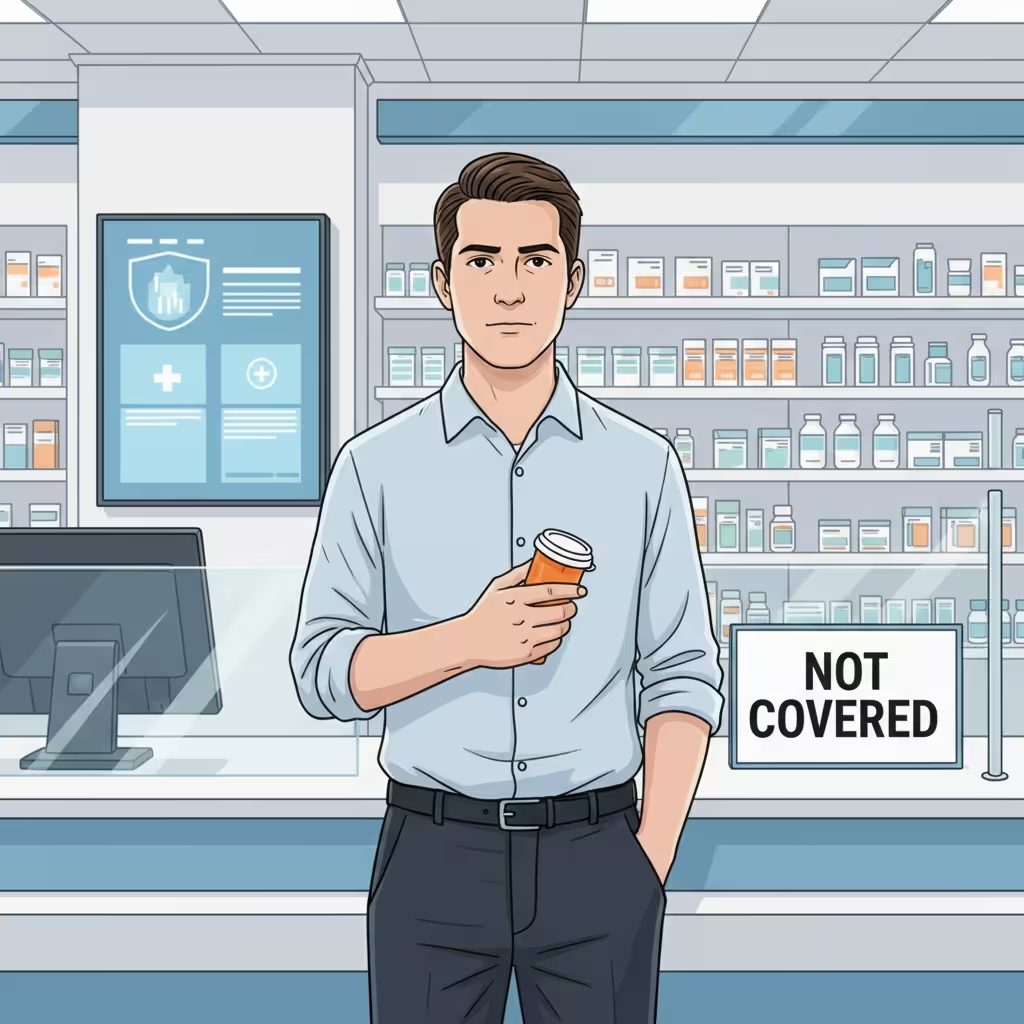
Short-term plans are not required to cover what ACA plans are required to cover. The ACA has something called Essential Health Benefits — ten categories of services every compliant plan must include. Maternity care. Mental health. Prescription drugs. Emergency services. Preventive care. The full list.
Short-term plans don’t have to cover any of it. And most of them don’t.
The numbers are not small. 98 out of 100 short-term plans exclude maternity care completely. 94 out of 100 skip adult vaccines. Almost half — 48% — have zero prescription coverage. And 40% don’t cover mental health or addiction treatment at all.
No mental health coverage. In 2026. On plans being marketed to people who are stressed about money and healthcare costs.
Then there’s the lookback clause situation. This is the thing that got my brother-in-law. Every short-term plan has a lookback period — usually somewhere between one and five years — during which they can review your medical history and decide whether your current claim is “related to” something that happened before your policy started.
The word “related” is doing a lot of heavy lifting in that sentence.
Heartburn medication two years ago, now you have an ER visit from chest pain? Related. Knee pain you mentioned to your doctor three years back, now you need physical therapy on that same knee? Related. The vagueness is intentional. It gives them room to deny.
ACA plans cannot do this. At all. It’s called guaranteed issue — they take you with your full history and they cover you. Short-term plans are the legal opposite of that.
The Real Dollar Math Nobody Does Before Buying
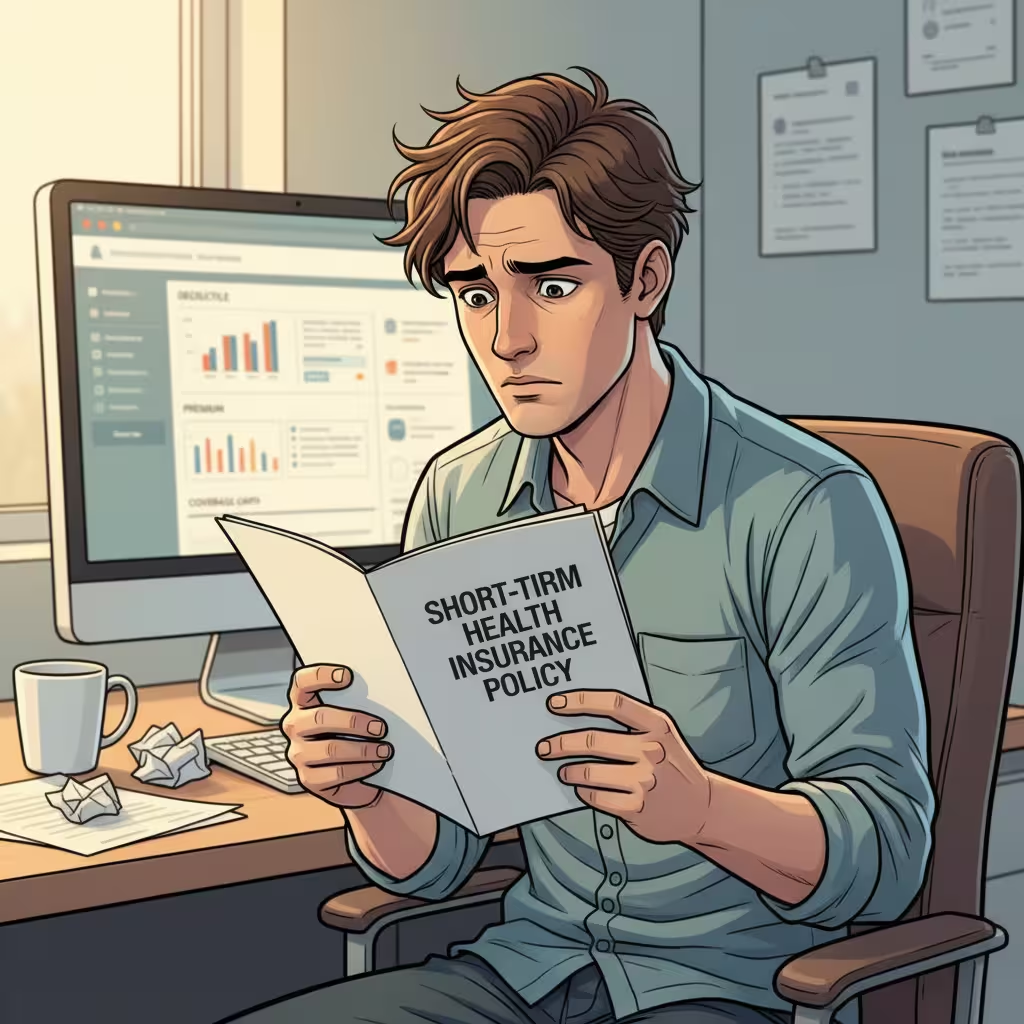
People compare short-term plan premiums to ACA premiums. That’s the wrong comparison.
The right comparison is total financial exposure.
Short-term plan. $90 a month. Sounds great.
But your short-term plan probably has no out-of-pocket maximum. ACA plans in 2026 cap your individual exposure at $10,600 for the year. Once you hit that number the plan pays 100% of everything else. Short-term plans just keep charging you. There is no ceiling. A bad accident, a surprise diagnosis, a surgery — your bill has no floor it stops at.
So yes. The $90 a month versus $450 a month premium comparison is real. $360 saved every month is real money.
But compare the worst cases. On an ACA plan your worst year costs you $10,600 out of pocket no matter what happens. On a short-term plan your worst year has no cap. My brother-in-law paid $3,200 for acid reflux. A serious injury or diagnosis could run $50,000, $80,000, $100,000 with no ceiling stopping it.
Is $360 a month in savings worth unlimited downside risk?
For a healthy 24-year-old with an emergency fund and a two-month gap before their employer plan kicks in? Maybe. Actually probably yes.
For a 45-year-old with a family history of anything and no substantial savings cushion? That math gets scary fast.

Is Short-Term Health Insurance Better Than ACA — Straight Answer
Here’s my blunt take. No. Not for coverage.
Cheaper? Yes sometimes. Significantly.
Easier to get? Yes. No real underwriting on enrollment, just on claims. They take your money fine.
Better coverage? No. Never. Not once. ACA plans are better coverage by every metric that matters when you’re actually sick.
The only honest argument for short-term over ACA is price. That’s it. Everything else cuts the other direction.
And even the price argument has an asterisk. Because if you qualify for ACA subsidies — and you might, more people qualify than realize it — the actual monthly cost of a Marketplace plan might not be as far from that short-term plan as you think. The subsidy calculator on Healthcare.gov takes literally five minutes. A lot of people skip it and assume they won’t qualify. Sometimes they’re wrong.
For someone above 400% of the federal poverty level — about $62,600 for a single person — subsidies are gone and ACA premiums are brutal. That’s real. I’m not pretending otherwise. A 60-year-old couple at $85,000 might be staring at $22,000 a year in ACA premiums in 2026. Twenty-two thousand dollars. That’s not a number I can wave away.
When that’s your ACA option the $1,200-a-year short-term plan feels like the only rational choice. I get it. But rational and safe aren’t always the same thing.
If You’re Going to Get One Anyway — Do This First
I’m not here to tell people in tough situations what they can and can’t afford. But if you decide a short-term plan is your only realistic option right now, at least don’t get burned the way my brother-in-law did.
Call providers before you buy. Don’t look at the plan’s website list of “participating providers.” Call two or three actual doctors and urgent care facilities near you and ask directly: do you accept this specific plan. The networks on these plans are often surprisingly small and outdated.
Get the exclusions document. Not the summary. Not the highlights page. The full exclusions document. It’s usually dense and long and that’s intentional. Read the lookback period. Read what conditions are categorically excluded. Read the benefit limit per condition and per policy term. Some plans cap at $100,000 total. An ICU stay eats that in days.
Check prescriptions specifically. About half of short-term plans include some drug coverage. The other half include zero. If you take anything regularly, call and ask whether that specific drug is covered, at what cost, and whether it’s on their formulary. Get that answer in writing before you pay your first premium.
Look for an out-of-pocket cap. Not all short-term plans have one. But some do. If you’re choosing between two plans at similar prices and one has any kind of annual cap on your exposure, that one wins every time.
Who Short-Term Plans Actually Make Sense For
I’ve been pretty hard on these plans and I stand by it. But I’m not going to pretend they’re useless for everyone.
There is a narrow group of people where short-term coverage is a legitimate reasonable choice.
You just got laid off. You have a new job starting in eight weeks. You’re 28. You’re healthy. You take no medications. You have $2,000 in savings. You need something in case you break your arm before week eight. A short-term plan for that window, with a network that includes your nearest ER, is probably fine and considerably cheaper than COBRA.
You’re 22 and just aged off your parents’ plan. Your employer doesn’t offer benefits. Open enrollment isn’t for another three months. You need a temporary bridge and Medicaid doesn’t cover you. Two or three months on a short-term plan is better than nothing.
You’re self-employed and missed open enrollment completely and don’t have a qualifying life event to trigger a special enrollment period. Short-term for a few months until November is a real option.
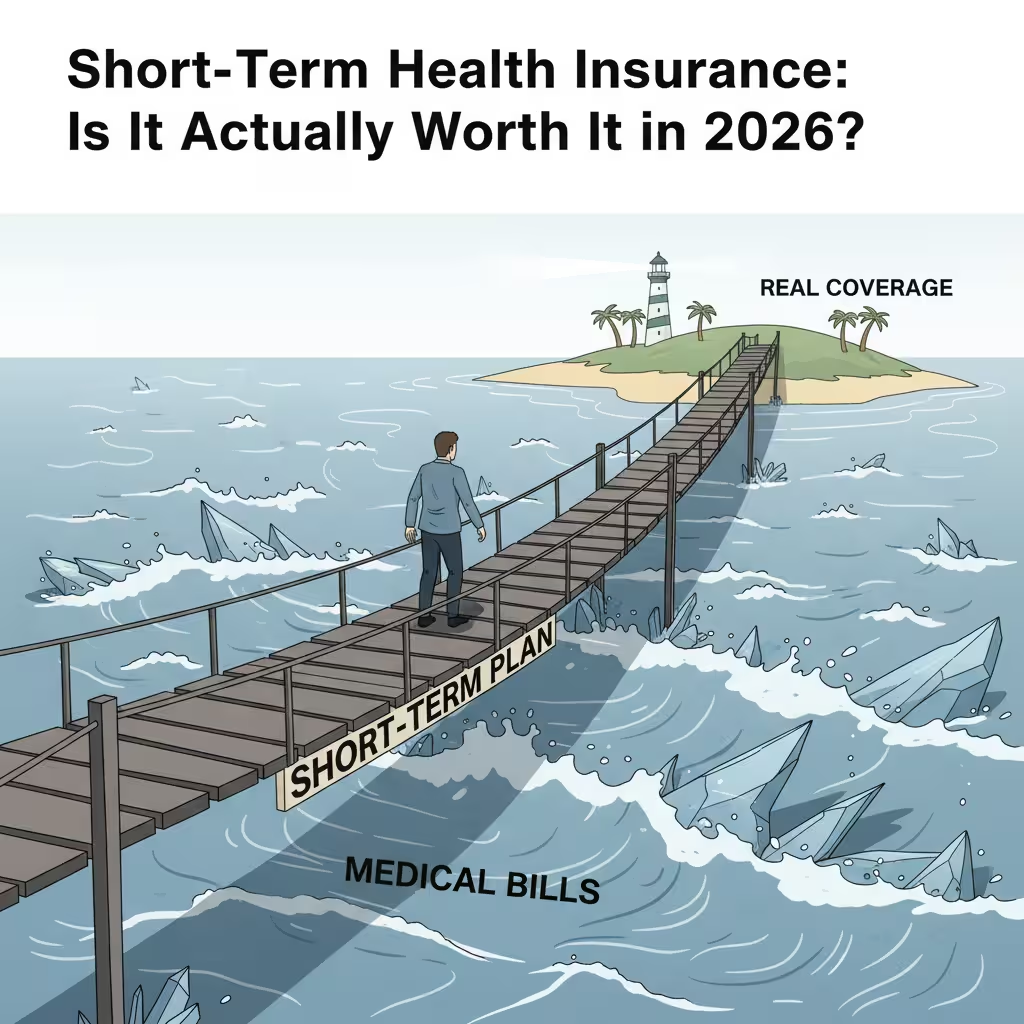
All three of those situations share the same thing. There’s a known end date. Real coverage is coming. The short-term plan is a literal bridge with water under it and dry land visible on the other side.
Using short-term as your permanent insurance because ACA is too expensive — that’s a different thing. That’s not a bridge. That’s just standing on the water and hoping it stays solid.
What Prescriptions Look Like on These Plans
People ask about this a lot. Short-term health insurance that covers prescriptions — does it exist?
Yes. Sort of.
Around half of short-term plans include some prescription coverage. But “some” is doing a lot of work in that sentence. Most of them cover a formulary — a limited approved list — and generics are included far more often than brand-name drugs. The coverage is often structured as a flat discount rather than actual insurance paying a share.
If you have a regular prescription that costs $200 a month and your short-term plan only discounts it to $180, you’re still paying $180 plus your monthly premium. Running that math against just paying out of pocket with a GoodRx coupon sometimes reveals the plan isn’t actually saving you anything on that drug.
I know this sounds like a lot of homework before buying a health plan. It is. That’s kind of the point I’m making. Short-term plans require way more research to use safely than ACA plans do. ACA plans have standardized protections. Short-term plans require you to do the detective work yourself.
Frequently Asked Questions – FAQ’s
- What is short-term health insurance, and how does it work?
Short-term health insurance provides temporary coverage for unexpected medical expenses during gaps in traditional insurance. It’s not ACA-compliant and offers limited benefits. - Does short-term health insurance cover pre-existing conditions?
No, short-term plans typically exclude pre-existing conditions, often defined broadly to deny related claims. - What are the main differences between ACA plans and short-term health insurance?
ACA plans cover essential health benefits, pre-existing conditions, and have out-of-pocket caps. Short-term plans are cheaper but lack these protections. - How long can I stay on a short-term health insurance plan in 2026?
Federal rules cap short-term plans at 3 months, with a one-month extension, totaling 4 months per year. - What are the typical exclusions in short-term health insurance policies?
Common exclusions include maternity care, mental health services, preventive care, and prescription drugs. - Is short-term health insurance cheaper than ACA plans?
Yes, short-term plans often cost 50-80% less than ACA plans but come with significantly fewer benefits. - Can I renew my short-term health insurance plan after it expires?
Renewals are limited to one month, and you cannot re-enroll with the same insurer within 12 months. - Does short-term health insurance cover prescription drugs and mental health services?
Coverage for these is rare; most plans exclude or offer very limited benefits for prescriptions and mental health. - Who is short-term health insurance best suited for?
It’s ideal for healthy individuals needing temporary coverage, such as between jobs or waiting for other insurance to start. - What should I check before buying a short-term health insurance plan?
Verify exclusions, network providers, lookback periods, benefit caps, and whether your prescriptions are covered.
The Bigger Picture Nobody Wants to Say Out Loud
This is where I’m going to say something a little uncomfortable.
The reason short-term plans are so attractive in 2026 isn’t because they’re a great product. It’s because the real product got a lot more expensive really fast.
55% of ACA enrollees this year are cutting back on food and basic stuff to pay their premiums. 43% are thinking about getting a second job to cover healthcare. A man in South Carolina said his plan tripled in price and he had to drop to a higher deductible plan and just hope nothing bad happens.
That’s the real story behind every person Googling short-term health insurance right now. Not that they want a worse product. They want something they can actually pay for.
And I don’t have a perfect answer to that. I don’t think there is one right now. What I can do is make sure that if you’re going to choose a short-term plan you choose it knowing exactly what it is and isn’t. Not because it sounded cheap on a comparison website. Not because you clicked approve without reading the exclusions. But because you looked at your situation, ran the real numbers, understood the lookback period and the benefit cap and the absence of an out-of-pocket ceiling, and decided this is the calculated risk I’m taking.
That’s a real choice. Made with real information.
My brother-in-law didn’t get that. I hope you do.
Sources: Comprehensive Study Guide: The One Big Beautiful Bill Act and the 2026 Healthcare Landscape. The Transformation of U.S. Healthcare in 2026. STLDI Federal Regulations Update September 2024. KFF Health Insurance Survey Data 2026.