
Last Updated: March 2026
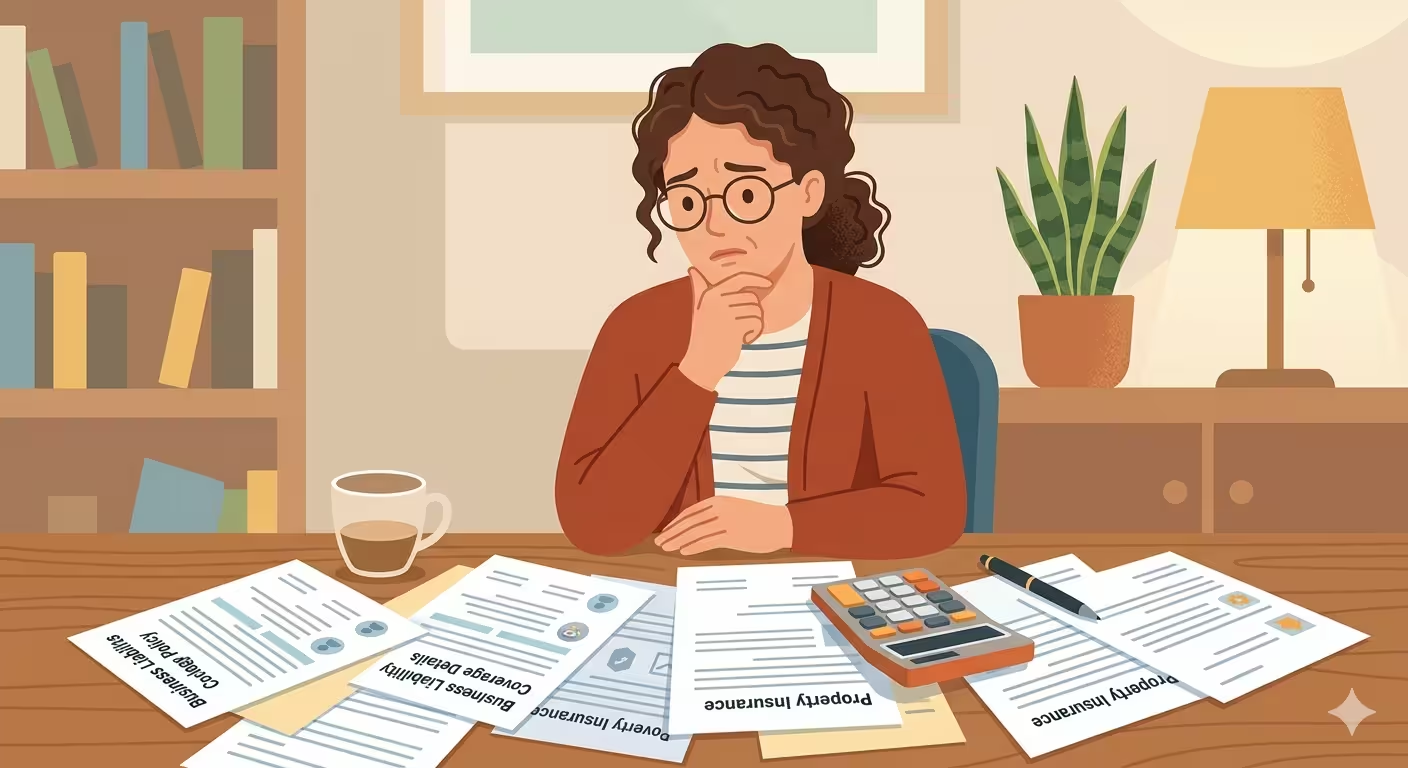
Diane ran a bookkeeping firm out of Tulsa for eleven years. Good clients. Solid reputation. She’d built the whole thing from a spare bedroom and a QuickBooks subscription into a real operation — four contractors, a downtown office, and a waiting list.
Then one client claimed she’d filed their quarterly taxes wrong. Cost them a penalty. They wanted $34,000.
Diane had liability insurance. She was certain of it. What she had, it turned out, was a Business Owner’s Policy — property and general liability bundled together. What she didn’t have was Errors and Omissions coverage. The two sound similar. They cover completely different things.
The claim wiped out most of her cash reserves. She settled. Kept the business, barely.
“I didn’t know what I didn’t know,” she told me. And that’s the thing — most small business owners don’t. They buy what sounds right, renew it every year without looking, and assume the gap will never show up.
It always shows up.
This guide is about closing those gaps before they find you. Small business insurance isn’t one product — it’s a stack of specific coverages that have to match your specific operation. Get the stack right and a bad day stays a bad day. Get it wrong and one lawsuit, one fire, one data breach ends eleven years of work.

The Mistake Almost Every Small Business Owner Makes First
Here’s what I see constantly: someone launches a business, Googles “small business insurance,” buys the first BOP that comes up, and calls it done. For maybe three or four years, nothing happens. They renew automatically. They forget about it.
Then something happens.
And they find out that the coverage they bought in year one — based on their revenue then, their employee count then, their risk profile then — has nothing to do with the business they’re actually running now.
If you’re a freelance designer or a solo consultant, your insurance needs look nothing like a landscaping company with six trucks or a restaurant with forty employees. The term “commercial insurance for small businesses” covers an enormous range of risk. Your job isn’t to buy all of it. Your job is to figure out which pieces your operation actually needs — and then make sure those pieces are calibrated to where your business is today, not where it was when you first signed up.

What a BOP Actually Covers — and Where It Stops
Most small businesses start here, and for good reason. A Business Owner’s Policy bundles three things: commercial property coverage, general liability, and business interruption insurance. Buying them as a package almost always costs less than sourcing them one by one.
The property piece is straightforward. Your equipment, inventory, furniture, signage — protected against fire, theft, vandalism, certain weather damage. If someone smashes your storefront window at 2 a.m. or a grease fire wrecks your kitchen, property coverage responds.
Two things it won’t touch, and I want to be direct about this: floods and earthquakes. Standard BOPs exclude both. Those need separate riders or standalone policies. If you’re operating anywhere near a flood zone — coastal areas, river towns, parts of the Gulf South — don’t skip this.
General liability inside a BOP handles third-party claims. Customer slips on your floor and breaks an ankle. Your crew damages a client’s hardwood floors during a delivery. Your company’s social media post makes a claim that someone’s lawyer decides qualifies as defamatory. General liability is the cushion between you and those legal fees.
And then there’s business interruption — the one that quietly saves businesses or quietly fails them. Say a burst pipe closes your restaurant for three weeks. Business interruption coverage replaces the income you’re losing while repairs happen. It pays your staff. It covers your rent. Without it, three weeks off becomes the beginning of a spiral most small operations don’t survive.
A BOP runs roughly $40 to $290 a month depending on your industry, location, and size. Worth every dollar when something goes wrong. Useless if you’re assuming it covers risks it was never designed to touch.
The Coverage Gap That Took Down Diane’s Cash Reserves
This is worth its own section because it catches so many service-based business owners off guard.
Errors and Omissions insurance — E&O, also called professional liability — is the coverage that protects you when a client claims your advice, your work, or your judgment cost them money. Not a slip-and-fall. Not a fire. Your professional output.
General liability won’t touch this. It’s a completely separate policy.
If you’re a consultant, accountant, IT professional, designer, financial advisor, therapist, or anyone else who charges for expertise — E&O isn’t optional. The day a client decides your recommendation blew a deal they were counting on, or that the deliverable you sent wasn’t what the contract described, general liability sits on the sidelines. E&O is what shows up.
What makes this uncomfortable is that the claim doesn’t require you to have done anything wrong. Meticulous professionals — the ones with contracts, documentation, email trails — get dragged into these disputes all the time. Being right doesn’t pay the attorney. Coverage does.
Small service businesses typically pay between $500 and $2,000 a year for E&O. IT firms and anything adjacent to healthcare land higher. It’s cheaper than one day of legal fees on a contested claim.
Workers’ Comp: The One That’s Actually the Law
Let’s answer the “is business insurance required by law” question directly.
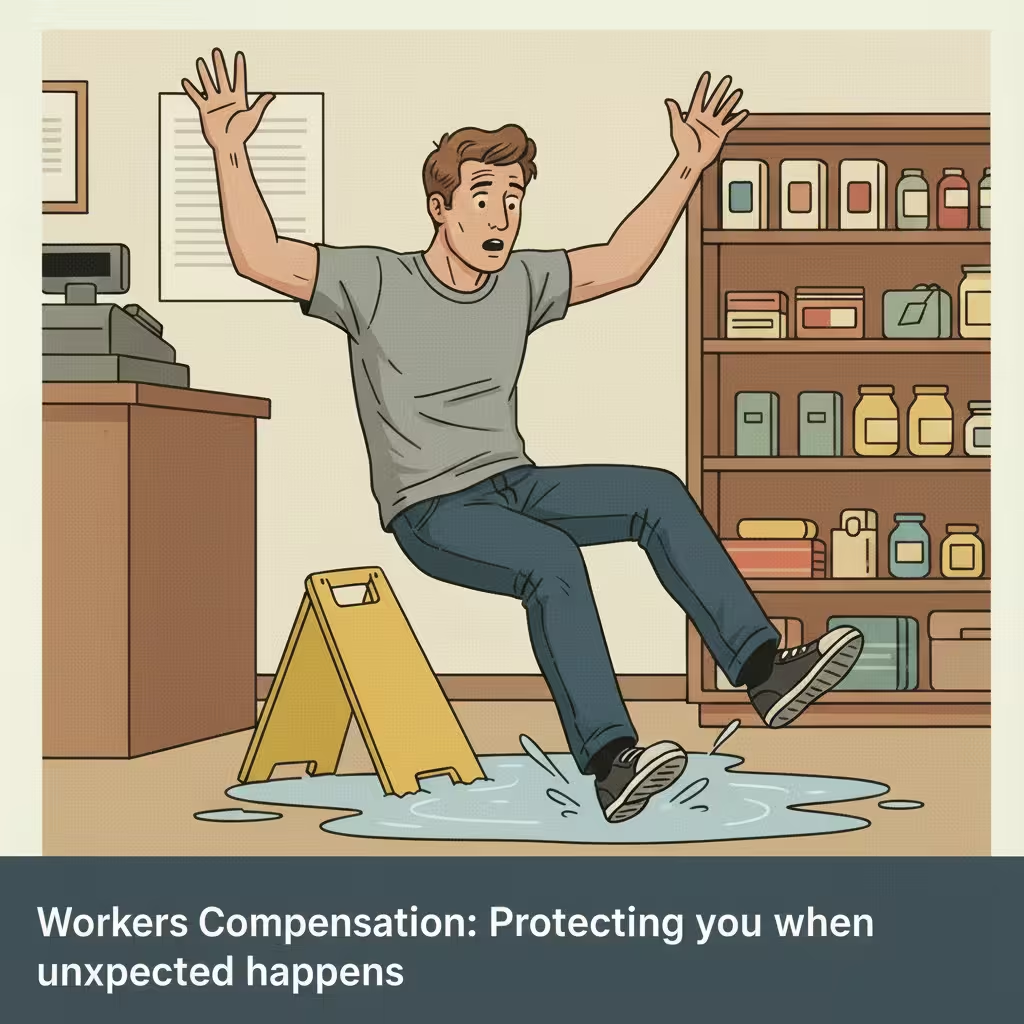
Most coverages aren’t legally mandated. Workers’ compensation is. In 49 states, the moment you hire an employee, you’re almost certainly legally required to carry it. Texas is the technical exception — workers’ comp is optional there — but the business owners who opt out in Texas absorb full personal liability when an employee gets hurt. Every one of them I’ve spoken to said the same thing: it seemed like a smart cost-cut until someone actually got hurt.
Workers’ comp pays your injured employee’s medical bills and replaces part of their wages during recovery. It also cuts off their right to sue you directly for the injury. That second part is the one that matters most for your business’s long-term survival — because without workers’ comp, a bad fall or a repetitive-stress injury can turn into a civil lawsuit that follows you for years.
Premiums get calculated from payroll, your industry classification code, and your claims history. Keep incidents off the board and the rates stay manageable. A string of claims is hard to walk back.
Commercial Auto: A Gap That Surprises People Every Time
A lot of small business owners drive their personal truck to job sites, run product samples in their own car, haul supplies between locations. Most assume their personal auto policy covers them while they’re doing it.
It doesn’t.
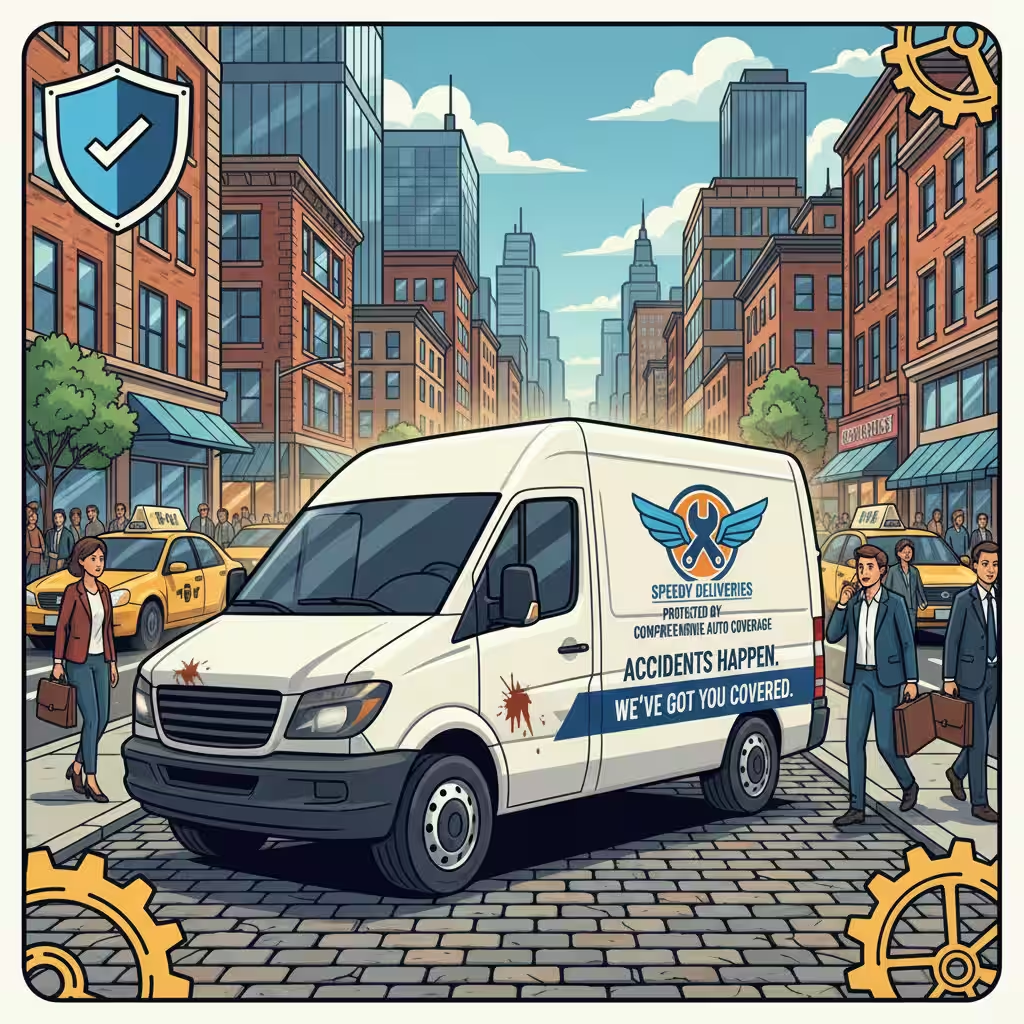
Personal auto policies exclude business use. Get into an accident while driving for work and your insurer can deny the claim entirely — and they will. Commercial auto coverage handles liability and physical damage for vehicles used in business operations, whether that’s a single sedan or a fleet of vans.
If your employees sometimes drive their own vehicles on company business, you also need non-owned auto coverage. Usually a modest add-on to an existing policy. Easy to skip. Very expensive to be missing when someone rear-ends your employee on an errand you sent them on.

Cyber Insurance: Small Businesses Are the Target Now
The idea that hackers focus on large corporations is outdated by several years. Small businesses are frequently easier marks — thinner IT budgets, less-trained staff, fewer layers of security.
The threat list in 2026 goes beyond what most people picture. Ransomware, phishing, and data breaches have been around long enough that most owners have heard of them. What’s newer and nastier is deepfake-enabled fraud — criminals using AI-generated audio of real voices, calling employees while impersonating the owner or CFO, authorizing wire transfers that drain accounts before anyone realizes what happened. This has worked on businesses with ten employees. Not ten thousand.
Cyber insurance covers the aftermath: notification costs when customer data leaks, legal fees, data recovery, business income lost while systems are down. Some policies cover ransom payments. Premiums typically start around $1,000 a year for most small businesses and move up based on industry and data volume.
Your insurer will require multi-factor authentication and documented employee training. That’s not red tape. Those requirements close real gaps. Treat them as baseline security, not bureaucratic boxes.
What This Actually Costs: Real Numbers for Real Businesses
No honest single number exists — anyone who quotes you one without knowing your business is guessing. Here’s a grounded framework:
| Coverage | Typical Monthly Cost |
| Business Owner’s Policy (BOP) | $40–$290 |
| Errors & Omissions (E&O) | $40–$170 |
| Cyber Insurance | $85–$400+ |
| Workers’ Compensation | Payroll-based |
| Commercial Auto | $100–$300 per vehicle |
A solo consultant or small service agency can often pull together solid coverage for under $200 a month total. A construction company with employees, trucks, and equipment — stack everything that actually needs to be there and you’re looking at $1,500 to $3,000 a month. All of it is deductible as a business operating expense.
One worth noting: with bonus depreciation now permanent under the 2025 OBBBA tax changes, there’s more flexibility in how small businesses structure expenses. Talk to your CPA about how insurance premiums fit into your overall deduction strategy this year.
The Certificate of Insurance: What Clients Are Really Asking For
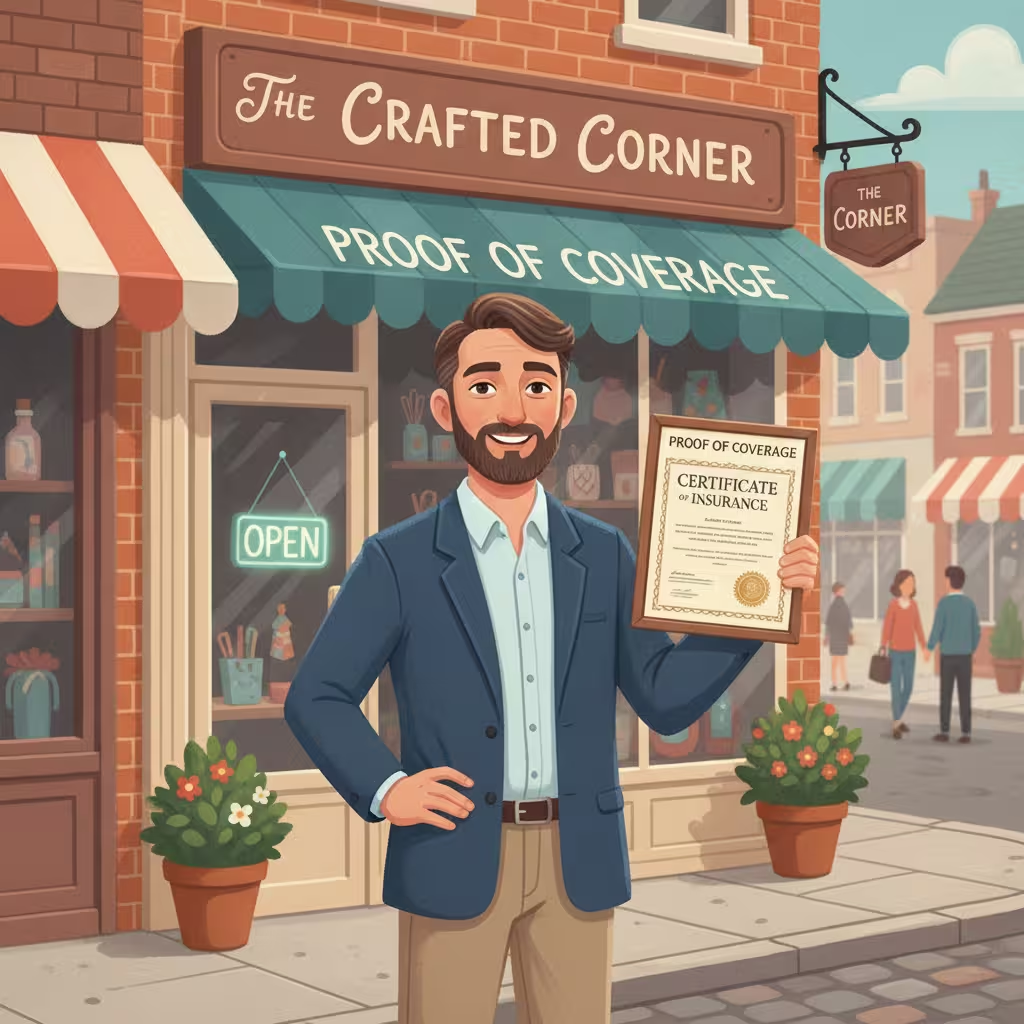
At some point — a corporate client, a new landlord, a government bid — someone’s going to ask you to send over a certificate of insurance. A COI.
Here’s what it is: a one-page summary of your coverage. Policy types, limits, your insurer’s name, the dates everything runs. It proves you carry coverage. It doesn’t alter your policy. It doesn’t extend any protection to the person asking. It’s paper that lets the relationship move forward.
Your agent can usually generate one same-day. Most don’t charge for it. Where people get tripped up is when a contract requires them to add the other party as an “additional insured” — that’s a different request with real legal implications. Don’t sign something with that language without understanding what you’re agreeing to.
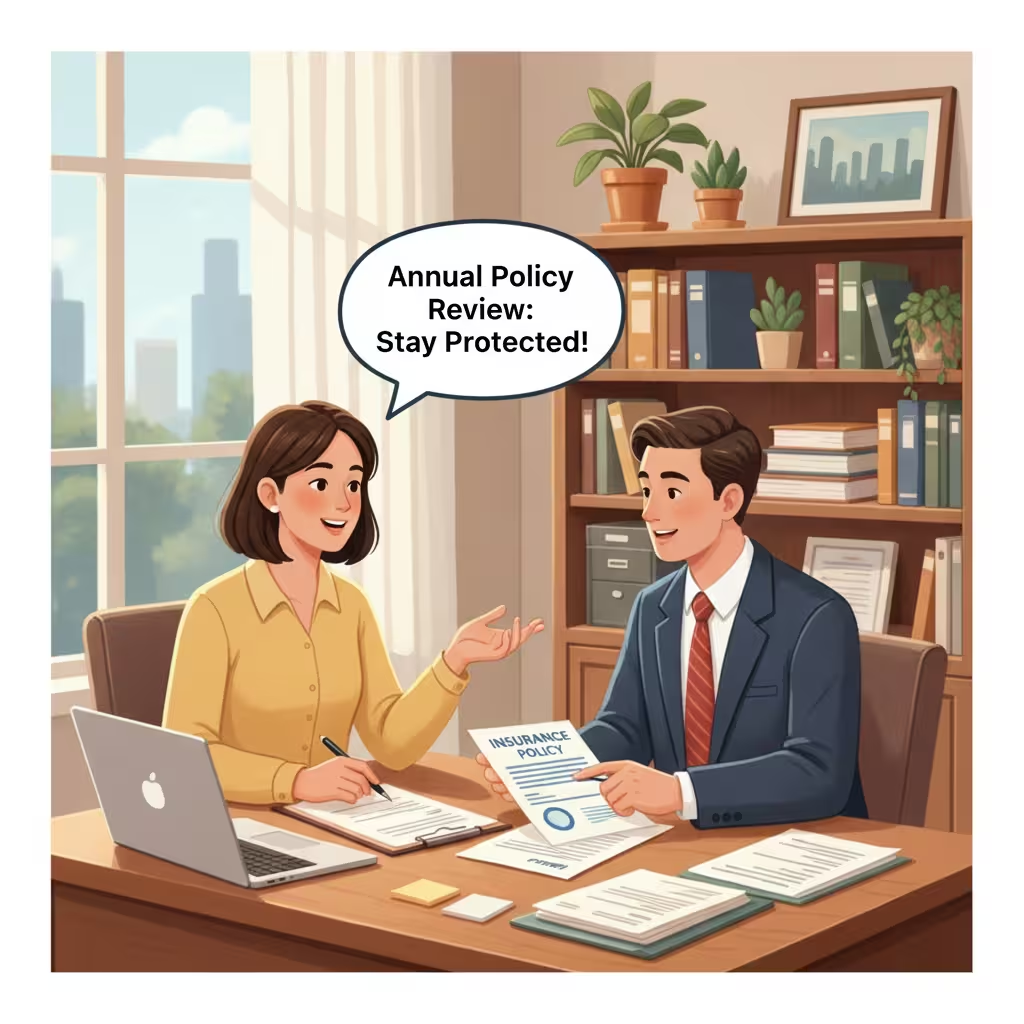
Why Auto-Renewal Is a Slow-Building Problem
Here’s something insurers don’t advertise: your policy doesn’t update itself when your business changes.
Your limits were set on the day you signed. Revenue you’ve made since then, employees you’ve hired, equipment you’ve bought, space you’ve moved into — none of that automatically adjusted your coverage. Most small business owners have been auto-renewing for years without ever checking whether their limits still match their actual operation.
Three things especially need a real look right now. First — cyber threats are moving faster than policy language can keep up with. Deepfake fraud and supply-chain attacks barely existed on small business policies two years ago. They should be on yours in 2026. Second — remote work has blurred the physical footprint of most businesses, and that creates workers’ comp and liability gray zones that most original policies weren’t written around. Third — business interruption coverage is pegged directly to your income. If revenue climbed 35% since you last reviewed your policy, a forced shutdown gets you a check based on old numbers. That gap can be crippling.
One real conversation with your agent, once a year. On the phone. Not a click.
If You’re Starting From Scratch: Here’s the Sequence
New business, no coverage yet — this is the order I’d recommend:
Lead with a BOP. Property, general liability, business interruption in one package. Most major carriers now offer industry-specific BOPs already calibrated for restaurants, contractors, retailers, and home-based service businesses. Start there.
Add E&O if you’re selling expertise in any form. Don’t talk yourself out of it. Thorough, careful professionals get hit with these claims regularly — having documentation helps but it doesn’t replace coverage.
Get workers’ comp in place before your first employee’s first day. Most states require it from day one, not after a grace period. Don’t find out the hard way.
Pull cyber coverage before customer data enters your systems. Once a name, an email address, a payment number is sitting in your database, you’re a target. Get covered before that threshold.
Come back and do a full review at the twelve-month mark. Your actual risk picture after a real year in business looks very different from your best guess before you opened the doors.
Your Startup Insurance Checklist — Simplified
Most entrepreneur insurance guides bury this. Here it is plain:
- BOP — foundation for nearly every small business
- E&O / Professional Liability — mandatory if you charge for advice or expertise
- Workers’ Comp — legally required in most states the moment you hire
- Cyber Insurance — non-optional if you handle customer data
- Commercial Auto — required if vehicles are used for business, regardless of who owns them
- Annual review — not a product, a habit, and arguably the most important item on this list
The Questions Small Business Owners Search Most – FAQ’s
What insurance does a small business need? Start with a BOP for the baseline. Layer E&O on top if your product is knowledge or judgment. Add workers’ comp the moment you hire. Pull cyber coverage before customer data touches your systems. Everything else — commercial auto, excess liability, industry-specific coverage — builds from that foundation based on your actual risk.
How much does small business insurance cost per month? A lean solo operation can often get covered for $80 to $200 a month total. A construction company or food-service business with employees, vehicles, and equipment typically runs $1,500 to $3,000 or more. The difference is mostly industry risk and payroll size.
Is business insurance required by law? Workers’ comp is — in 49 states, from the day your first employee starts. General liability isn’t legally mandated in most places, but clients, landlords, and lenders will require it anyway. “Not legally required” doesn’t mean you can skip it without consequences.
What’s the difference between actual cash value and replacement cost value? Actual cash value factors in depreciation — your five-year-old laptop gets you what it’s currently worth, not what a new one costs. Replacement cost pays what it actually takes to replace the item with something comparable today. The premium difference is modest. The claims difference is not.
What is small business insurance? It protects businesses from financial losses due to risks like property damage, liability, or employee injuries.
What types of insurance do small businesses need? Common policies include general liability, property insurance, workers’ compensation, and business interruption insurance.
Is business insurance mandatory? Requirements vary by state and industry, but workers’ compensation is often legally required.
How much does small business insurance cost? Costs depend on factors like business size, industry, location, and coverage needs.
What is a Business Owner’s Policy (BOP)? A BOP bundles general liability, property, and business interruption insurance at a lower cost.
Does homeowners insurance cover home-based businesses? No, you’ll need separate home-based business insurance for adequate coverage.
How do I choose the right coverage? Assess your business risks and consult an insurance agent to tailor policies to your needs.
What is professional liability insurance? It covers claims of negligence or errors in professional services.
How can I lower my insurance costs? Increase deductibles, bundle policies, or implement safety measures to qualify for discounts.
What happens if my business grows or changes? Review and update your policies annually to ensure adequate coverage for new risks.
What Happened to Diane
After the settlement, Diane sat down with an independent insurance broker — someone who could pull quotes from multiple carriers, not just push one product. Two hours. She walked out with a proper E&O policy, a revised BOP with updated limits that matched her current revenue, and a commercial auto rider for the times her contractors drove their own vehicles to client offices.
She pays about $410 a month for the full stack now.
Three months later, a different client filed a complaint claiming she’d misclassified two employees on their payroll. Wrong again — Diane had done everything correctly. But the dispute went to mediation anyway, and her E&O carrier covered the legal fees and representation. Cost her nothing but time.
That’s the difference between having a policy and having coverage.
Small business insurance doesn’t guarantee that problems won’t come up — they will. What it guarantees is that when the problem lands on your desk, it lands there as a problem to manage, not a crisis that ends the business you spent years building.
About the Author: Rachel Okonkwo is a small business financial strategist based in Dallas with 12 years advising entrepreneurs across retail, professional services, and the trades on insurance structure, tax planning, and operational risk. She has consulted alongside independent brokers and CPA firms in nine states.
Disclosure: This content is for general educational purposes only. It does not constitute legal or financial advice. Consult a licensed insurance professional or attorney for guidance specific to your business and state.