

My neighbor came home from a cruise last spring with a $94,000 hospital bill.
She thought she was covered. She wasn’t. Her regular health insurance didn’t follow her to the Bahamas, Medicare sure didn’t, and the travel protection the cruise line sold her for $29 covered almost nothing real.
Ninety-four thousand dollars. For a trip she saved three years for.
I think about her a lot when someone asks me about travel insurance for seniors. The answer isn’t complicated.
What Medicare Won’t Tell You
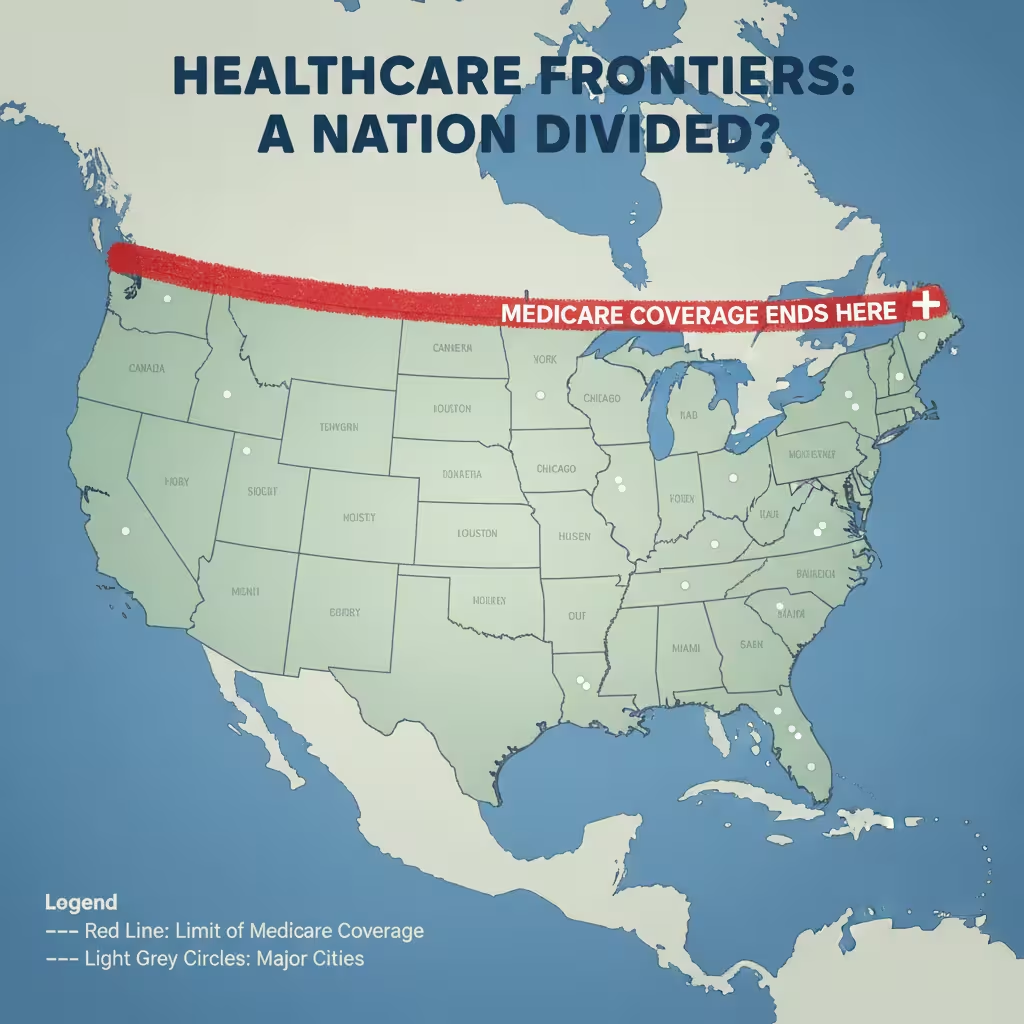
Medicare stops working the second you leave the country. Not a maybe. Just the rule.
Parts A and B — the standard stuff — cover nothing outside the U.S. There’s a narrow exception near the Canadian border, that’s about it. For any real trip abroad, you’re starting from zero.
Medicare Advantage plans vary. A few have a small international emergency benefit, but small is doing a lot of work in that sentence. Most cap at $50,000 lifetime. Sounds reasonable until you look up what a medical flight from Tokyo actually runs.
Medigap helps a little more. Plans C, D, F, G, M, and N include some foreign emergency coverage — usually capped around $50,000 total, with a $250 deductible first. Better than nothing. But not enough to actually travel on, especially if you’re older and something serious happens.
The gap is real. That’s why senior travel insurance exists. That’s the whole story.

Why the Price Goes Up With Age (And Why That’s Fair)
A 30-year-old might pay 4% of their trip cost for coverage. By 65, you’re closer to 8%. By 75, you’re at 11% or more.
On an $8,000 trip, that’s roughly $516 at age 65. More if you’re older. More if you’re heading somewhere remote.
People push back on that. “Why so much?” Because the risk is higher.
A medical evacuation — getting you off a mountain in Peru or out of a rural clinic in Morocco and onto a proper medical flight home — can run $100,000 to $300,000 on its own. That’s just moving you. Not the care. Not the hospital. Just the transport bill.
The premium isn’t the scary number. The bill without insurance is.
The Pre-Existing Condition Trap
This is where most seniors get blindsided.
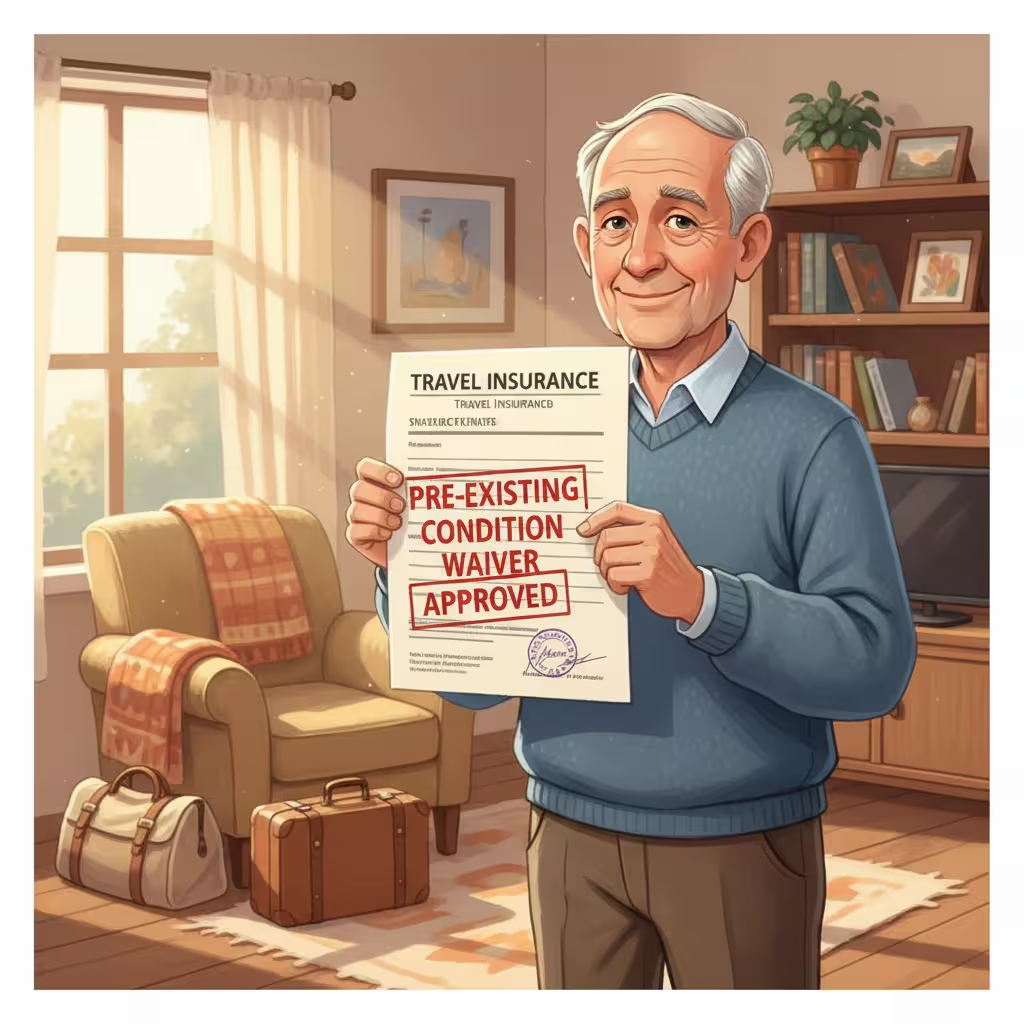
Standard travel insurance doesn’t cover pre-existing conditions. Heart disease, Type 2 diabetes, history of a stroke, prior cancer, arthritis that flares up — if something happens abroad and the doctor ties it back to any of those, the claim gets rejected.
The fix is a pre-existing condition waiver. It removes those exclusions from your policy. For most travelers over 65, it’s not really optional — it’s the main reason to buy insurance in the first place.
But here’s the catch that trips everyone up. You have to buy it within 14 to 21 days of your very first trip payment. Not the day before you fly. Not three weeks after you booked. The window opens when you first hand over money, and it closes fast. You also have to insure 100% of your non-refundable costs and be medically stable in the months before you purchase — usually the 60 to 180 days before you buy, called the look-back period.
Miss the window by one day? Gone. No appeal. Done.
I see this mistake constantly. Someone books in January, plans to “deal with insurance later,” and by mid-February the door is already shut. Book the trip. Buy the insurance that same week. That’s the whole trick — seriously, just that one habit fixes most of the problems seniors run into.

Three Numbers That Actually Matter
Look, there are a lot of coverage details to think about. But if you just remember these three, you’re ahead of most people.
First — aim for at least $100,000 in emergency medical coverage. That’s the floor for any international trip. For cruises or places with limited hospitals nearby, push it to $250,000. Some strong senior plans go up to $500,000, and for the right trip that’s not overkill.
Second — don’t cheap out on medical evacuation. This is the one people underbuy, usually because it sounds abstract until it isn’t. Getting you out — an air ambulance, a specialized crew, the whole operation of moving you from a foreign hospital back home — runs $100,000 to $300,000 easily. A plan with $50,000 in evac limits isn’t protecting you from the scenario that actually wrecks people. Look for $250,000 minimum. The better senior plans go up to $1,000,000.
Third — ask if the coverage is primary or secondary. Secondary means you file with Medicare first, wait for their denial letter, then go back to the travel insurer. That’s brutal paperwork when you’re already managing a health crisis overseas. Primary pays first. No denial letter. Just handled. It’s worth specifically asking before you buy.

Which Plans Are Actually Worth It
I’m not listing 20 options. Here are the ones that keep showing up for good reasons.
IMG / iTravelInsured is the top seller for travelers over 70, and it earns that. Up to $100,000 in primary emergency medical, $500,000 in evacuation, and it pays first — so you skip the Medicare denial letter process entirely. For seniors with a real health history, their pre-existing condition waiver process is the most straightforward I’ve come across.
Allianz Travel stands out because their annual plans aren’t age-rated. The price doesn’t jump just because you turned 68. If you take four or more trips a year, one annual plan often beats buying separate policies each time. Their TravelSmart app handles real-time alerts and digital claims, and their “Cancel Anytime” benefit is genuinely useful when your health situation can shift without warning.
Seven Corners is the one for high limits and group travel. Up to $500,000 in emergency medical, up to $1,000,000 in evacuation. For groups of 10 or more, they have dedicated plans built for that. Remote destinations, high-stakes itineraries — Seven Corners is built for the situations where being underinsured really costs you.
Travelex got voted best overall by several review groups this year. Their Ultimate Plan covers grandkids 17 and under at no extra charge, which matters for grandparent trips. They’re consistent across a lot of categories — and when you’re filing a claim from a hospital in Portugal at midnight, consistent matters more than flashy.
Tin Leg is the budget pick that doesn’t gut your coverage to hit a low price. $500,000 in medical coverage at premiums lower than most competitors at that level. For healthy seniors going to lower-risk places who mostly want solid medical and evacuation protection, Tin Leg punches above its price.
HTH Travel is built for people spending a whole season abroad — three months in Italy, a winter in Costa Rica, a semester-length stay somewhere. Most travel policies aren’t built for that. HTH is. No age-related waiting periods, high evacuation limits, and a Passport app that helps you find qualified local doctors and translate medication names abroad.
Nationwide is the cruise play. Three tiers of cruise-specific plans — Universal, Choice, Luxury — covering missed ports, shipboard disruptions, and sea-based medical evacuations. Before you click “add travel protection” on the cruise line’s checkout page, compare what Nationwide offers. The cruise line’s default is usually the weakest option available.
If You’re Over 80, Here’s What to Expect
Coverage exists. But the rules do get tighter.
Most big providers cover into the 80s. Some cut off at exactly 80. Others go to 85 with adjusted terms. Health questionnaires get more common the older you are. And premiums jump more between 75 and 80 than any other decade — so compare real quotes, because prices vary a lot at that age.
IMG, Seven Corners, and HTH hold up well for travelers in their late 70s and 80s. Tin Leg and Trawick International are worth checking if price is the main concern.
One thing I’d tell anyone in their mid-60s right now: the window between 65 and 70 is the easiest time to start the habit. Getting first-time coverage at 83 is slower, harder, and more expensive than renewing an annual plan you’ve had since 66. Start early. Keep it going.
Should Seniors Get Cancel For Any Reason?
CFAR — Cancel For Any Reason — lets you back out of a trip for any reason at all and still get 50% to 75% of your non-refundable costs back. No approved-reason list. No documentation fight. Just: I’m canceling, here’s my money back.
For seniors, that matters more than people realize. Health shifts between when you book and when you fly. A knee that felt fine in March might be genuinely unreliable by June. Your spouse’s condition might change. A news situation at your destination might make you uncomfortable enough that you just don’t want to go. None of those hit the approved-reason list on a standard policy. But they’re real situations that real people face.
CFAR has to be bought within 10 to 21 days of your first deposit — same window as the pre-existing condition waiver, which is actually a good argument for buying both at the exact same time, right after you book.
Standard cancellation pays 100% but only for a short approved list. CFAR pays less but covers everything. When you’re dealing with real health uncertainty, “everything” is usually more useful than “100% on five specific scenarios.”

What Real Coverage Actually Costs
A healthy 65-year-old on a $3,000 trip to Western Europe can find solid coverage with $100,000 in medical for roughly $150 to $200. That’s about 5% to 6.5% of the trip.
A 75-year-old with managed diabetes and high blood pressure heading to Southeast Asia on a $7,000 trip? Budget $550 to $800 or more, especially once you add a pre-existing condition waiver and higher medical limits.
If you travel three or four times a year, run the numbers on an annual plan. Allianz offers flat-rate annual coverage that doesn’t go up with age. Four trips on one annual plan almost always beats four separate policies by a real margin.
And always — always — compare at least three to five real quotes before buying. The same coverage level can cost $100 more from one company versus another for no logical reason, just different pricing formulas. Squaremouth and InsureMyTrip both let you compare a bunch of providers at once. Takes 20 minutes and can save you hundreds.
What 2026 Has Already Taught People
January. Military operations in Venezuela. FAA emergency restrictions on U.S. commercial flights. Passengers stranded.
February. Civil unrest in Mexico. Guadalajara and Puerto Vallarta airports shut down. Cancellations everywhere.
Trip protection demand jumped 67% after those two events. People who’d never given insurance a second thought suddenly wanted it badly. But a lot of them found out too late that their standard policy excluded every bit of it — acts of war, civil unrest, government closures, all carved out in the fine print.
The only people who got money back in the “I don’t feel safe flying” scenario were the ones who’d bought CFAR beforehand. Everyone else lost what they paid.

Before You Shop, Do These Five Things
Add up every non-refundable dollar first. Flights, hotels, tours, cruise deposits. That total is what you insure — not a rough estimate, the actual number.
Buy the week you book. The waiver window and the CFAR window both start at your first deposit. Waiting even three weeks can close both doors permanently.
Compare real quotes on Squaremouth or InsureMyTrip. Five providers, 20 minutes, potentially hundreds saved. Don’t skip this step.
Ask directly: is the medical coverage primary or secondary? Primary is better. If they say secondary, ask whether upgrading is an option.
Read the exclusions page. I know it’s boring. But what’s not covered matters more than what is. Check how they handle pre-existing conditions, what the look-back period is, and whether government disruptions and civil unrest are excluded.
Frequently Asked Questions – FAQ’s
- Why do seniors need travel insurance?
Medicare and most health plans don’t cover medical expenses abroad. Travel insurance ensures coverage for emergencies, cancellations, and disruptions. - What does travel insurance for seniors typically cover?
It includes emergency medical care, evacuation, trip cancellations, lost baggage, and sometimes pre-existing condition waivers. - Does Medicare cover international travel?
No, Medicare generally doesn’t cover medical expenses outside the U.S., except in rare cases near the Canadian border. - What is a pre-existing condition waiver?
It removes exclusions for pre-existing conditions if purchased within 14-21 days of the first trip payment. - How much does travel insurance cost for seniors?
Costs range from 5-11% of the trip cost, increasing with age and trip complexity. - Are there age limits for senior travel insurance?
Some policies cap coverage at 70-85 years, but options exist for older travelers with adjusted terms. - What is the importance of medical evacuation coverage?
It covers costly airlifts and transport to proper medical facilities, which can exceed $100,000. - What is Cancel For Any Reason (CFAR) coverage?
CFAR allows trip cancellation for any reason, reimbursing 50-75% of non-refundable costs. - How can seniors save on travel insurance?
Compare quotes, consider annual plans, and check existing coverage through credit cards or health plans. - What are the best travel insurance providers for seniors?
Providers like Allianz, IMG, and Seven Corners offer tailored plans with high medical and evacuation limits.
The Part I Keep Coming Back To
My neighbor’s $94,000 bill got sorted out eventually. A personal loan. A GoFundMe her daughter put together. Two years of grinding that down.
She told me the travel insurance she was offered before the trip cost $180.
That’s the number I can’t shake. One hundred and eighty dollars.
A $400 premium on a $6,000 trip is a 6.7% cost to protect everything else. You’ve spent years getting to a place where a trip like this is even possible. Don’t let a skipped insurance policy be what unravels it.
Buy the policy. Buy it the week you book. Read the exclusions. Then go have the trip.
Disclaimer: Coverage terms, rates, and eligibility rules vary by provider, policy, and state. Always read the full policy before buying. For complex medical histories or high-value trips, talk to a licensed travel insurance specialist. This is general information only — not insurance advice.