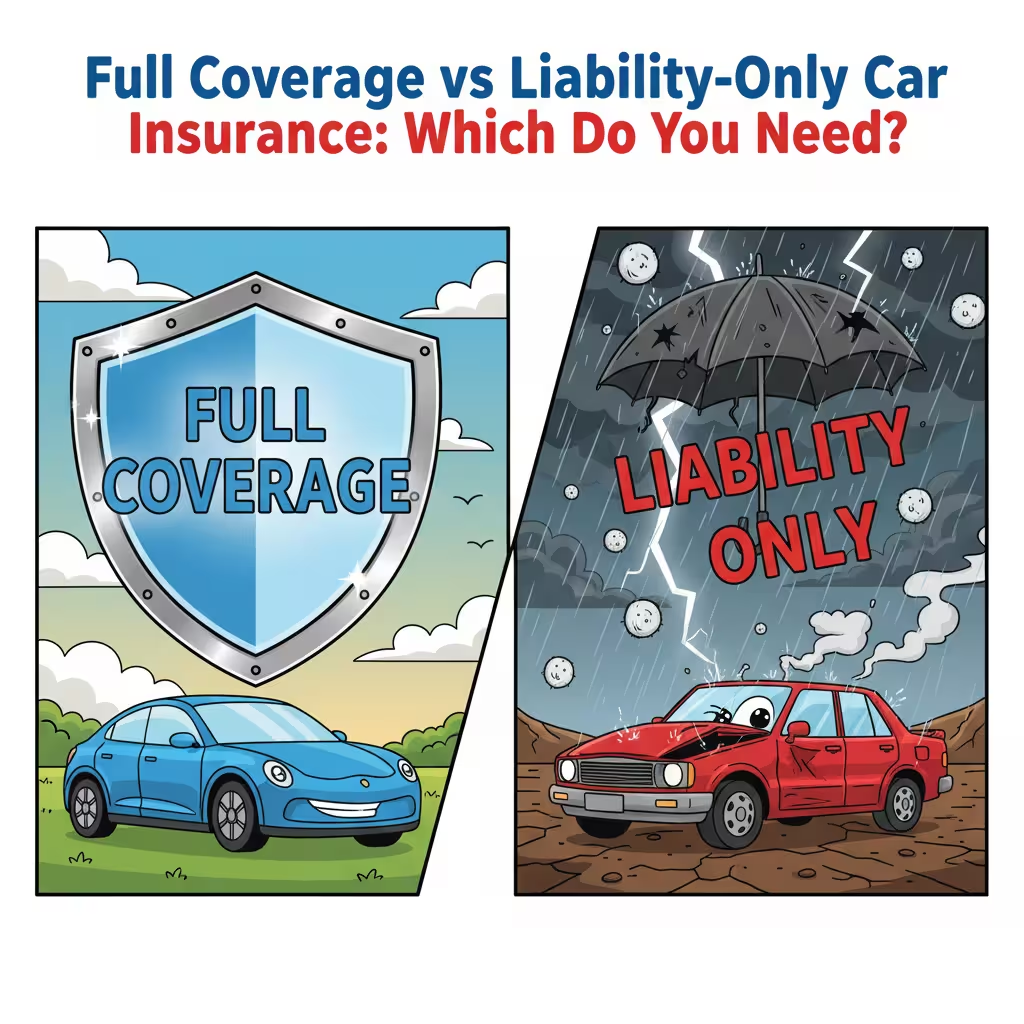

Honestly, the name is a disaster. “SR-22 insurance” sounds like a product you’d shop for – like you’d pull up a comparison site, punch in your zip code, and find a policy called SR-22. That’s not a thing. SR-22 is a certificate of financial responsibility, not an insurance policy. Your insurer files it with the DMV. It tells the state you’ve got the minimum liability coverage they require. That’s the whole job.
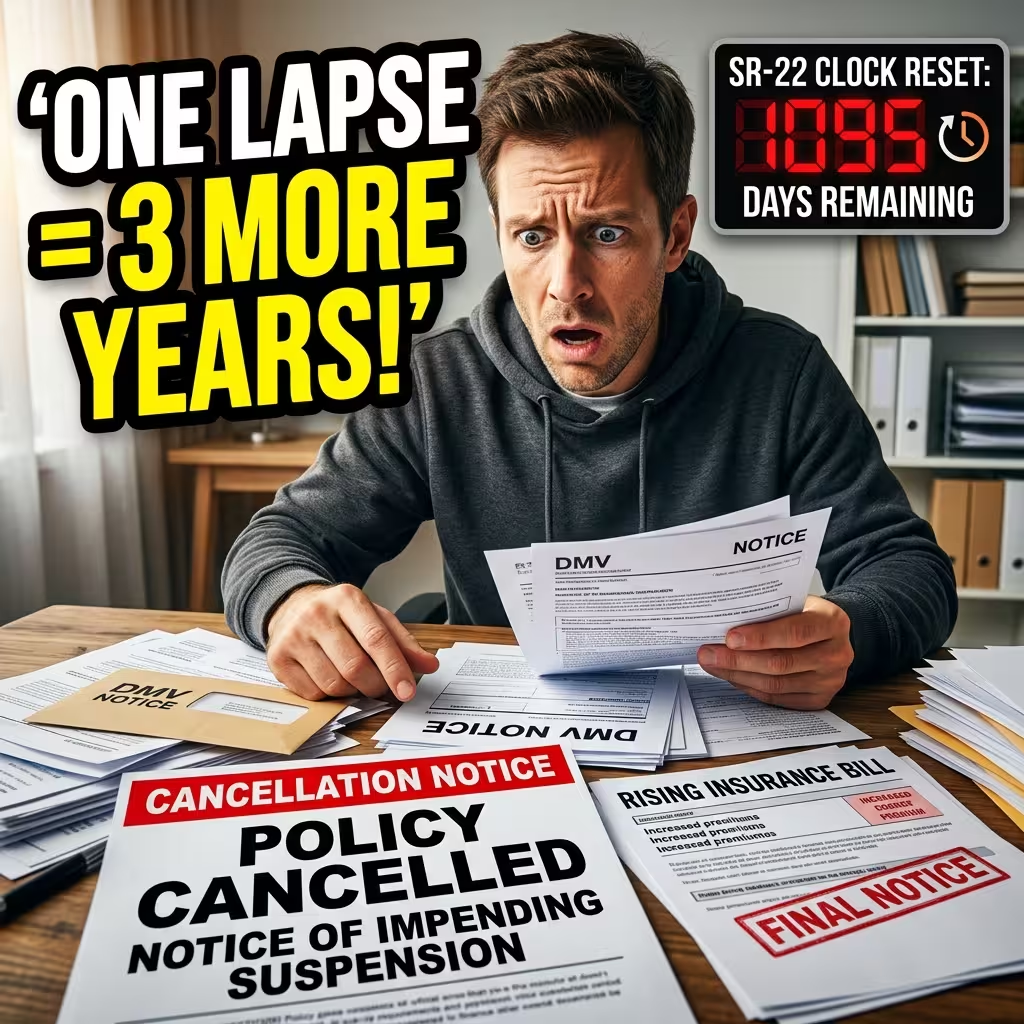
Why does this matter? Because drivers who don’t get this distinction go looking for the wrong thing. They call around asking for “SR-22 insurance quotes” and waste time, or worse – they end up with gaps in their understanding that cause real coverage lapses. And during an SR-22 filing period, one lapse can reset a three-year clock to day zero.
What is an SR-22 Certificate?
Think of it as a leash your insurer has to hold. You’ve got a regular auto policy already – you pay monthly, it covers your liability, all the normal stuff. SR-22 doesn’t replace that. It adds a layer of state-mandated monitoring.
Mechanically, here’s how it works. Your insurer files a form – the SR-22 – electronically with your state’s motor vehicle department. That form tells the DMV: active coverage, confirmed, we’re watching. The state doesn’t have to chase you down or wait for renewal paperwork. They get real-time updates.
And the flip side is brutal. The second your coverage lapses – missed payment, cancellation, whatever – your insurer must file an SR-26. That’s the termination notice. DMV gets it, license gets suspended. No warning letter, no grace period. The SR-26 is the warning letter.
Filing fee for the SR-22 itself? Usually $15 to $25, paid once. Pocket change. The real financial hit comes from getting tagged as high-risk – that’s what drives premiums through the floor.

Who ends up needing one?
Not your average speeder. We’re talking about the bigger stuff:
- DUI or DWI – the #1 trigger by a wide margin
- Driving with no insurance, especially if you caused a wreck while uninsured
- Reckless driving
- Hit-and-run
- Too many points stacking up on your record too fast
- Reinstating a suspended or revoked license
- Applying for a hardship or probationary license
Here’s one that throws people off: in some states, falling behind on child support payments can get you ordered to file an SR-22. Nothing whatsoever to do with your driving record. The state uses your license as a compliance lever. Annoying? Yes. Legal? Also yes.
Court sends the notice or the DMV does. Either way, you’re on a clock once it arrives. Ignore it and you’re compounding a bad situation.
How is having an SR-22 different from regular car insurance?
Your existing policy doesn’t get upgraded or overhauled. Same coverage, same limits, same deductibles. The SR-22 sits on top of it as a reporting layer – nothing more.
Put it this way: with a regular policy, your insurer’s job is to pay your covered claims. That’s it. With an SR-22 attached, they’ve also got an obligation to the state. They must report any coverage gap, any cancellation, any dip below minimum limits – the moment it happens. Not quarterly. Not at renewal. Immediately.
So when people ask “can I keep my regular insurance and add SR-22?” – sort of. You keep your regular policy, yes. But not every insurer will attach the SR-22 filing to it. Standard carriers often refuse entirely. If yours won’t do it, you’re switching.
SR-22 vs. FR-44 – what’s the difference?
Florida and Virginia drivers dealing with a DUI or drug offense may run into an FR-44 instead. Same deal structurally – a certificate, not a policy – but the liability minimums are dramatically higher.
SR-22 FR-44 Used where Most U.S. states Florida and Virginia only Common trigger Reckless driving, no insurance, license suspension DUI/DWI, driving on a forfeited license Liability floor State minimums Double or triple state minimums Premium hit Significant Much heavier Filing fee $15–$25, once $15–$25, once
According to the Virginia Department of Motor Vehicles, FR-44 financial responsibility certificates double the state’s standard liability minimums under Virginia Code § 46.2-472.
Florida’s normal minimum liability sits at $10,000. FR-44 pushes that to $100,000 per person and $300,000 per accident. That coverage jump alone – before any high-risk surcharge – means a serious premium increase.
This strict pricing multiplier stems directly from Florida Statutes s. 324.023, which legally mandates these higher limits for any driver convicted of a DUI.
What does SR-22 do to your insurance bill?
Two separate costs, and people mix them up constantly.
Certificate fee: $15–$25. One-time. Genuinely not worth worrying about.
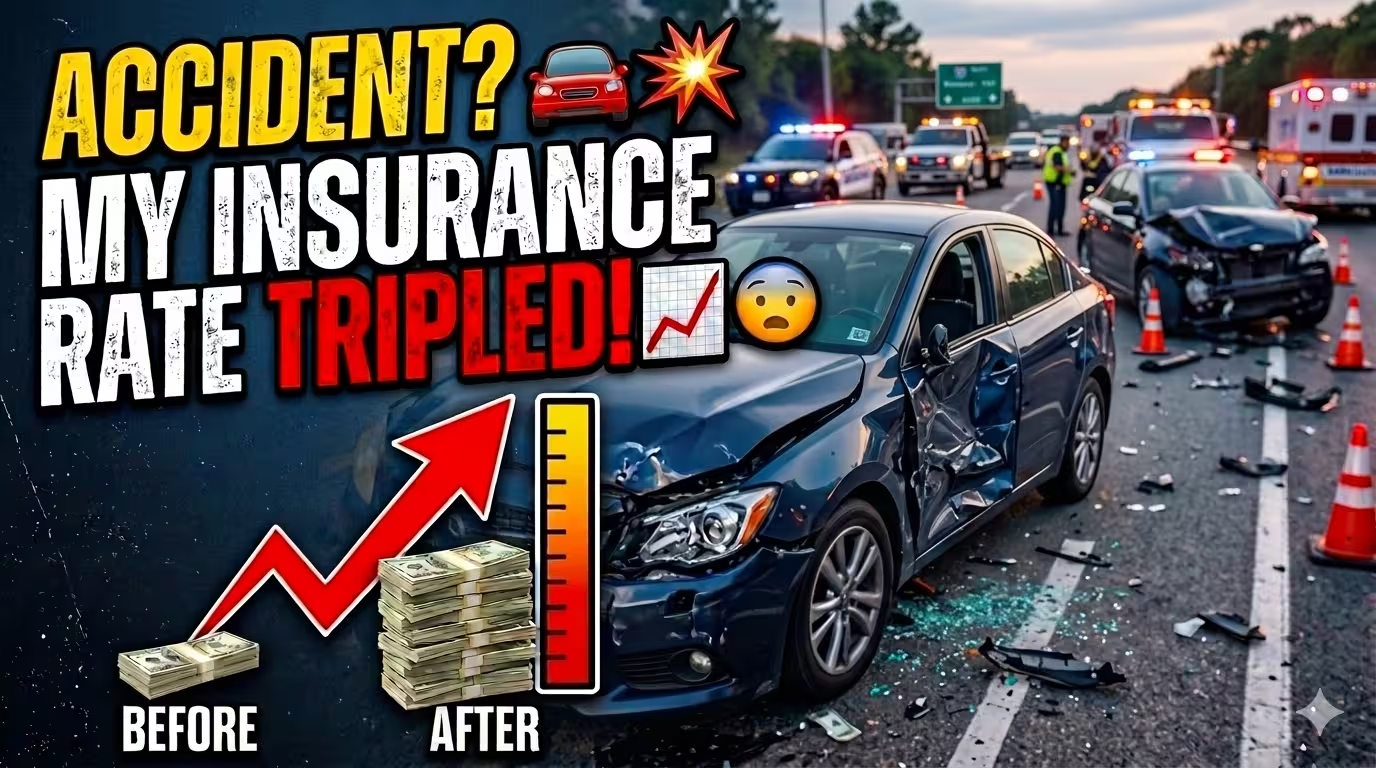
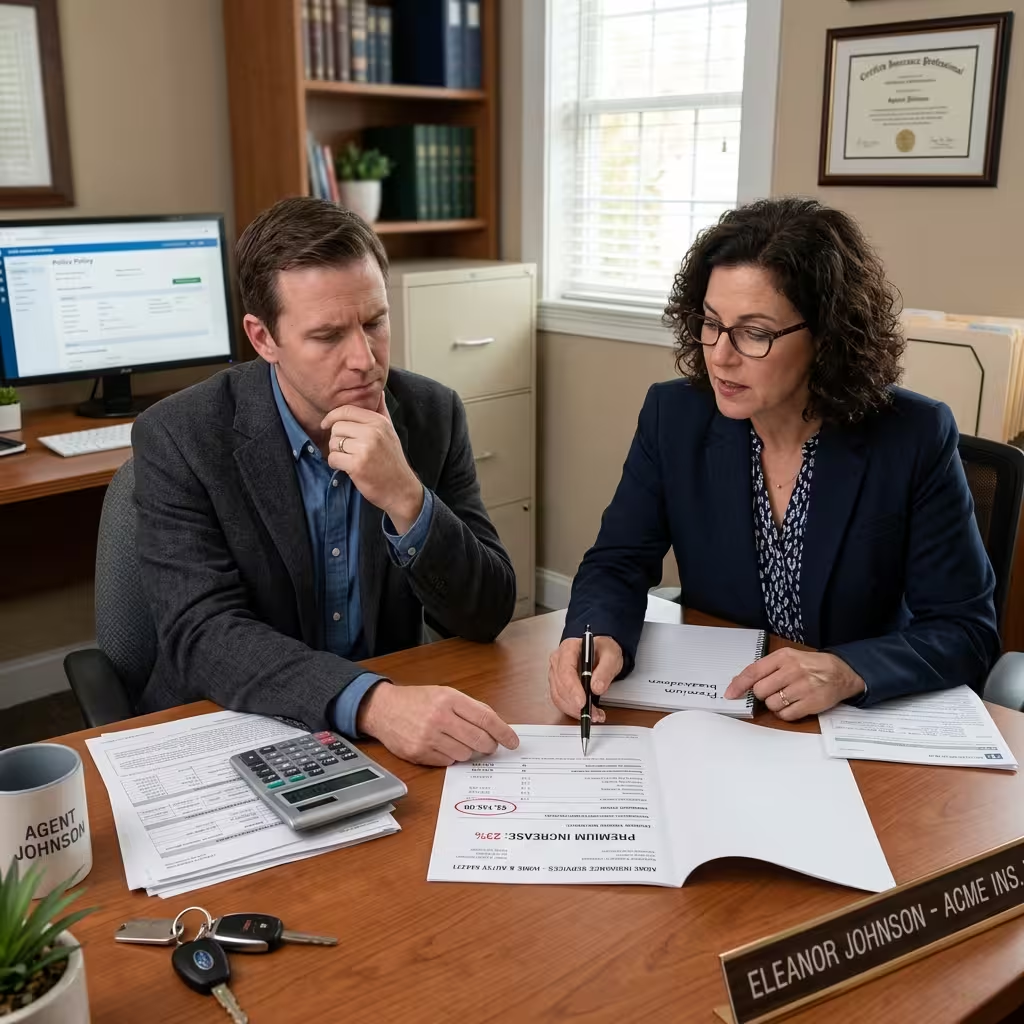
Premium surcharge – that’s the real problem. Drivers under SR-22 requirements average a 69% premium increase, and some hit 103% or higher. Michigan high-risk drivers with full coverage can clear $3,500 a year without blinking.
What pushes your number up or down?
The offense. A DUI surcharge hits harder than a lapse-in-coverage surcharge. Underwriters aren’t subtle about this.
Your state. Ohio and Michigan aren’t priced the same. California and Texas aren’t either. The multipliers vary.
Your record going in. First violation on an otherwise clean history? Cheaper. Second or third offense? Different conversation entirely.
The vehicle. High repair costs and theft rates push base rates up before the surcharge even applies. Insurers track this through what they call the vehicle’s “symbol.”
Your credit. Uncomfortable truth: most U.S. insurers factor credit-based insurance scores into pricing. It’s legal in most states.
Not every insurer even offers SR-22 filings. Some standard carriers turn away high-risk applicants flat-out. You’ll likely end up with a non-standard carrier – real, regulated, pricier. Shopping through an independent broker with access to multiple high-risk carriers is the fastest way to find a rate that doesn’t make you wince.
⚡ Interactive SR-22 State Guide & Cost Estimator
Select your state and primary violation to see your estimated filing fees, premium hikes, and mandatory filing timelines.
Don’t own a car? There’s a policy built for that.
If you need to keep your license active but don’t have a vehicle, a non-owner SR-22 policy is your move. Liability coverage when you drive someone else’s car or a rental – nothing for the vehicle itself, nothing for your own injuries. Straight third-party liability.
Cheapest way to satisfy the requirement, typically. Only works if nobody in your household owns a car and you don’t have regular access to a specific vehicle.

What actually happens when your SR-22 lapses – even for one day?
This is the section most drivers wish they’d read before it happened to them.
Coverage drops. Insurer files SR-26. DMV gets it. License: suspended. And in most states, the three-year SR-22 period – whatever you’d already completed – resets to day one.
Not paused. Not deducted from. Restarted.
“Even a one-day lapse will be reported, often leading to the entire SR-22 term being restarted,” per SR-22 compliance research. People who miss one auto-pay by a week and let the policy cancel end up tacking years onto their high-risk classification. It happens constantly.
Protecting against this isn’t about willpower. It’s about removing the human failure point:
Set up automatic payments. Not a suggestion. Manual billing requires you to remember every single month without fail. Auto-pay requires you to actively log in and cancel it. Default to the safer option.
New policy before you cancel the old one. Even if you’re switching carriers same-day. Even if the new policy starts “immediately.” Bind it first. Then cancel.
Insurer drops you? Start shopping from the moment you get the notice – not after the termination date. They give you advance notice for a reason. Use it.
Confirm your end date with the DMV directly. Your insurer tracks their filings. The DMV tracks the legal requirement. Those two things don’t always match up. Call the DMV. Get confirmation in writing if you can.
Thinking about skipping a month to save a few bucks? Do the math. One reset means three more years of high-risk premiums. Whatever you saved in thirty days gets erased in the first month of the reset period. And then some.

What if you move to another state while under the requirement?
Crossing state lines doesn’t touch the SR-22 obligation. Not even a little.
Requirement belongs to the state that issued it. Doesn’t matter where you’re living now – the original DMV holds the filing requirement until the mandatory period ends. Full stop.
Practically speaking: you need an insurer licensed in both states – your new one and the one that issued the requirement. That insurer files the certificate with the original state, proving your coverage hasn’t lapsed. Your policy has to clear the higher of the two states’ minimums.
Enforcement comes through the National Driver Register – a federal database that covers all fifty states. Original state suspends your license for non-compliance? That suspension shows up nationwide. Try to get a new license anywhere else, and the system flags it. Most states won’t issue an unrestricted license until the original state’s requirement is cleared.
Interstate SR-22 filings aren’t something every broker handles. Specialists exist – worth tracking down before you move, not scrambling to find after.

When does the SR-22 requirement end?
Three years of continuous, unbroken coverage is the standard across most states. Some violations – multiple DUIs, certain aggravated offenses – stretch it to five years or longer. In extreme situations it can reach 20 years, or occasionally become permanent.
Three things people routinely get wrong at the end:
It doesn’t fall off by itself. Once the mandatory period expires, nothing happens automatically. The SR-22 stays attached to your policy. The high-risk surcharge keeps billing. You have to contact your insurer and explicitly request removal.
Verify with the DMV before you do anything. Your insurer tracks what they filed. The DMV tracks whether the requirement is legally complete. These can be out of sync. Confirm the official end date with the DMV before requesting removal – acting too early, even by a few weeks, can create a technical lapse and restart the whole thing.
Request a letter of experience. Ask your insurer for written proof of continuous coverage across the entire mandate period. When you move back to a standard carrier, that letter is evidence. It’s the difference between your clean three-year record getting recognized and being treated like you walked out of traffic court yesterday.
Are some states SR-22-free?
A handful don’t use it. Delaware, Kentucky, Minnesota, New Mexico, Oklahoma, and Pennsylvania are among them – though requirements evolve, so verify with your specific state DMV – don’t take anyone’s word for it.
States that use alternatives:
FR-44 – Florida, Virginia. DUI/drug offenses. Higher limits required.
SR-50 – Indiana. Used during reinstatement to confirm active coverage.
SR-22A – Georgia. Specific violation types.
SR-21 – Used in several states, but different purpose: confirms coverage existed at the time of a specific past accident. Not a forward-looking filing like the SR-22.
Violation happened in an SR-22 state, you’ve since moved to a non-SR-22 state? The original obligation still applies. You need an insurer licensed in the original state to file on your behalf from wherever you are.
Frequently Asked Questions
Is SR-22 a type of car insurance policy?
No – and this confusion causes real problems. SR-22 is a certificate filed by your insurance company with your state DMV. It proves you’re carrying minimum liability coverage. You can’t buy “SR-22 insurance” as a standalone product because it doesn’t exist as one. You buy an auto policy from a carrier that also does SR-22 filings, and they attach the certificate. Filing fee: $15–$25 one-time. The underlying insurance is its own separate ongoing cost.
Can you get SR-22 the same day?
Usually yes. A lot of non-standard and specialty carriers can bind coverage and file the SR-22 electronically within the same business day. Processing time depends on the state and carrier. Get the filing date confirmed in writing from your insurer, then call your state DMV to verify it landed – don’t assume it did based on your insurer saying they sent it.
What happens to your SR-22 if you switch insurers?
The new insurer files a fresh SR-22 before you cancel the old one. That’s the only safe order of operations. The moment the old policy cancels with nothing on file to replace it, your old insurer sends the SR-26, the DMV suspends your license, and depending on the state, the filing period restarts. New policy bound. Then cancel. Not the other way around.
Does SR-22 appear on your declarations page?
As a filing endorsement somewhere in your policy documents – not always labeled the way you’d expect. Ask your insurer to confirm in writing that it’s active. If you need proof for court or a DMV hearing, request an official copy of the filed certificate. A letter from your insurer saying they filed it isn’t the same thing.
Do you need SR-22 if you already have full coverage?
Depends on your carrier. Full coverage – collision, comprehensive, liability combined – doesn’t automatically satisfy an SR-22 requirement. The question is whether your insurer will attach the certificate and file it. Plenty of standard carriers won’t touch SR-22 filings. If yours is one of them, you’re switching insurers regardless of how solid your current coverage is.
What’s the real difference between SR-22 and FR-44?
Both are certificates, not policies. SR-22 is used in most states and requires state-minimum liability coverage. FR-44 is Florida and Virginia only, triggered by DUI or drug offenses, and mandates liability limits that are two to three times the state minimums. The premium gap between the two is significant – FR-44 carriers know they’re dealing with the highest-risk applicants in those states, and they price accordingly.